

Alloy

This glossary entry has not yet been updated and is under review.

A mixture of two or more compatible metals (or sometimes a metal and a non-metal, e.g. steel, an alloy of iron and carbon), made by being fused into each other to form a homogeneous mass, theresultant new metal usually being harder, more durable and more fusible than the components but less malleable and of a different colour.Non-compatible metals (e.g. nickel and silver) cannot be alloyed because they will not dissolve into each other.Some alloys are formed by nature (e.g. electrum), but most are man-made to increase strength or workability, or to alter colour, e.g. a base metal mixed with a precious metal.Alloys made of various metals and in various proportions to meet different industrial needs are made by refiners and sold to makers of jewelry, e.g. gold and silver solder.See also: alloys and metal standards

Alloy

An alloy is a solid solution or homogeneous mixture of two or more elements, at least one of which is a metal, which itself has metallic properties. It usually has different properties from thoseof its component elements.Alloying one metal with others often enhances its properties. For instance, steel is stronger than iron, its primary element. The physical properties, such as density, reactivity, Young's modulus,and electrical and thermal conductivity, of an alloy may not differ greatly from those of its elements, but engineering properties, such as tensile strength and shear strength may be substantiallydifferent from those of the constituent materials. This is sometimes due to the sizes of the atoms in the alloy, since larger atoms exert a compressive force on neighboring atoms, and smaller atomsexert a tensile force on their neighbors, helping the alloy resist deformation. Alloys may exhibit marked differences in behavior even when small amounts of one element occur. For example,impurities in semi-conducting ferromagnetic alloys lead to different properties, as first predicted by White, Hogan, Suhl, Tian Abrie and Nakamura.Some alloys are made by melting and mixing two or more metals. Brass is an alloy made from copper and zinc. Bronze, used for statues, ornaments and church bells, is an alloy of tin and copper.Unlike pure metals, most alloys do not have a single melting point. Instead, they have a melting range in which the material is a mixture of solid and liquid phases. The temperature at whichmelting begins is called the solidus and the temperature when melting is complete is called the liquidus. However, for most alloys there is a particular proportion of constituents which give thema single melting point or (rarely) two. This is called the alloy's eutectic mixture.
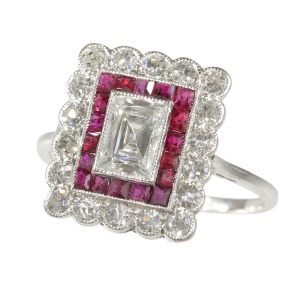

Explanation on alloy by Adin antique jewelry
Adin Academy

Alloy

No items found.

A mixture of two or more compatible metals (or sometimes a metal and a non-metal, e.g. steel, an alloy of iron and carbon), made by being fused into each other to form a homogeneous mass, theresultant new metal usually being harder, more durable and more fusible than the components but less malleable and of a different colour.Non-compatible metals (e.g. nickel and silver) cannot be alloyed because they will not dissolve into each other.Some alloys are formed by nature (e.g. electrum), but most are man-made to increase strength or workability, or to alter colour, e.g. a base metal mixed with a precious metal.Alloys made of various metals and in various proportions to meet different industrial needs are made by refiners and sold to makers of jewelry, e.g. gold and silver solder.See also: alloys and metal standards

Alloy

An alloy is a solid solution or homogeneous mixture of two or more elements, at least one of which is a metal, which itself has metallic properties. It usually has different properties from thoseof its component elements.Alloying one metal with others often enhances its properties. For instance, steel is stronger than iron, its primary element. The physical properties, such as density, reactivity, Young's modulus,and electrical and thermal conductivity, of an alloy may not differ greatly from those of its elements, but engineering properties, such as tensile strength and shear strength may be substantiallydifferent from those of the constituent materials. This is sometimes due to the sizes of the atoms in the alloy, since larger atoms exert a compressive force on neighboring atoms, and smaller atomsexert a tensile force on their neighbors, helping the alloy resist deformation. Alloys may exhibit marked differences in behavior even when small amounts of one element occur. For example,impurities in semi-conducting ferromagnetic alloys lead to different properties, as first predicted by White, Hogan, Suhl, Tian Abrie and Nakamura.Some alloys are made by melting and mixing two or more metals. Brass is an alloy made from copper and zinc. Bronze, used for statues, ornaments and church bells, is an alloy of tin and copper.Unlike pure metals, most alloys do not have a single melting point. Instead, they have a melting range in which the material is a mixture of solid and liquid phases. The temperature at whichmelting begins is called the solidus and the temperature when melting is complete is called the liquidus. However, for most alloys there is a particular proportion of constituents which give thema single melting point or (rarely) two. This is called the alloy's eutectic mixture.

Also known as:

References

From: An Illustrated Dictionary of Jewelry, autor: Harold Newman, publishers: Thames and HudsonFrom: Wikipedia