
See our: Mythologic jewelry.Aphrodite (Latin: Venus) is the classical Greek goddess of love, lust, and beauty. She was also called Kypris and Cytherea after the two places, Cyprus and Cythera, which claimed her birth. Her Romanequivalent is the goddess Venus. Myrtle, dove, sparrow, and swan are sacred to her."Foam-arisen" Aphrodite was born of the sea foam near Paphos, Cyprus after Cronus cut off Ouranos' genitals and threw them behind him into the sea. Hesiod's Theogony described that the genitals "werecarried over the sea a long time, and white foam arose from the immortal flesh; with it a girl grew" to become Aphrodite. This fully grown up myth of Venus (the Roman name for Aphrodite), VenusAnadyomene ("Venus Rising From the Sea") was one of the iconic representations of Aphrodite, made famous in a much-admired painting by Apelles, now lost, but described inPliny the ElderNatural History.See also: Olympian gods
Aphrodite
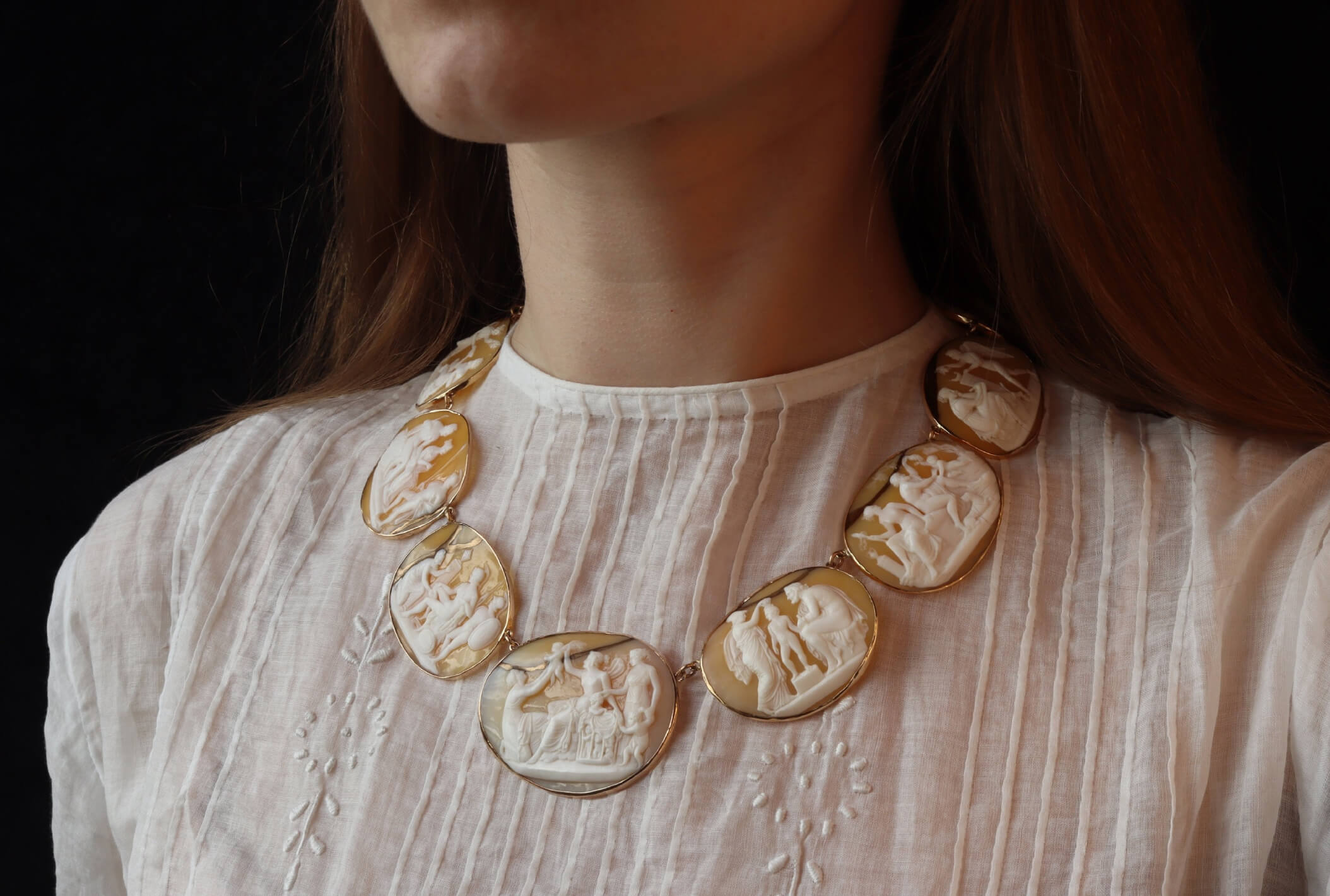
Aphrodite
See our: Mythologic jewelry.Aphrodite (Latin: Venus) is the classical Greek goddess of love, lust, and beauty. She was also called Kypris and Cytherea after the two places, Cyprus and Cythera, which claimed her birth. Her Romanequivalent is the goddess Venus. Myrtle, dove, sparrow, and swan are sacred to her."Foam-arisen" Aphrodite was born of the sea foam near Paphos, Cyprus after Cronus cut off Ouranos' genitals and threw them behind him into the sea. Hesiod's Theogony described that the genitals "werecarried over the sea a long time, and white foam arose from the immortal flesh; with it a girl grew" to become Aphrodite. This fully grown up myth of Venus (the Roman name for Aphrodite), VenusAnadyomene ("Venus Rising From the Sea") was one of the iconic representations of Aphrodite, made famous in a much-admired painting by Apelles, now lost, but described inPliny the ElderNatural History.See also: Olympian gods
References
From: Wikipedia