
1. Introduction
Classical jewellery refers to ornaments made in the Greek and Roman worlds from the eighth century BC to the fifth century AD.
Refined goldwork, balanced proportions and carefully composed motifs express civic identity, status and religious devotion across the ancient Mediterranean, forming a visual vocabulary that later European jewellery revisited.
2. Historical and Cultural Context
Classical jewellery developed in societies that valued civic identity, religious practice and artistic order. In Greece, regional traditions combined with the influence of philosophy and sculpture, and proportion and harmony guided the visual language.
The Hellenistic period broadened this vocabulary through wider trade, new materials and contact with Egypt and the Near East. Roman jewellers adopted Greek techniques and expanded production through larger, more organised workshops and wider distribution, maintaining jewellery as an expression of status, devotion and cultural continuity across the Mediterranean.
3. Visual Characteristics, Materials and Techniques
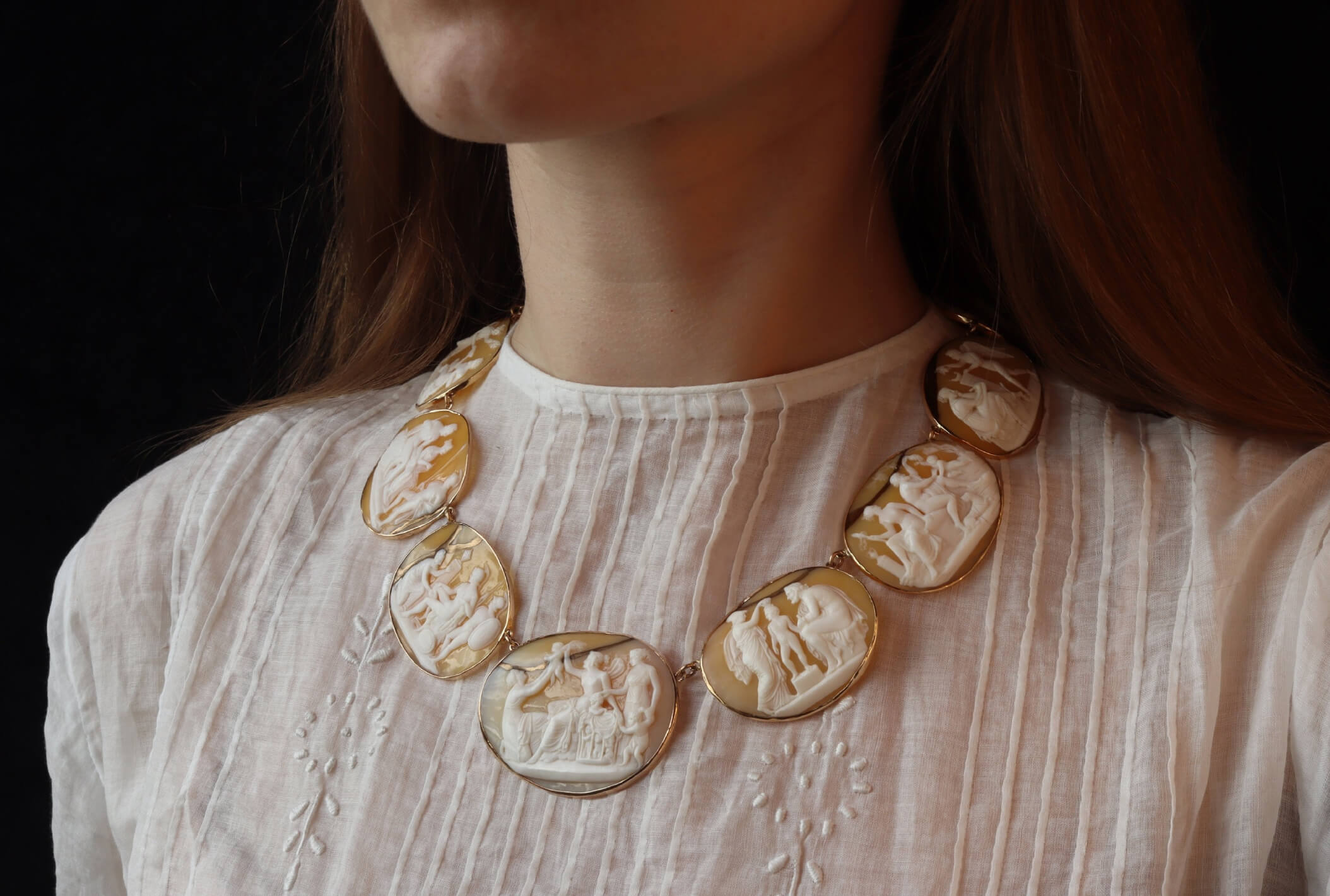
Classical jewellery is defined by precision in goldwork, balanced proportions and clear structural order. Dominant materials include high purity gold and silver, hardstone intaglios and cameos, coloured glass pastes, and occasional inlays, with enamel mainly in some Roman, especially provincial, jewellery.
Common techniques include fine granulation, filigree and wire construction, casting and chasing, engraved and carved gemstones, and hinged or articulated forms with integrated clasps and joints. Greek and Hellenistic pieces can show particularly fine granulation and wirework. Hellenistic workshops introduced more sculptural forms and greater use of colour through inlay, and Roman jewellery often uses bezel settings for polished cabochon stones and for engraved gemstones used as intaglios.
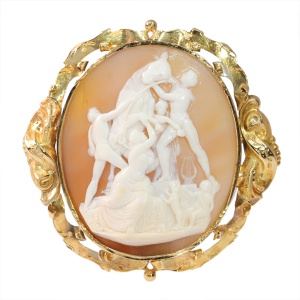
Decoration favours disciplined vegetal and architectural motifs such as palmettes, acanthus and laurel, alongside vessel motifs such as amphorae and profiles in relief.
4. Function and Meaning
Classical jewellery signalled status, piety and civic affiliation through a symbolic language that remained relatively stable across Greek and Roman contexts. Motifs such as laurel wreaths and victory crowns conveyed honour and achievement, while depictions of deities and mythological figures suggested protection and devotion. Miniature vessels, knots and geometric patterns echo themes of continuity and order in classical art, and gold carried associations of prestige and permanence. At the same time it is important to remember that perhaps most Classical jewellery style jewels were created and worn simply because their materials, colours or forms appealed, without any further intention than beauty and attraction.
5. Workshops and Exemplary Pieces
Classical jewellery was made in specialised workshops, with skills transmitted through apprenticeship rather than tied to individually recorded masters.
Surviving Greek and Hellenistic earrings, diadems and finger rings demonstrate refined granulation, filigree and miniature sculptural detail, including Hellenistic gold wreaths, hinged bracelets with animal head terminals and hardstone intaglios used as personal seals. Roman workshops broadened production through gemstone settings, glass pastes and engraved rings that reflected civic life and military culture. Objects recovered from graves, hoards and temple deposits offer a representative view of the range and craftsmanship that characterised jewellery in antiquity.
6. How to Recognise the Style
Motifs such as palmettes, acanthus and laurel wreaths, vessel motifs such as amphorae, mythological profiles and animal head terminals appear frequently, organised in clear, symmetrical compositions.
Construction tends to be precise, with joints and clasps integrated into the design. Disciplined workmanship and stable iconography mark the style across Greek and Roman contexts.
7. Related Styles and Legacy
Classical jewellery provided a foundational vocabulary for later European and Mediterranean design, while Hellenistic and Roman production also developed broader and more standardised workshop practice. The rediscovery of classical antiquity during the Renaissance and again in the eighteenth century shaped Neoclassicism and later nineteenth century revivals. Contemporary interpretations still draw on its clarity, proportion and enduring symbolic language.
8. Purpose of This Page
This page offers an overview of the historical Classical jewellery style within the context of jewellery history and design. It focuses on what is relevant from the perspective of the jewellery world and does not aim to be a full encyclopaedia on the Classical jewellery style. Instead, it strives to offer a concise and structured introduction that outlines key interpretive angles and points towards deeper study. This page is part of the Adin Glossary, a curated resource that brings documented historical knowledge into an ordered and accessible structure. Use and sharing for educational purposes are welcomed, and readers who reference or quote this page are kindly asked to mention Adin as their source.
9. Accuracy Note
Every effort has been made to present this information accurately and in line with current historical understanding. Interpretations may evolve as new research becomes available, and readers who notice points for refinement are welcome to share their insights.
10. Author Attribution
Elkan Wijnberg, Jewellery Historian and Antique Jewellery Specialist – Adin – www.antiquejewel.com