
Joseph Lucien Mignon-Falize, better known as Lucien Falize, was born in Paris on 4 August 1839. He was frustrated by the constantinterruptions to his studies caused by years of political turmoil and compensated by immersing himself in literature and historical works.His plans to attend the Ecole Centrale des Arts et Manufactures were thwarted when his father announced that he wished to make him afuture partner in the firm; Lucien reluctantly abandoned his studies and joined his father in 1856. During his apprenticeship, Lucienfamiliarized himself with all the technical skills, which would be required of him.Under his father's guidance, he continued todraw and model, and was soon equipped with sufficient knowledge to supervise the design and manufacture of the pieces created inthe workshop. Lucien was first taken to London by his father in 1853, but stayed for a longer period in 1855 when he spent six monthsat a school in Clapham run by monks. In 1861, he returned to London with his friend Charles Enot, visiting the National Gallery andWestminster Abbey, where he expressed particular admiration for the Henry VII chapel with its 'lacework of stone'; he also madeexcursions to Bushy Park and Hampton Court. It was his visit to the Crystal Palace, which made the deepest impression on him duringhis stay. The architecture of the building left him full of praise. Although he admired the Indian and Chinese exhibits, hewas particularly captivated by those galleries devoted to Egyptian and Assyrian art. The works he saw there inspired him to introduceelements from them into his later work. He was in London again in October 1862, visiting the International Exhibition on severaloccasions during his stay. This gave him the opportunity to see the largest collection of Chinese and Japanese works of art assembled todate, most of which were owned by Sir Rutherford Alcock. The Oriental lacquers, bronzes, enamels, earthenware and prints he sawthere cannot have failed to impress him, although it was only after he saw the Japanese exhibit at the 1867 Exposition Universellethat he suggested to his father that he should visit Japan. Lucien's 1862 visit to London proved significant for a different reasonaltogether. He was filled with admiration for the South Kensington Museum's enlightened educational policies, and these are an inspirationto him during his lifelong involvement with the Union Centrale. Upon returning to Paris, Falize went to see the Campana collection displayedat the Louvre, a visit no doubt prompted by works of Castellani in the archaeological taste which he had admired at the InternationalExhibition. He began to immerse himself in recent publications containing designs and motifs drawn from wide-ranging styles, includingThe Grammar of Ornament by Owen Jones, and Les Arts industriels by Labarte.It is clear from his writings that Lucien felt frustrated by the relatively slow recognition the firm had received and was hampered byhis inability to improve his situation. His youthful ambition, combined with his father's flair for imaginative and refined jewelry,eventually succeeded in making theirs a remarkably successful partnership. Lucien's search for knowledge brought him into contactwith suc savants as Alfred Darcel whom he met in 1867. In bringing his son into the firm at the age ofseventeen, Alexis had found a real collaborator; at the exhibition held by the Union Centrale des Beaux Arts appliques a l'Industriein 1869, Lucien obtained a first class medal as 'cooperateur' to his father. In 1871 Lucien's father made him a full partner inthe business. On 28 April 1871, Lucien married Louise Clementine Poulard (1850-1914) (known as Clementine), daughter of Charles Poulard. Bythis time Lucien was 32 years old. They had three sons: Andre, Alexis Eugene (born 21 May 1872), Jean Henri Lucien (born 15 April 1874),and Pierre Isidore (born 1 October 1875). Lucien made a silver watch for each of his sons when they celebrated their first communion.Lucien made extensive use of symbols in these watches to refer to his sons' personalities. On 13 March 1875 the Falize firm registered anew stamp and an insignia was designed to commemorate the event.In the exhibition organized in 1876 by the Union Centrale des Beaux-Artsappliques a l'Industrie, Lucien was a jury member and official reporter on the goldsmith's work and jewelry section of the show. Heand his father could therefore not be rewarded for their work, although several of their collaborators were singled out for prizes. The factthat the firm's pieces were well received probably encouraged Lucien to take part in the Amsterdam exhibition the following year. Sincehis father had retired after the Union Centrale show, this was the first time Lucien exhibited on his own.Lucien's long-standing desire for recognition was finally fulfilled when he participated in the 1878 Exposition Universelle in Paris.Despite the praise he had won with his father at the Union Centrale exhibitions, and on his own in Amsterdam, those smaller andmore specialized platforms could not compare with the glamour and prominence of an Exposition Universelle. To be awarded oneof the Grand Prix for his display, and granted the Legion d'honneur, must have seemed to Lucien the culmination of his ambitions. Hedescribed this period of professional success in a letter written to his son Andre many years later.Bapst suggestedto join their firms together. On 16 June 1880, the partnership between Lucien Falize and Germain Bapst was formalized. Bapst (1853-1921),the son of a jeweler Alfred Bapst and descendant of the famous crown jewelers, could expect loyal customers and friends tofollow him in this new venture. Lucien, after his recent success at the Exposition, could certainly hope to gain from the long-standing reputation of the Bapst name. Both of the new partners were widely respected for their learning and their professional skills, andmust have found kindred spirits in each other. Since Lucien Falize was the official reporter on the goldsmiths' work section ofthe Exposition Universelle of 1889, no prizes could be awarded for the firm's splendid display. As a keen member ofthe Union Centrale, Lucien understood, like his father, the importance of providing proper training to those who wished to enterthe trade. On 31 March 1892, the partnership between Bapst and Falize was dissolved. A new mark was registeredfor the firm on 21 September 1892. It was, ironically, the monogram used during the Bapst et Falize partnership, in theform of their initials separated by a diamond-set ring and a pearl, with the scrolled legend 'Adamas Margaritas'(the 'adamant' or 'unconquerable' diamond, and the pearl).In 1894, Luciens oldest son Andre joined the firm after an apprenticeship in Lucerne. In that year Lucien suffered a hugefinancial setback, having entrusted a large number of bonds to a M. Benoist who had gambled with the money and lost. In order to spareClementine and his sons, Lucien kept his anxieties concerning the firm's precarious situation to himself. According to family descendants,this heavy burden was largely responsible for the stroke he suffered in 1895, followed by another in 1896. Nevertheless, Lucientook part in the exhibition held at the Salon des Champs-Elysees in 1896. Success continued to attend his achievements. He wasappointed to the newly instituted Chair of Industrial Arts at the Musee des Arts et Metiers, and many prominent commissions werebestowed upon him. His financial problems, however, were rapidly worsening. M. Benoit's father-in-law declared that he wouldnot get the funds back unless he protected his daughter's name as well as his own. From surviving correspondence, itappears that Benoist frequently failed to keep his appointments with Lucien. The jeweler never recovered the full sum owed to him.Lucien suffered a fatal stroke on 4 September 1897.
Falize Lucien
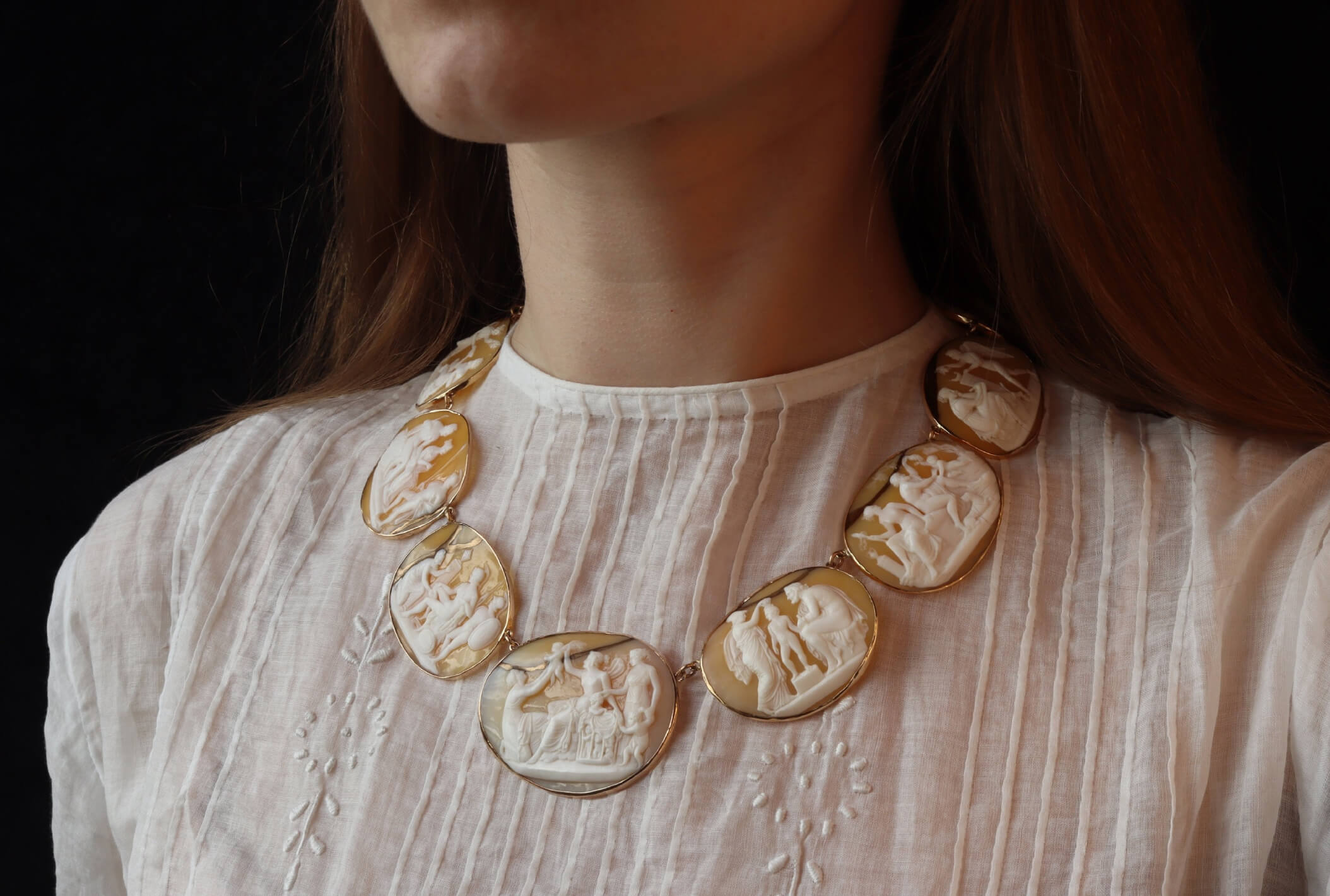
Falize Lucien
Joseph Lucien Mignon-Falize, better known as Lucien Falize, was born in Paris on 4 August 1839. He was frustrated by the constantinterruptions to his studies caused by years of political turmoil and compensated by immersing himself in literature and historical works.His plans to attend the Ecole Centrale des Arts et Manufactures were thwarted when his father announced that he wished to make him afuture partner in the firm; Lucien reluctantly abandoned his studies and joined his father in 1856. During his apprenticeship, Lucienfamiliarized himself with all the technical skills, which would be required of him.Under his father's guidance, he continued todraw and model, and was soon equipped with sufficient knowledge to supervise the design and manufacture of the pieces created inthe workshop. Lucien was first taken to London by his father in 1853, but stayed for a longer period in 1855 when he spent six monthsat a school in Clapham run by monks. In 1861, he returned to London with his friend Charles Enot, visiting the National Gallery andWestminster Abbey, where he expressed particular admiration for the Henry VII chapel with its 'lacework of stone'; he also madeexcursions to Bushy Park and Hampton Court. It was his visit to the Crystal Palace, which made the deepest impression on him duringhis stay. The architecture of the building left him full of praise. Although he admired the Indian and Chinese exhibits, hewas particularly captivated by those galleries devoted to Egyptian and Assyrian art. The works he saw there inspired him to introduceelements from them into his later work. He was in London again in October 1862, visiting the International Exhibition on severaloccasions during his stay. This gave him the opportunity to see the largest collection of Chinese and Japanese works of art assembled todate, most of which were owned by Sir Rutherford Alcock. The Oriental lacquers, bronzes, enamels, earthenware and prints he sawthere cannot have failed to impress him, although it was only after he saw the Japanese exhibit at the 1867 Exposition Universellethat he suggested to his father that he should visit Japan. Lucien's 1862 visit to London proved significant for a different reasonaltogether. He was filled with admiration for the South Kensington Museum's enlightened educational policies, and these are an inspirationto him during his lifelong involvement with the Union Centrale. Upon returning to Paris, Falize went to see the Campana collection displayedat the Louvre, a visit no doubt prompted by works of Castellani in the archaeological taste which he had admired at the InternationalExhibition. He began to immerse himself in recent publications containing designs and motifs drawn from wide-ranging styles, includingThe Grammar of Ornament by Owen Jones, and Les Arts industriels by Labarte.It is clear from his writings that Lucien felt frustrated by the relatively slow recognition the firm had received and was hampered byhis inability to improve his situation. His youthful ambition, combined with his father's flair for imaginative and refined jewelry,eventually succeeded in making theirs a remarkably successful partnership. Lucien's search for knowledge brought him into contactwith suc savants as Alfred Darcel whom he met in 1867. In bringing his son into the firm at the age ofseventeen, Alexis had found a real collaborator; at the exhibition held by the Union Centrale des Beaux Arts appliques a l'Industriein 1869, Lucien obtained a first class medal as 'cooperateur' to his father. In 1871 Lucien's father made him a full partner inthe business. On 28 April 1871, Lucien married Louise Clementine Poulard (1850-1914) (known as Clementine), daughter of Charles Poulard. Bythis time Lucien was 32 years old. They had three sons: Andre, Alexis Eugene (born 21 May 1872), Jean Henri Lucien (born 15 April 1874),and Pierre Isidore (born 1 October 1875). Lucien made a silver watch for each of his sons when they celebrated their first communion.Lucien made extensive use of symbols in these watches to refer to his sons' personalities. On 13 March 1875 the Falize firm registered anew stamp and an insignia was designed to commemorate the event.In the exhibition organized in 1876 by the Union Centrale des Beaux-Artsappliques a l'Industrie, Lucien was a jury member and official reporter on the goldsmith's work and jewelry section of the show. Heand his father could therefore not be rewarded for their work, although several of their collaborators were singled out for prizes. The factthat the firm's pieces were well received probably encouraged Lucien to take part in the Amsterdam exhibition the following year. Sincehis father had retired after the Union Centrale show, this was the first time Lucien exhibited on his own.Lucien's long-standing desire for recognition was finally fulfilled when he participated in the 1878 Exposition Universelle in Paris.Despite the praise he had won with his father at the Union Centrale exhibitions, and on his own in Amsterdam, those smaller andmore specialized platforms could not compare with the glamour and prominence of an Exposition Universelle. To be awarded oneof the Grand Prix for his display, and granted the Legion d'honneur, must have seemed to Lucien the culmination of his ambitions. Hedescribed this period of professional success in a letter written to his son Andre many years later.Bapst suggestedto join their firms together. On 16 June 1880, the partnership between Lucien Falize and Germain Bapst was formalized. Bapst (1853-1921),the son of a jeweler Alfred Bapst and descendant of the famous crown jewelers, could expect loyal customers and friends tofollow him in this new venture. Lucien, after his recent success at the Exposition, could certainly hope to gain from the long-standing reputation of the Bapst name. Both of the new partners were widely respected for their learning and their professional skills, andmust have found kindred spirits in each other. Since Lucien Falize was the official reporter on the goldsmiths' work section ofthe Exposition Universelle of 1889, no prizes could be awarded for the firm's splendid display. As a keen member ofthe Union Centrale, Lucien understood, like his father, the importance of providing proper training to those who wished to enterthe trade. On 31 March 1892, the partnership between Bapst and Falize was dissolved. A new mark was registeredfor the firm on 21 September 1892. It was, ironically, the monogram used during the Bapst et Falize partnership, in theform of their initials separated by a diamond-set ring and a pearl, with the scrolled legend 'Adamas Margaritas'(the 'adamant' or 'unconquerable' diamond, and the pearl).In 1894, Luciens oldest son Andre joined the firm after an apprenticeship in Lucerne. In that year Lucien suffered a hugefinancial setback, having entrusted a large number of bonds to a M. Benoist who had gambled with the money and lost. In order to spareClementine and his sons, Lucien kept his anxieties concerning the firm's precarious situation to himself. According to family descendants,this heavy burden was largely responsible for the stroke he suffered in 1895, followed by another in 1896. Nevertheless, Lucientook part in the exhibition held at the Salon des Champs-Elysees in 1896. Success continued to attend his achievements. He wasappointed to the newly instituted Chair of Industrial Arts at the Musee des Arts et Metiers, and many prominent commissions werebestowed upon him. His financial problems, however, were rapidly worsening. M. Benoit's father-in-law declared that he wouldnot get the funds back unless he protected his daughter's name as well as his own. From surviving correspondence, itappears that Benoist frequently failed to keep his appointments with Lucien. The jeweler never recovered the full sum owed to him.Lucien suffered a fatal stroke on 4 September 1897.
References
From: French Jewelry of the Nineteenth Century, autor: Henri Vever