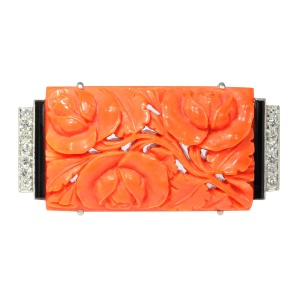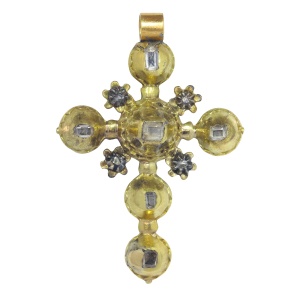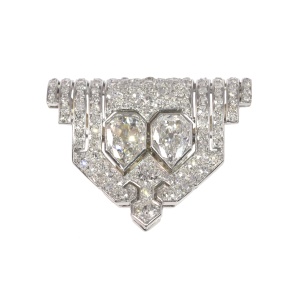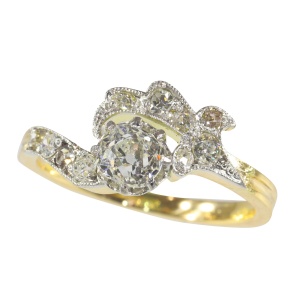

1. Introduction
Fifties jewellery reflects the renewed confidence of the decade following the Second World War. Designers embraced bold gold work, sculptural volume and a sense of movement, moving beyond wartime austerity and certain interwar modernist restraint.
Some designers drew on Art Deco era geometric vocabulary in high end diamond jewellery, yet softened strict lines into more fluid forms suited to mid century taste.
2. Cultural and Historical Influences
Fifties jewellery emerged from a world rebuilding after the Second World War, shaped by growing economic stability, technological innovation and a renewed appreciation for personal adornment. The decade looked forward, yet still drew on the aesthetic memory of earlier styles, including a more relaxed reinterpretation of Art Deco.
Advances in metalworking, improved fabrication methods and increasingly reliable coloured gold alloys encouraged experimentation with texture, movement and coloured gold. In parallel, the late Retro preference for voluminous forms evolved into sculptural gold compositions, and a lighter cultural mood supported playful and figurative jewels that suited a society eager for optimism and individual expression.
3. Visual Characteristics and Materials
Fifties jewellery ranges from refined diamond work to sculptural gold. Platinum and white gold are often used for well matched diamonds, including cluster arrangements and mountings that echo Art Deco structure but with gentler outlines and more comfortable proportions.
Alongside this, yellow and multicoloured gold favours volume, curves and tactile surfaces, including textured panels and folded or fluted construction. Bracelets, brooches and rings often combine bold presence with balanced composition. Figurative motifs, including stylised animals, are a notable feature and frequently executed in textured or multicoloured gold.
4. Function and Meaning
Fifties jewellery conveys the renewed spirit of a decade marked by stability, optimism and a growing sense of personal freedom. Sculptural gold forms suggest confidence and comfort, while softened Art Deco geometry signals continuity with the past in a more relaxed mode of elegance. At the same time it is important to remember that perhaps most Fifties jewellery jewels were created and worn simply because their materials, colours or forms appealed, without any further intention than beauty and attraction.
Playful and figurative pieces, including animal motifs in coloured gold, suggest lightness and individuality, showing how adornment could carry both charm and self-expression.
5. Notable Creators and Exemplary Pieces
Fifties jewellery was shaped by major European and American houses, as well as specialised ateliers that embraced the mid century idiom. Parisian firms such as Van Cleef & Arpels developed playful designs, including stylised animal brooches and figurative motifs executed in textured or multicoloured gold.
Makers like Sterlé introduced dynamic compositions with movement and fluidity, while houses with a strong Art Deco heritage continued to produce refined diamond jewels that softened earlier geometric forms. Together, these creators defined a decade in which technical skill and expressive form were closely aligned.
6. How to Recognise the Style
Fifties jewellery can be recognised by confident gold work, sculptural volume and a blend of modern clarity with softened geometric influence. Look for bold yet balanced forms in yellow or multicoloured gold with textured, folded or fluted surfaces.
Diamonds may appear in clusters or in refined settings that retain a geometric discipline reminiscent of Art Deco but with gentler outlines. Figurative pieces, including stylised animals and other playful motifs, are characteristic of the decade and often executed with technical finesse.
7. Related Styles and Legacy
Fifties jewellery stands at the meeting point of several design traditions. Compared with the sharper geometry of the 1930s and the heavier Retro forms, Fifties jewels feel more fluid, approachable and expressive.
It continues aspects of Art Deco through softened geometry and refined diamond work, while extending late Retro volume into more sculptural expressions. Its playful figurative pieces also anticipate the freer and more experimental jewellery of the 1960s. The decade’s legacy lies in its combination of clarity, comfort and expressive form, which helped define mid century taste and continues to influence contemporary makers seeking a balance between structure and individuality.
8. Purpose of This Page
This page offers an overview of the historical Fifties jewellery style within the context of jewellery history and design. It focuses on what is relevant from the perspective of the jewellery world and does not aim to be a full encyclopaedia on the Fifties jewellery style. Instead, it strives to offer a concise and structured introduction that outlines key interpretive angles and points towards deeper study. This page is part of the Adin Glossary, a curated resource that brings documented historical knowledge into an ordered and accessible structure. Use and sharing for educational purposes are welcomed, and readers who reference or quote this page are kindly asked to mention Adin as their source.
9. Accuracy Note
Every effort has been made to present this information accurately and in line with current historical understanding. Interpretations may evolve as new research becomes available, and readers who notice points for refinement are welcome to share their insights.
10. Author Attribution
Elkan Wijnberg, Jewellery Historian and Antique Jewellery Specialist – Adin – www.antiquejewel.com