
Any mineral (natural or synthetic) that is composed of crystallized matter and the atoms of which are regularly arranged throughout the structure, thus including the approximately 100 principalmineral species used in jewelry, e.g. all precious stones, and also other stones formerly referred to as semi-precious stones, as well as the opal (which is non-crystalline), but excluding all typesof glass and plastics.The quality of a gemstone that makes it desirable for use as jewelry (as distinguished from primarily utilitarian use) depends on varying degrees of brilliance, hardness, colour dispersion, andrefraction, on its being transparent, translucent or opaque, or colourless or of a wide range of colours, as well as being sometimes glyptic and usually susceptible of being given a polished surface,and also free of flaws.Some gemstones are identifiable superficially by colour, coolness, optic qualities, and sight, but most require some scientific examination, e.g. comparison of specific gravity, refractive index,hardness, dichroism, crystal system, absorption spectra, melting-point, etc.The names used by jewellers and many persons for most gemstones are based on long usage, and in many instances differ from the correct names now used by mineralogists. This is now regarded asregrettable (and sometimes deceptive), especially when the old names, or even some names adopted later, include with some qualifying word or geographical name a mineralogical name that is incorrectfor the particular stone (e.g. 'white sapphire', 'cape emerald', 'cornish diamond').The preferable nomenclature in most cases is to use the correct mineralogical name of the stone preceded by the particular colour, rather than a geographical name preceded the name of a stone of adifferent species, e.g. 'green tourmaline' rather than 'Ceylon peridot'. Such misnomers should be discontinued, especially now that the Gemmological Association of Great Britain has promulgated alist of admissible names, and false names can lead to prosecution for illegal misdescription.Such terms as 'Oriental' or 'Brazilian' preceding a name often are intended merely to suggest a superior variety of the enamel stone, but are misnomers if the source of the stone is elsewhere or ifthe succeeding word is the name of a stone of a different species.Most names of gemstones end with suffix '-ite', adopted in English from French, but sometimes '-ine' is used in England, e.g. 'almandine' for 'almandite'.The term 'synthetic' may properly be used as a qualifying term to designate a synthetic gemstone, provided that the stone name used is that of a natural stone to which the synthetic one corresponds,not merely one of like colour. Likewise, the term 'reconstructed' should be restricted to stones built up from fragments, not formed from powder.
Gemstone
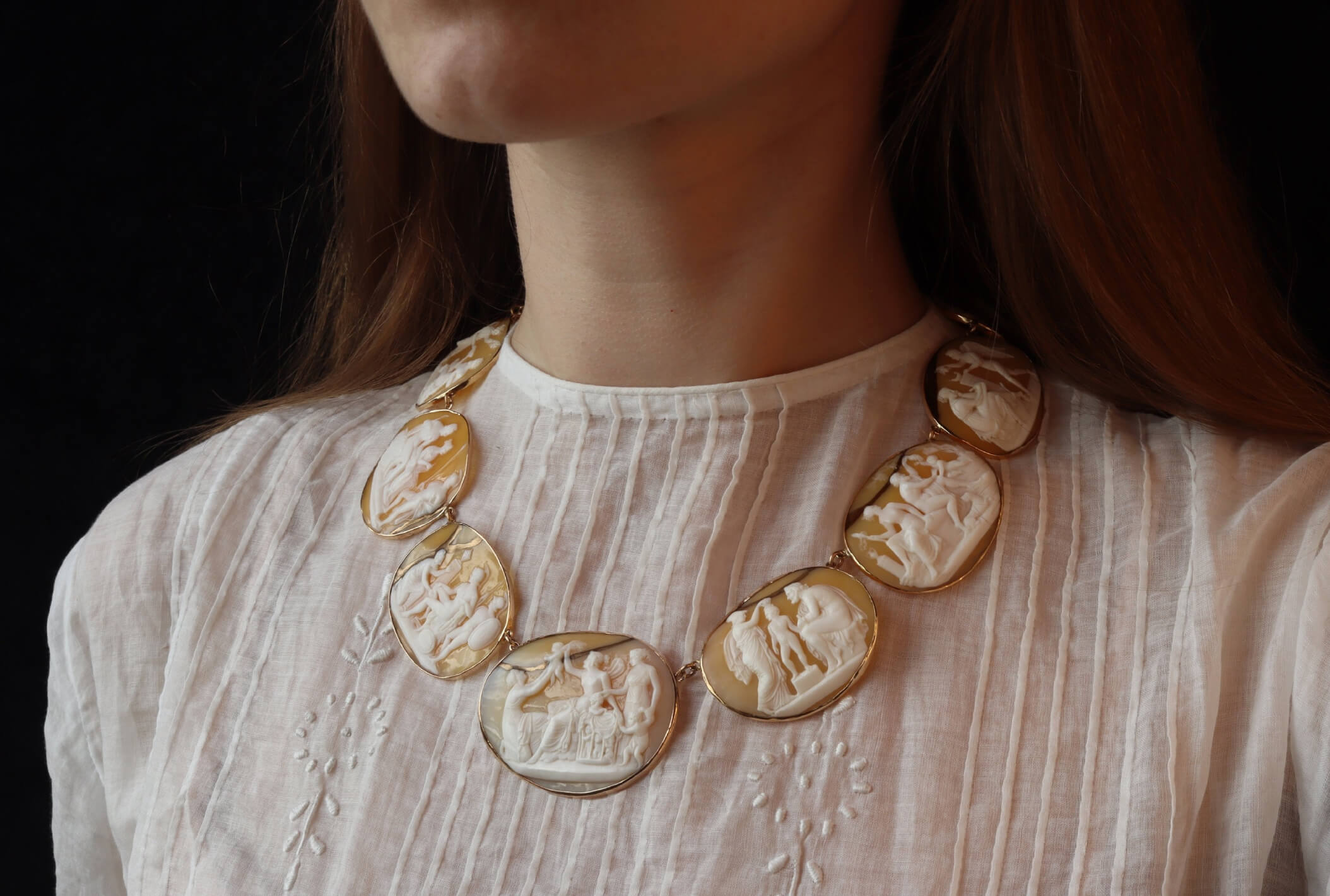
Gemstone
Any mineral (natural or synthetic) that is composed of crystallized matter and the atoms of which are regularly arranged throughout the structure, thus including the approximately 100 principalmineral species used in jewelry, e.g. all precious stones, and also other stones formerly referred to as semi-precious stones, as well as the opal (which is non-crystalline), but excluding all typesof glass and plastics.The quality of a gemstone that makes it desirable for use as jewelry (as distinguished from primarily utilitarian use) depends on varying degrees of brilliance, hardness, colour dispersion, andrefraction, on its being transparent, translucent or opaque, or colourless or of a wide range of colours, as well as being sometimes glyptic and usually susceptible of being given a polished surface,and also free of flaws.Some gemstones are identifiable superficially by colour, coolness, optic qualities, and sight, but most require some scientific examination, e.g. comparison of specific gravity, refractive index,hardness, dichroism, crystal system, absorption spectra, melting-point, etc.The names used by jewellers and many persons for most gemstones are based on long usage, and in many instances differ from the correct names now used by mineralogists. This is now regarded asregrettable (and sometimes deceptive), especially when the old names, or even some names adopted later, include with some qualifying word or geographical name a mineralogical name that is incorrectfor the particular stone (e.g. 'white sapphire', 'cape emerald', 'cornish diamond').The preferable nomenclature in most cases is to use the correct mineralogical name of the stone preceded by the particular colour, rather than a geographical name preceded the name of a stone of adifferent species, e.g. 'green tourmaline' rather than 'Ceylon peridot'. Such misnomers should be discontinued, especially now that the Gemmological Association of Great Britain has promulgated alist of admissible names, and false names can lead to prosecution for illegal misdescription.Such terms as 'Oriental' or 'Brazilian' preceding a name often are intended merely to suggest a superior variety of the enamel stone, but are misnomers if the source of the stone is elsewhere or ifthe succeeding word is the name of a stone of a different species.Most names of gemstones end with suffix '-ite', adopted in English from French, but sometimes '-ine' is used in England, e.g. 'almandine' for 'almandite'.The term 'synthetic' may properly be used as a qualifying term to designate a synthetic gemstone, provided that the stone name used is that of a natural stone to which the synthetic one corresponds,not merely one of like colour. Likewise, the term 'reconstructed' should be restricted to stones built up from fragments, not formed from powder.
References
From: An Illustrated Dictionary of Jewelry, autor: Harold Newman, publishers: Thames and Hudson