

A variety of plagioclase feldspar which has a flashing display of varied colours suggestive of the Northern Lights. Although it has a dirty-grey colour before being cut, the cut stones, when placed ina certain position (but no other) before the viewer, change tremendously, acquiring a metallic lustre and a beautiful sheen, due to the lamellar composition and the property of adularescence, which inthis stone is called 'labradorescence'.The usual colour is blue, but a variety (called 'spectrolite') found in Karelia, Finland, shows the colour of the spectrum. The stones are usually cut with a flat surface, and have been carved ascameos. The original source, c. 1770, was the island of St. Paul, Labrador.
Labradorite
This glossary entry has not yet been updated and is under review.
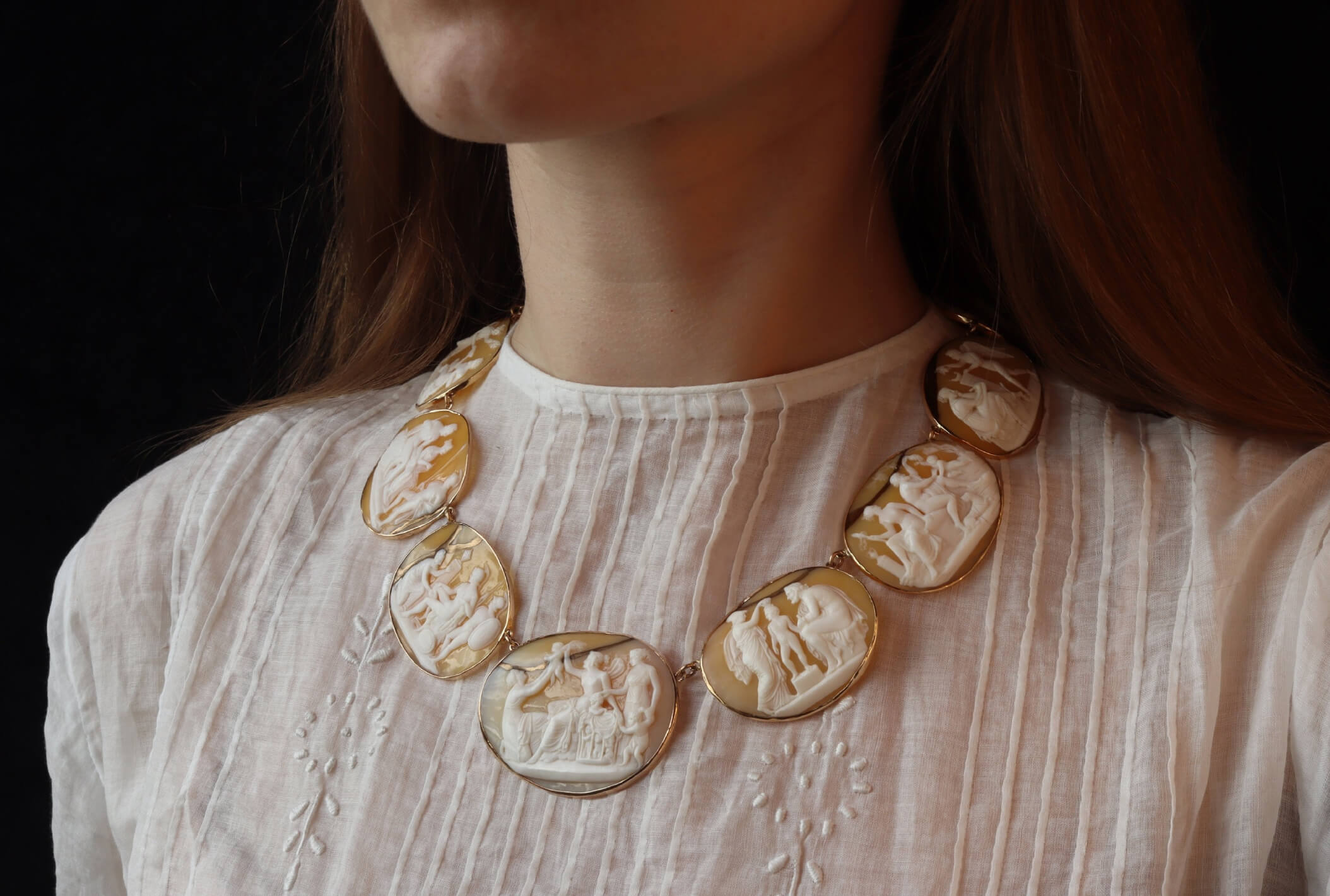
Explanation on labradorite by Adin antique jewelry
Adin Academy
Labradorite
No items found.
A variety of plagioclase feldspar which has a flashing display of varied colours suggestive of the Northern Lights. Although it has a dirty-grey colour before being cut, the cut stones, when placed ina certain position (but no other) before the viewer, change tremendously, acquiring a metallic lustre and a beautiful sheen, due to the lamellar composition and the property of adularescence, which inthis stone is called 'labradorescence'.The usual colour is blue, but a variety (called 'spectrolite') found in Karelia, Finland, shows the colour of the spectrum. The stones are usually cut with a flat surface, and have been carved ascameos. The original source, c. 1770, was the island of St. Paul, Labrador.
Also known as:
References
From: An Illustrated Dictionary of Jewelry, autor: Harold Newman, publishers: Thames and Hudson
Want to share your feedback or input on this Academy article?
Thank you! Your submission has been received!
Oops! Something went wrong while submitting the form.