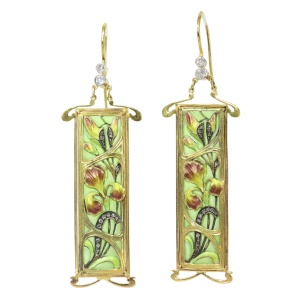

The leading French designer and maker of jewelry and glassware in the Art Nouveau style, creating new techniques and highly original designs. He wasborn at Ay, on the Maine, was apprenticed at 16 to the Parisian silversmith and jeweller, Louis Aucoq, attended art schools in Paris and London, and upon returning to Paris made designs for Aucoq,Cartier, Boucheron and others.He managed, and in 1886 took over, the workshop of Jules d'Estape. After making, in 1891-1894, several pieces of jewelry for Sarah Bernhardt, he exhibited his work at the 1894 Paris Salon, and wasacclaimed for his Art Nouveau jewelry, especially after his success at the Paris Exhibition of 1900 which led to his vogue with royalty and the aristocracy.In 1895 he attracted the attention of Calouste Gulbenkian who became his patron and friend, and who commissioned many of his jewels, of which over 140 are now owned by the Gulbenkian Foundation Museumin Lisbon. In 1902 he designed and opened galleries in his home in the Cours Ia Reine in Paris, and in 1905 opened his shop in the Place Vendôme.His jewelry combined the use of gold with gemstones and enamelling in designs which often depicted the human female figure, nude or draped, and fantasized. with butterfly or dragonfly wings. He madebracelets, necklaces, pendants, combs, and pectorals with themes emphasizing forms from nature, such as peacocks, snakes, insects, blossoming branches, orchids, etc.He often experimented with glass, using it in some articles of jewelry, and this led him to buy in 1910 a glassworks at Combes-la-Ville. Thereafter he devoted himself almost exclusively to makingglass; and from 1914 ceased making jewelry, except possibly some mounted glass plaques.Read more of René Lalique
Lalique
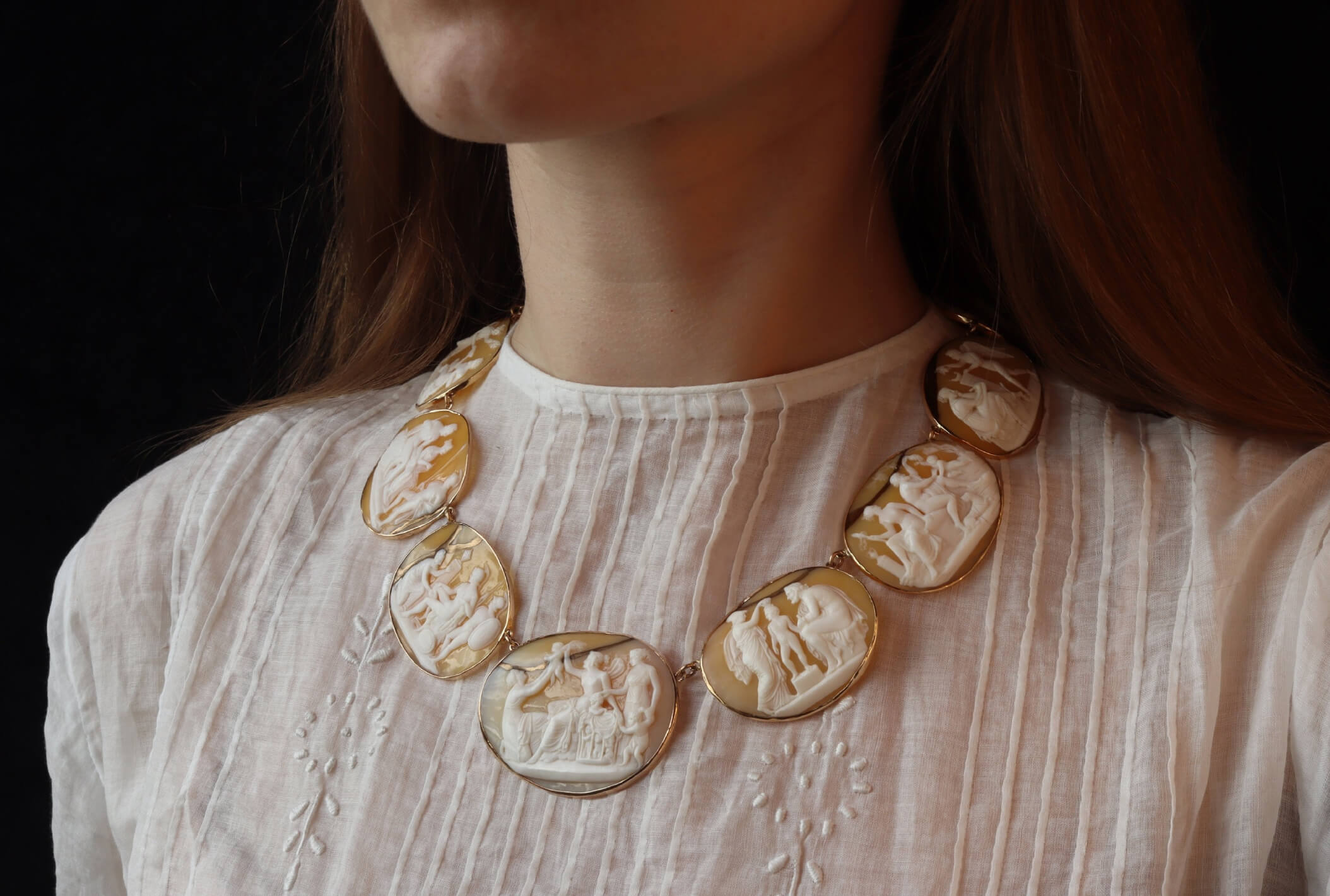
Lalique
The leading French designer and maker of jewelry and glassware in the Art Nouveau style, creating new techniques and highly original designs. He wasborn at Ay, on the Maine, was apprenticed at 16 to the Parisian silversmith and jeweller, Louis Aucoq, attended art schools in Paris and London, and upon returning to Paris made designs for Aucoq,Cartier, Boucheron and others.He managed, and in 1886 took over, the workshop of Jules d'Estape. After making, in 1891-1894, several pieces of jewelry for Sarah Bernhardt, he exhibited his work at the 1894 Paris Salon, and wasacclaimed for his Art Nouveau jewelry, especially after his success at the Paris Exhibition of 1900 which led to his vogue with royalty and the aristocracy.In 1895 he attracted the attention of Calouste Gulbenkian who became his patron and friend, and who commissioned many of his jewels, of which over 140 are now owned by the Gulbenkian Foundation Museumin Lisbon. In 1902 he designed and opened galleries in his home in the Cours Ia Reine in Paris, and in 1905 opened his shop in the Place Vendôme.His jewelry combined the use of gold with gemstones and enamelling in designs which often depicted the human female figure, nude or draped, and fantasized. with butterfly or dragonfly wings. He madebracelets, necklaces, pendants, combs, and pectorals with themes emphasizing forms from nature, such as peacocks, snakes, insects, blossoming branches, orchids, etc.He often experimented with glass, using it in some articles of jewelry, and this led him to buy in 1910 a glassworks at Combes-la-Ville. Thereafter he devoted himself almost exclusively to makingglass; and from 1914 ceased making jewelry, except possibly some mounted glass plaques.Read more of René Lalique