

A type of enamel work on copper in the style of champlevé enamel, found on much ware made at Limoges, France, in the late 12th and the 13th centuries, but frequently used on jewelry. The metal in thecells was first covered with a dark enamel, and then the design was built up with translucent enamels (usually lapis-lazuli blue or sea-green) with the dark showing through as the background, and theunenamelled metal areas generally being gilded.Painted enamel that was executed at Limoges and elsewhere during the 15th century and that has continued to be produced there today. Leading exponents of such work were Nardon Pénicaud and LéonardLimousin.
Limoges Enamel
This glossary entry has not yet been updated and is under review.
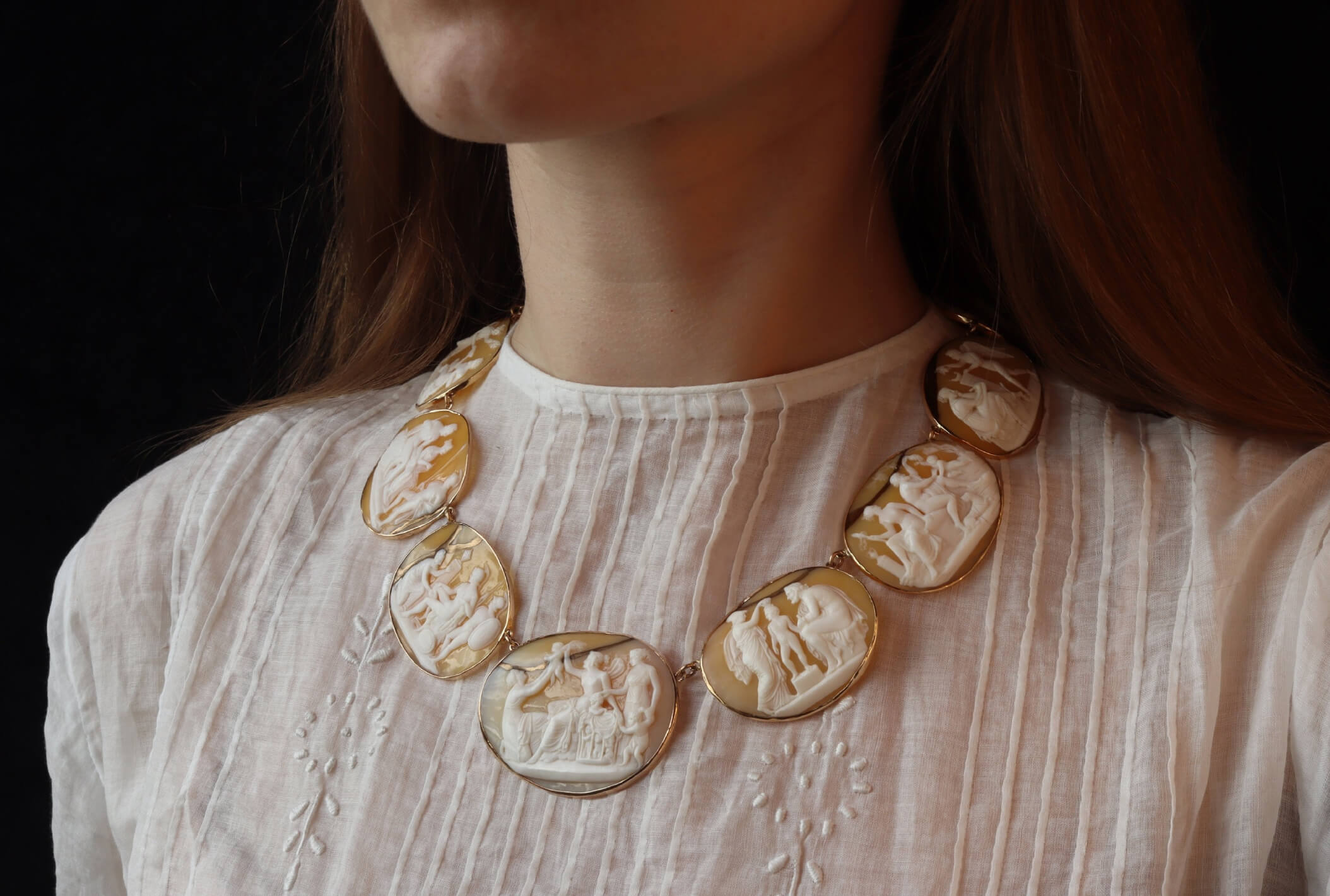
Explanation on limoges enamel by Adin antique jewelry
Adin Academy
Limoges Enamel
No items found.
A type of enamel work on copper in the style of champlevé enamel, found on much ware made at Limoges, France, in the late 12th and the 13th centuries, but frequently used on jewelry. The metal in thecells was first covered with a dark enamel, and then the design was built up with translucent enamels (usually lapis-lazuli blue or sea-green) with the dark showing through as the background, and theunenamelled metal areas generally being gilded.Painted enamel that was executed at Limoges and elsewhere during the 15th century and that has continued to be produced there today. Leading exponents of such work were Nardon Pénicaud and LéonardLimousin.
Also known as:
References
From: An Illustrated Dictionary of Jewelry, autor: Harold Newman, publishers: Thames and Hudson
Limoges porcelain
In 1768, kaolin, a rock rich in fine, white clay which is used for making porcelain, was discovered at Saint-Yrieix-la-Perche, near Limoges.Under the impetus of the progressive economist Anne Robert Jacques Turgot, Baron de Laune, who had been appointed intendant of this impoverished and isolated region, a new ceramics industry was developed,and Limoges porcelain became fa
Want to share your feedback or input on this Academy article?
Thank you! Your submission has been received!
Oops! Something went wrong while submitting the form.