
Adin Glossary: Styles and periods

Louis Philippe jewellery

circa 1830 to 1848 (France), smooth gold, laurel wreaths, hairwork

1. Introduction

Louis Philippe jewellery reflects early nineteenth century French taste for moderate elegance and sentimental expression. During the July Monarchy, makers favoured controlled neoclassical forms, restrained ornament and personal motifs.

2. Cultural and Historical Influences

Louis Philippe jewellery developed during the July Monarchy in France, a period associated with political stability and a growing bourgeois taste for refinement. Parisian workshops drew on neoclassical traditions while responding to a rising interest in personal and commemorative objects. The style met demand for jewellery that was fashionable yet measured, bridging courtly precedent and the practical preferences of an emerging middle class.

3. Aesthetic Characteristics

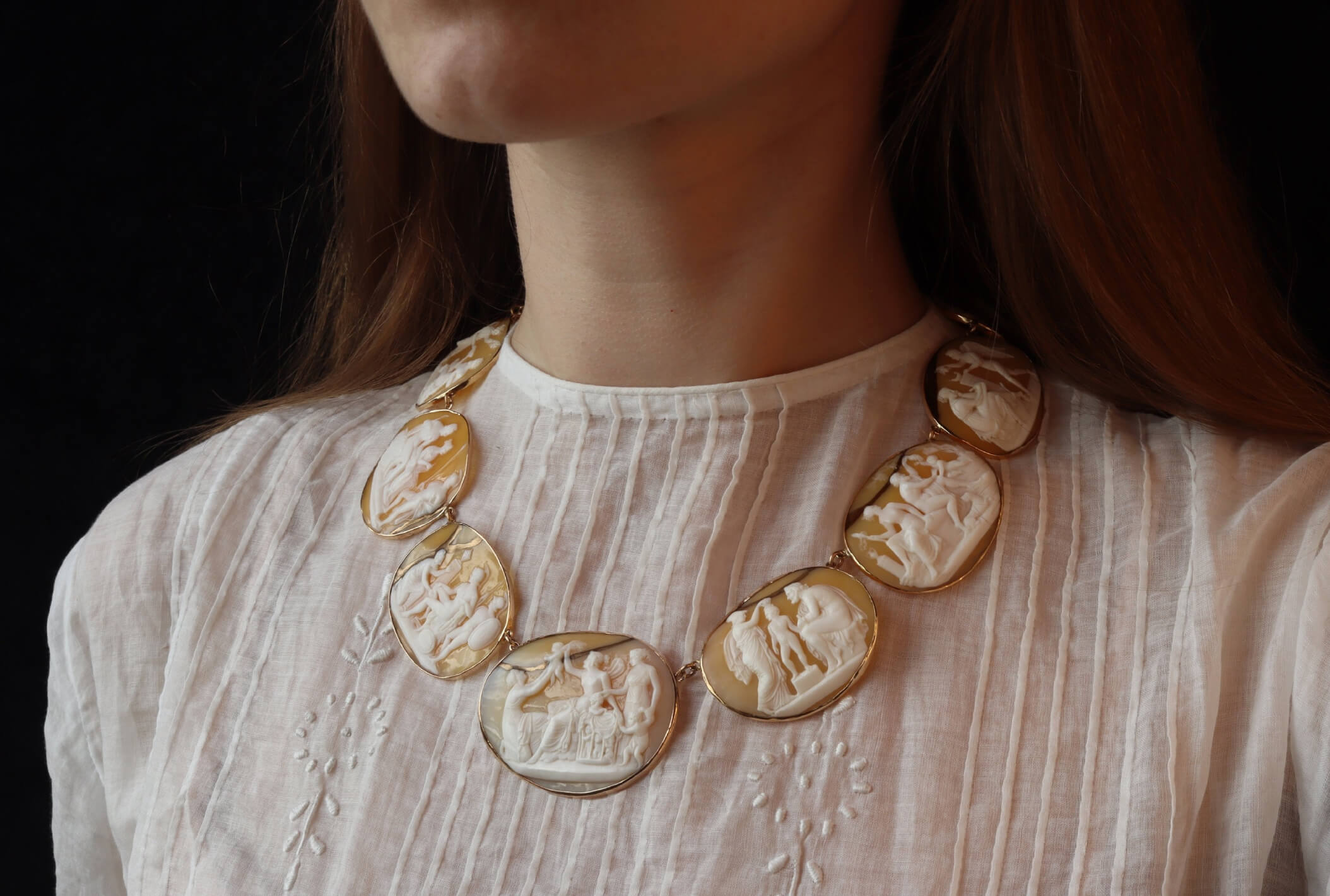
Louis Philippe jewellery is characterised by smooth gold surfaces, gentle curves and balanced proportions. Motifs are restrained, often drawing on neoclassical elements such as laurel wreaths, garlands and small scrolls. Gemstones are typically used sparingly, either in closely matched stone borders or as small accent stones, with occasional enamel, miniature portraits and lockets with hairwork adding discreet sentimental detail.

4. Function and Meaning

Louis Philippe jewellery was intended to appear refined and accessible, serving decorative and commemorative purposes.

Meaning is usually personal rather than overtly political or religious. Sentimental motifs such as lockets, hairwork, initials and miniature portraits reflect family, memory and personal connection, while restrained neoclassical elements suggest order, continuity and cultivated elegance. At the same time it is important to remember that perhaps most Louis Philippe jewels were created and worn simply because their materials, colours or forms appealed, without any further intention than beauty and attraction.

5. Workshop Practice and Exemplary Pieces

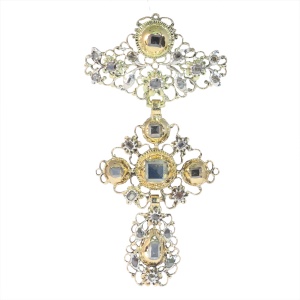
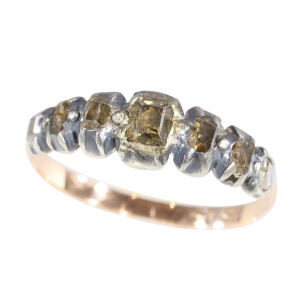
Louis Philippe jewellery was produced mainly by skilled Parisian goldsmiths and workshop artisans, many of whom are identified by their maker’s marks. Typical examples include gold brooches and pendants with subtle neoclassical motifs, lockets containing miniature portraits or hairwork, and rings with delicately engraved shoulders. These pieces demonstrate careful proportions, restrained ornament and meticulous craftsmanship.

6. Recognition in Practice

Look for gold jewellery with smooth surfaces, gentle curves and restrained neoclassical motifs, and careful attention to proportion. Gemstones, enamel or portraits tend to be small and used sparingly, and sentimental elements such as lockets or hairwork are integrated discreetly. The overall impression is composed and moderate rather than flamboyant.

7. Related Styles and Legacy

Louis Philippe follows the restrained neoclassical tendencies of the Restoration period while anticipating the more varied Historicist styles of mid nineteenth century France. It shares a focus on personal sentiment and measured elegance with Biedermeier jewellery from neighbouring Central Europe.

Elements of the style, particularly its neoclassical motifs and discreet sentimentality, continued into early Victorian jewellery and later revivalist work, and it remains valued for its balance between craftsmanship, refinement and private expression.

8. Purpose of This Page

This page offers an overview of the historical Louis Philippe jewellery style within the context of jewellery history and design. It focuses on what is relevant from the perspective of the jewellery world and does not aim to be a full encyclopaedia on the Louis Philippe jewellery style. Instead, it strives to offer a concise and structured introduction that outlines key interpretive angles and points towards deeper study. This page is part of the Adin Glossary, a curated resource that brings documented historical knowledge into an ordered and accessible structure. Use and sharing for educational purposes are welcomed, and readers who reference or quote this page are kindly asked to mention Adin as their source.

9. Accuracy Note

Every effort has been made to present this information accurately and in line with current historical understanding. Interpretations may evolve as new research becomes available, and readers who notice points for refinement are welcome to share their insights.

10. Author Attribution

Elkan Wijnberg, Jewellery Historian and Antique Jewellery Specialist – Adin – www.antiquejewel.com
Smooth, high carat gold with gentle curves, laurel garlands and closely matched stones, often in restrained borders.

circa 1830 to 1848 (France)

July Monarchy in France, French neoclassical traditions, Parisian bourgeois refinement, post-Napoleonic political stability, rise of middle class taste, Paris workshop tradition and trade regulation, interest in sentimental and commemorative objects, continuity with Restoration period design

France, Paris

laurel wreaths and garlands, small scrolls and restrained neoclassical ornament, smooth gold panels, miniature portraits, lockets with hairwork, engraved initials and monograms, simple floral accents, closely matched small stone borders and small accent gems

high carat French gold, occasional gilt metal, small, closely matched gemstones, diamonds in accent use, enamel details, miniature portraits on ivory or metal, hairwork in lockets or under glass

fine chasing and engraving, smooth polished gold surfaces with restrained relief, closed back and partially open back stone settings, construction of lockets and portrait frames, hairwork and memorial mounting, precise setting of closely matched small stones along borders

Biedermeier, Romanticism, Early Victorian, Neoclassicism, Historicism

Court Ornament (court splendour, ornament as display)

Adin Academy

Louis Philippe jewellery

No items found.

1. Introduction

Louis Philippe jewellery reflects early nineteenth century French taste for moderate elegance and sentimental expression. During the July Monarchy, makers favoured controlled neoclassical forms, restrained ornament and personal motifs.

2. Cultural and Historical Influences

Louis Philippe jewellery developed during the July Monarchy in France, a period associated with political stability and a growing bourgeois taste for refinement. Parisian workshops drew on neoclassical traditions while responding to a rising interest in personal and commemorative objects. The style met demand for jewellery that was fashionable yet measured, bridging courtly precedent and the practical preferences of an emerging middle class.

3. Aesthetic Characteristics

Louis Philippe jewellery is characterised by smooth gold surfaces, gentle curves and balanced proportions. Motifs are restrained, often drawing on neoclassical elements such as laurel wreaths, garlands and small scrolls. Gemstones are typically used sparingly, either in closely matched stone borders or as small accent stones, with occasional enamel, miniature portraits and lockets with hairwork adding discreet sentimental detail.

4. Function and Meaning

Louis Philippe jewellery was intended to appear refined and accessible, serving decorative and commemorative purposes.

Meaning is usually personal rather than overtly political or religious. Sentimental motifs such as lockets, hairwork, initials and miniature portraits reflect family, memory and personal connection, while restrained neoclassical elements suggest order, continuity and cultivated elegance. At the same time it is important to remember that perhaps most Louis Philippe jewels were created and worn simply because their materials, colours or forms appealed, without any further intention than beauty and attraction.

5. Workshop Practice and Exemplary Pieces

Louis Philippe jewellery was produced mainly by skilled Parisian goldsmiths and workshop artisans, many of whom are identified by their maker’s marks. Typical examples include gold brooches and pendants with subtle neoclassical motifs, lockets containing miniature portraits or hairwork, and rings with delicately engraved shoulders. These pieces demonstrate careful proportions, restrained ornament and meticulous craftsmanship.

6. Recognition in Practice

Look for gold jewellery with smooth surfaces, gentle curves and restrained neoclassical motifs, and careful attention to proportion. Gemstones, enamel or portraits tend to be small and used sparingly, and sentimental elements such as lockets or hairwork are integrated discreetly. The overall impression is composed and moderate rather than flamboyant.

7. Related Styles and Legacy

Louis Philippe follows the restrained neoclassical tendencies of the Restoration period while anticipating the more varied Historicist styles of mid nineteenth century France. It shares a focus on personal sentiment and measured elegance with Biedermeier jewellery from neighbouring Central Europe.

Elements of the style, particularly its neoclassical motifs and discreet sentimentality, continued into early Victorian jewellery and later revivalist work, and it remains valued for its balance between craftsmanship, refinement and private expression.

8. Purpose of This Page

This page offers an overview of the historical Louis Philippe jewellery style within the context of jewellery history and design. It focuses on what is relevant from the perspective of the jewellery world and does not aim to be a full encyclopaedia on the Louis Philippe jewellery style. Instead, it strives to offer a concise and structured introduction that outlines key interpretive angles and points towards deeper study. This page is part of the Adin Glossary, a curated resource that brings documented historical knowledge into an ordered and accessible structure. Use and sharing for educational purposes are welcomed, and readers who reference or quote this page are kindly asked to mention Adin as their source.

9. Accuracy Note

Every effort has been made to present this information accurately and in line with current historical understanding. Interpretations may evolve as new research becomes available, and readers who notice points for refinement are welcome to share their insights.

10. Author Attribution

Elkan Wijnberg, Jewellery Historian and Antique Jewellery Specialist – Adin – www.antiquejewel.com
Also known as:

References