
Orpheus

This glossary entry has not yet been updated and is under review.
Orpheus

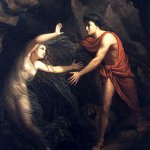
A figure from Greek mythology, king of the Thracian tribe Cicones, called by Pindar "the father of songs". His name does not occur in Homer or Hesiod, but he was known by the time of Ibycus(c.530 BC).He was a poet famous for his extraordinary way of playing the lyre. Orpheus married the nymph Eurydice and when she died he descended to the underworld trying bring her back to the earth.Playing the lyre he convinced Pluto to let her go, on the condition that he would not look back until they had reached the earth. At the very last moment he did look back because he wasso anxious to see her again and Eurydice disappeared for ever in the realm of spirits.

Explanation on Orpheus by Adin antique vintage and estate jewelry
Adin Academy

Orpheus

No items found.
Orpheus

A figure from Greek mythology, king of the Thracian tribe Cicones, called by Pindar "the father of songs". His name does not occur in Homer or Hesiod, but he was known by the time of Ibycus(c.530 BC).He was a poet famous for his extraordinary way of playing the lyre. Orpheus married the nymph Eurydice and when she died he descended to the underworld trying bring her back to the earth.Playing the lyre he convinced Pluto to let her go, on the condition that he would not look back until they had reached the earth. At the very last moment he did look back because he wasso anxious to see her again and Eurydice disappeared for ever in the realm of spirits.

Also known as:

References