
Adin Glossary: Styles and periods

Romanticism jewellery

circa 1820 to 1850 (Europe), cupids, knots, inscriptions, portraits

1. Introduction

Romanticism jewellery emerged in Europe in the early nineteenth century as artists and makers sought forms that expressed emotion and individual sentiment, often drawing on nature, poetry and personal devotion. It favoured intimate jewels that conveyed remembrance, affection or reflection, marking a shift away from the stricter formality of the preceding neoclassical era. It is recognised by gentle forms, nature inspired motifs and an emphasis on personal sentiment.

2. Cultural and Historical Influences

Romanticism in jewellery grew from a cultural movement that favoured emotion, imagination and individual experience over neoclassical restraint. Political and social change in Europe in the early nineteenth century, including shifting attitudes towards personal identity and private sentiment, encouraged intimate forms of expression. Literature, poetry and the arts celebrated nature, memory and personal devotion, and jewellers translated these themes into delicate pieces.

3. Visual Characteristics, Materials and Techniques

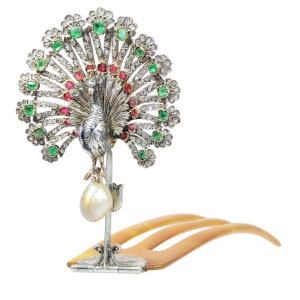
Romanticism jewellery is characterised by delicate forms and soft contours, with motifs drawn from nature such as flowers, leaves and birds, alongside cupids and other classical love figures. Gold was the dominant metal, often worked in warm tones and combined with coloured gemstones, seed pearls or enamel. Techniques such as repoussé, cannetille and granulated decoration contributed to a light, textured appearance.

4. Function and Meaning

Symbolism in Romanticism jewellery centres on affection, remembrance and reflection. Motifs such as flowers, hearts, cupids and entwined forms express personal attachment or devotion, while natural elements evoke the beauty and transience of life. Many pieces were intimate in scale, with meaning conveyed through carefully chosen forms and materials. At the same time it is important to remember that perhaps most Romanticism jewellery jewels were created and worn simply because their materials, colours or forms appealed, without any further intention than beauty and attraction.

Mourning and memorial jewels were significant across Europe, and became especially prominent in Britain through the nineteenth century. Pieces may incorporate hairwork, miniature portraits, inscriptions or symbolic motifs, turning lockets, rings or brooches into private keepsakes.

5. Notable Creators and Exemplary Pieces

Romanticism jewellery was produced across Europe by both court jewellers and skilled regional workshops. In France, makers such as Jean Baptiste Fossin, and the goldsmith jeweller Jean Valentin Morel (later joined by his son Prosper), created refined goldwork that reflected the taste for sentiment and natural motifs.

Typical jewels of the period include gold lockets, brooches with floral or poetic themes, rings set with coloured gemstones arranged in acrostic sequences, and pendants expressing affection or remembrance.

6. How to Recognise the Style

Look for warm toned gold, often worked with delicate cannetille, fine repoussé, and light textured surfaces. Pieces are usually modest in scale and may include coloured gemstones, seed pearls or enamel, with motifs such as flowers, leaves, birds, hearts, cupids or entwined elements.

7. Related Styles and Legacy

Romanticism developed from the neoclassical style but replaced its disciplined structure with softer forms rooted in nature and sentiment. Compared with Neoclassicism, Romanticism appears softer, more intimate and guided by feeling rather than strict symmetry.

It prepared the way for later nineteenth century movements such as Historicism and encouraged a growing taste for personal narrative in jewellery. Many themes introduced during the Romantic period, including symbolic motifs and intimate keepsakes, continued throughout the century, and its legacy lies in an emphasis on individual feeling that shaped both the design and purpose of jewellery in the decades that followed.

8. Purpose of This Page

This page offers an overview of the historical Romanticism jewellery style within the context of jewellery history and design. It focuses on what is relevant from the perspective of the jewellery world and does not aim to be a full encyclopaedia on the Romanticism jewellery style. Instead, it strives to offer a concise and structured introduction that outlines key interpretive angles and points towards deeper study. This page is part of the Adin Glossary, a curated resource that brings documented historical knowledge into an ordered and accessible structure. Use and sharing for educational purposes are welcomed, and readers who reference or quote this page are kindly asked to mention Adin as their source.

9. Accuracy Note

Every effort has been made to present this information accurately and in line with current historical understanding. Interpretations may evolve as new research becomes available, and readers who notice points for refinement are welcome to share their insights.

10. Author Attribution

Elkan Wijnberg, Jewellery Historian and Antique Jewellery Specialist – Adin – www.antiquejewel.com
Entwined knots, cupids and birds, with miniature portraits and inscriptions to carry affection and remembrance.

circa 1820 to 1850 (Europe)

Romantic cultural movement, reaction against Neoclassicism, early nineteenth century political and social change, rise of individual sentiment and private identity, Romantic literature and poetry, fascination with nature and memory, growth of mourning and memorial practices

France, United Kingdom

flowers and floral sprays, leaves and foliate branches, birds, hearts, cupids and classical love figures, entwined forms and knots, sentimental lockets, memorial pieces with hairwork, miniature portraits, acrostic gemstone arrangements, poetic or commemorative inscriptions

warm toned gold, coloured gemstones, seed pearls, enamel, hairwork in lockets or under glass, miniature portraits, occasional paste stones

repoussé goldwork, cannetille and fine filigree, granulated decoration and textured surfaces, closed and semi closed settings (with a gradual shift towards open backs by the 1840s), hairwork and memorial construction, engraved or enamelled inscriptions, acrostic stone settings forming words of affection

Gothic Revival, Victorian, Biedermeier

Sentimental & Domestic Romanticism (memory, emotion, intimacy)

Adin Academy

Romanticism jewellery

No items found.

1. Introduction

Romanticism jewellery emerged in Europe in the early nineteenth century as artists and makers sought forms that expressed emotion and individual sentiment, often drawing on nature, poetry and personal devotion. It favoured intimate jewels that conveyed remembrance, affection or reflection, marking a shift away from the stricter formality of the preceding neoclassical era. It is recognised by gentle forms, nature inspired motifs and an emphasis on personal sentiment.

2. Cultural and Historical Influences

Romanticism in jewellery grew from a cultural movement that favoured emotion, imagination and individual experience over neoclassical restraint. Political and social change in Europe in the early nineteenth century, including shifting attitudes towards personal identity and private sentiment, encouraged intimate forms of expression. Literature, poetry and the arts celebrated nature, memory and personal devotion, and jewellers translated these themes into delicate pieces.

3. Visual Characteristics, Materials and Techniques

Romanticism jewellery is characterised by delicate forms and soft contours, with motifs drawn from nature such as flowers, leaves and birds, alongside cupids and other classical love figures. Gold was the dominant metal, often worked in warm tones and combined with coloured gemstones, seed pearls or enamel. Techniques such as repoussé, cannetille and granulated decoration contributed to a light, textured appearance.

4. Function and Meaning

Symbolism in Romanticism jewellery centres on affection, remembrance and reflection. Motifs such as flowers, hearts, cupids and entwined forms express personal attachment or devotion, while natural elements evoke the beauty and transience of life. Many pieces were intimate in scale, with meaning conveyed through carefully chosen forms and materials. At the same time it is important to remember that perhaps most Romanticism jewellery jewels were created and worn simply because their materials, colours or forms appealed, without any further intention than beauty and attraction.

Mourning and memorial jewels were significant across Europe, and became especially prominent in Britain through the nineteenth century. Pieces may incorporate hairwork, miniature portraits, inscriptions or symbolic motifs, turning lockets, rings or brooches into private keepsakes.

5. Notable Creators and Exemplary Pieces

Romanticism jewellery was produced across Europe by both court jewellers and skilled regional workshops. In France, makers such as Jean Baptiste Fossin, and the goldsmith jeweller Jean Valentin Morel (later joined by his son Prosper), created refined goldwork that reflected the taste for sentiment and natural motifs.

Typical jewels of the period include gold lockets, brooches with floral or poetic themes, rings set with coloured gemstones arranged in acrostic sequences, and pendants expressing affection or remembrance.

6. How to Recognise the Style

Look for warm toned gold, often worked with delicate cannetille, fine repoussé, and light textured surfaces. Pieces are usually modest in scale and may include coloured gemstones, seed pearls or enamel, with motifs such as flowers, leaves, birds, hearts, cupids or entwined elements.

7. Related Styles and Legacy

Romanticism developed from the neoclassical style but replaced its disciplined structure with softer forms rooted in nature and sentiment. Compared with Neoclassicism, Romanticism appears softer, more intimate and guided by feeling rather than strict symmetry.

It prepared the way for later nineteenth century movements such as Historicism and encouraged a growing taste for personal narrative in jewellery. Many themes introduced during the Romantic period, including symbolic motifs and intimate keepsakes, continued throughout the century, and its legacy lies in an emphasis on individual feeling that shaped both the design and purpose of jewellery in the decades that followed.

8. Purpose of This Page

This page offers an overview of the historical Romanticism jewellery style within the context of jewellery history and design. It focuses on what is relevant from the perspective of the jewellery world and does not aim to be a full encyclopaedia on the Romanticism jewellery style. Instead, it strives to offer a concise and structured introduction that outlines key interpretive angles and points towards deeper study. This page is part of the Adin Glossary, a curated resource that brings documented historical knowledge into an ordered and accessible structure. Use and sharing for educational purposes are welcomed, and readers who reference or quote this page are kindly asked to mention Adin as their source.

9. Accuracy Note

Every effort has been made to present this information accurately and in line with current historical understanding. Interpretations may evolve as new research becomes available, and readers who notice points for refinement are welcome to share their insights.

10. Author Attribution

Elkan Wijnberg, Jewellery Historian and Antique Jewellery Specialist – Adin – www.antiquejewel.com
Also known as:

References