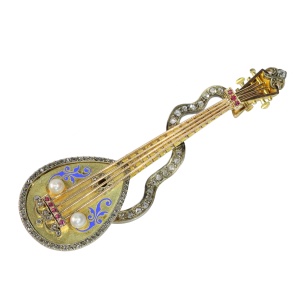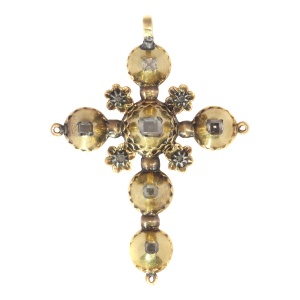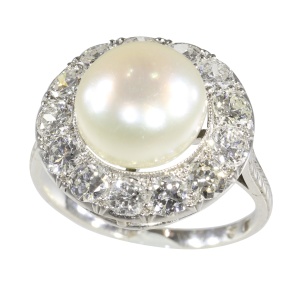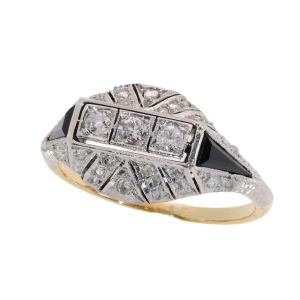

A type of jewel that is decorated with various martial trophies. The trophy was originally the arms of a defeated enemy hung by the Greeks in an oak-tree to commemorate the victory; it became adecorative motif depicting martial trophies, including helmets, shields, swords, axes, drums, etc. An example is the badge of Duke Maximilian I of Bavaria (1573-1651) in the form of an enamelledbreastplate with a flag and many projecting weapons; it is decorated with 245 faceted table cut diamonds and 6 large pear-shaped pearls, weighing together 410 grams. The reverse bears the Ducalemblem, an inscription, and the date MDCIII. The surviving bill states that it was made by the Augsburg goldsmith Georg Beuerl (Peyerl), and a painting of the Duchess Elizabeth shows it worn on herleft sleeve.
Trophy Jewelry
Trophy Jewelry
A type of jewel that is decorated with various martial trophies. The trophy was originally the arms of a defeated enemy hung by the Greeks in an oak-tree to commemorate the victory; it became adecorative motif depicting martial trophies, including helmets, shields, swords, axes, drums, etc. An example is the badge of Duke Maximilian I of Bavaria (1573-1651) in the form of an enamelledbreastplate with a flag and many projecting weapons; it is decorated with 245 faceted table cut diamonds and 6 large pear-shaped pearls, weighing together 410 grams. The reverse bears the Ducalemblem, an inscription, and the date MDCIII. The surviving bill states that it was made by the Augsburg goldsmith Georg Beuerl (Peyerl), and a painting of the Duchess Elizabeth shows it worn on herleft sleeve.
References
From: An Illustrated Dictionary of Jewelry, autor: Harold Newman, publishers: Thames and Hudson