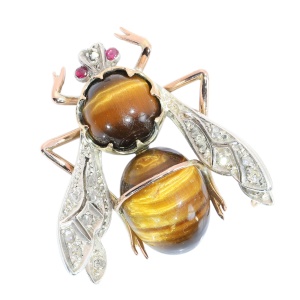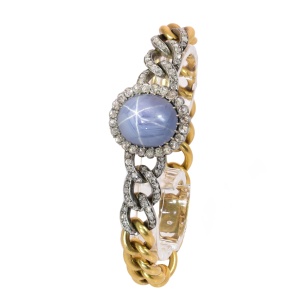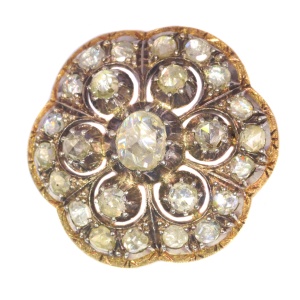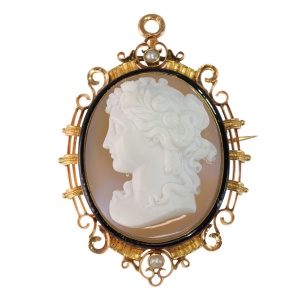

Metal in the form of a thread or a very slender rod, usually flexible and circular in section. Wire of gold has been used in jewelry from ancient times, as surface or openwork decoration or forjoining the elements of an article.Originally it was made by rolling a hammered strip of sheet metal between two very hard surfaces (e.g. stone or bronze) until circular in section, or by twisting a thin strip of metal into a spiral.Later, in the Roman era and the Middle Ages, the draw-plate was used to reduce the thickness of the wire and to stretch it. Thick wire was made by casting, and hollow wire (tubing) by hammeringstrips into grooves in wood or metal or by wrapping it around a mandrel and hammering it into shape.Beaded wire was formerly made by pressing wire into a beading tool on which depressions had been engraved. Today wire manufactured in many gauges is available to jewellers from rolling mills andmetal refiners.
Wire
Wire
Metal in the form of a thread or a very slender rod, usually flexible and circular in section. Wire of gold has been used in jewelry from ancient times, as surface or openwork decoration or forjoining the elements of an article.Originally it was made by rolling a hammered strip of sheet metal between two very hard surfaces (e.g. stone or bronze) until circular in section, or by twisting a thin strip of metal into a spiral.Later, in the Roman era and the Middle Ages, the draw-plate was used to reduce the thickness of the wire and to stretch it. Thick wire was made by casting, and hollow wire (tubing) by hammeringstrips into grooves in wood or metal or by wrapping it around a mandrel and hammering it into shape.Beaded wire was formerly made by pressing wire into a beading tool on which depressions had been engraved. Today wire manufactured in many gauges is available to jewellers from rolling mills andmetal refiners.
References
From: An Illustrated Dictionary of Jewelry, autor: Harold Newman, publishers: Thames and Hudson