
Adin Glossary: Styles and periods

Directoire jewellery

c.1795 to 1799, extending into the Consulate to c.1804, gold, laurel, urns

1. Introduction

Directoire jewellery emerged in France during the political and artistic transition between the late Louis XVI period and the rise of the Empire style. Made chiefly between 1795 and 1799, with closely related work continuing into the Consulate until 1804, these jewels favour clarity, structural simplicity and restrained neoclassical motifs. Ornament is reduced and forms become lighter, echoing the Directory preference for order and civic reason in the decorative arts.


2. Cultural and Historical Influences

Directoire jewellery developed in the years after the French Revolution, when political change and social uncertainty reshaped both demand and taste. With the collapse of the royal court, elaborate court jewels became less relevant, while republican ideals encouraged simpler, more rational forms.

At the same time, archaeological interest in antiquity remained influential. Designers adopted motifs from Greece and Rome, often associated with civic virtue and order, and the early rise of Napoleon and the Consulate helped prepare the transition toward the more monumental taste of the Empire period.


3. Visual Characteristics and Materials

Directoire jewellery is characterised by light structures, refined geometry and a disciplined neoclassical vocabulary. Layouts are balanced and symmetrical, with clear outlines and reduced ornament.

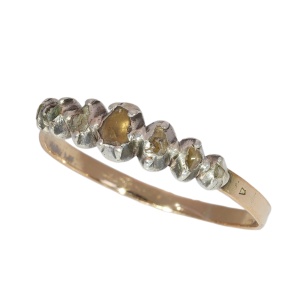
Settings are often thin yet precise, typically in polished gold, sometimes with enamel highlights, including white enamel, or with graduated pearls. Gemstones are used sparingly, commonly as small table-cut or rose-cut stones set in oval or circular settings, favouring controlled symmetry.

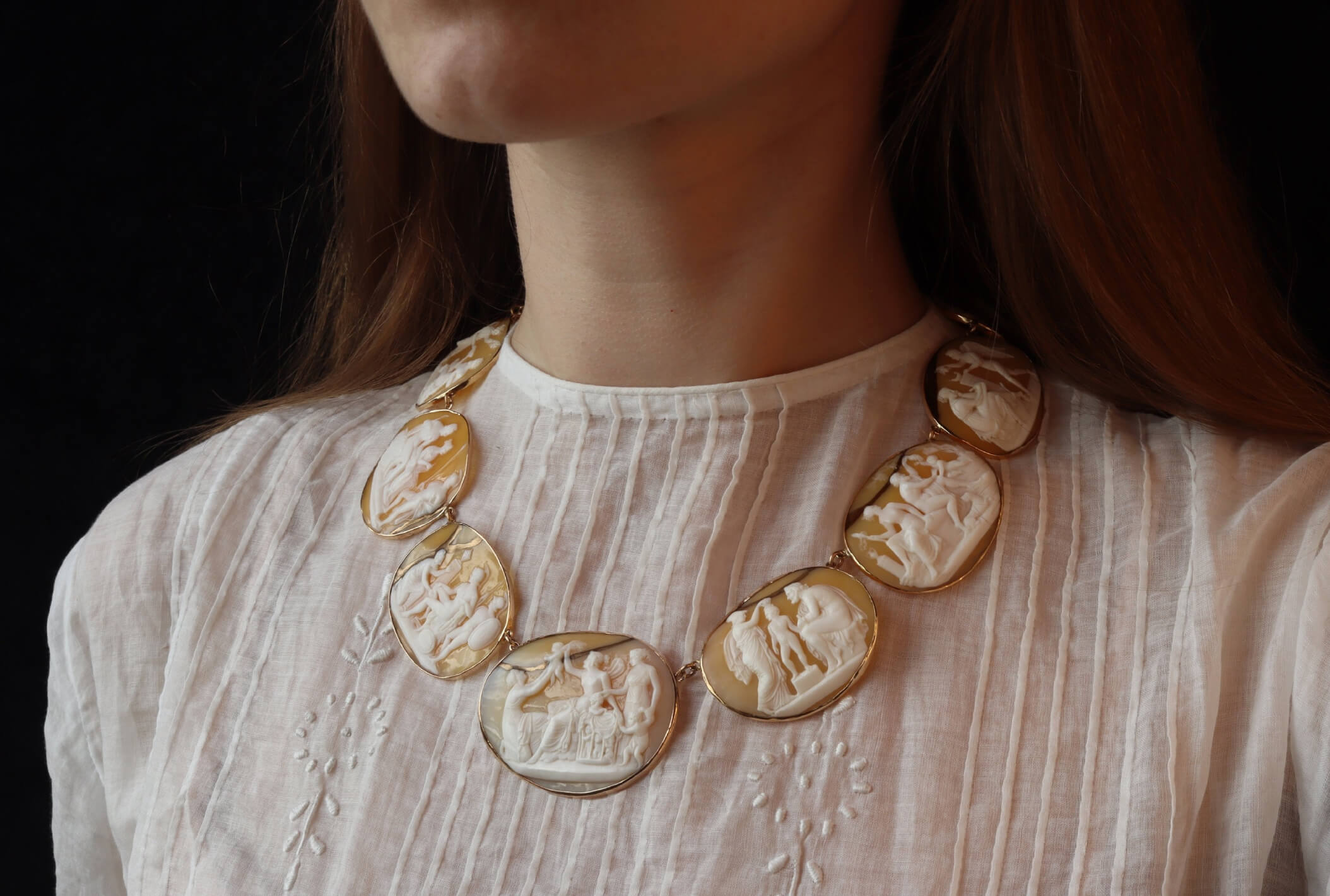
Motifs commonly include laurel wreaths, urns, geometric neoclassical frames, small relief profiles and medallions, and architectural pendant shapes derived from antiquity. Intaglios and cameos appear as focal elements, often set within restrained classical surrounds.


4. Function and Meaning

Directoire jewellery could signal values of civic order, rational thought and public virtue. Neoclassical motifs such as laurel wreaths, urns and classical profiles could reflect admiration for antiquity and its ideals of discipline and balance.

Simpler settings signalled a move away from the opulence of the ancien regime, while geometric forms expressed clarity and moderation. At the same time it is important to remember that perhaps most jewels of the Directoire jewellery style were created and worn simply because their materials, colours or forms appealed, without any further intention than beauty and attraction. These pieces communicated a measured identity suited to a society redefining its structures after the Revolution and preparing for the emerging authority of the Consulate.


5. Workshops and Exemplary Pieces

Directoire jewellery was produced in Parisian ateliers and other French centres, continuing the technical traditions of late eighteenth-century goldsmiths. Individual makers are not always recorded, and surviving pieces are often difficult to attribute securely, but they suggest consistent craftsmanship across France.

Typical jewels include light gold necklaces with neoclassical pendants, bracelets composed of fine links with restrained ornament, and rings set with oval intaglios or small profile medallions. Hairwork medallions, miniature urn motifs, and cameo settings also appear and are often framed by simple classical surrounds.


6. How to Recognise the Style

Recognise Directoire jewellery by its light construction, thin and precise goldwork, and reduced ornament in favour of balanced proportions and neoclassical outlines. Enamel highlights, sometimes in white, graduated pearls, and sparing gemstone use in small table cut or rose cut stones reinforce the restrained effect.

Compared with late Louis XVI jewels, the design is less ornate, while early Empire pieces tend to be more monumental. The Directoire style occupies the narrow space between these two expressions, marked by measured clarity and restraint.


7. Related Styles and Legacy

Directoire jewellery sits between late Louis XVI refinement and the emerging Empire style. It simplifies the ornate vocabulary of the ancien regime and anticipates the clearer lines and symbolic discipline that would define early nineteenth-century design.

The restrained neoclassical motifs of the Directoire period influenced early Empire workshops and later informed nineteenth century revivals looking back to classical antiquity. Its legacy lies in the concise transition it marks within the broader evolution of French neoclassicism.


8. Purpose of This Page

This page offers an overview of the historical Directoire jewellery style within the context of jewellery history and design. It focuses on what is relevant from the perspective of the jewellery world and does not aim to be a full encyclopaedia on the Directoire jewellery style. Instead, it strives to offer a concise and structured introduction that outlines key interpretive angles and points towards deeper study. This page is part of the Adin Glossary, a curated resource that brings documented historical knowledge into an ordered and accessible structure. Use and sharing for educational purposes are welcomed, and readers who reference or quote this page are kindly asked to mention Adin as their source.


9. Accuracy Note

Every effort has been made to present this information accurately and in line with current historical understanding. Interpretations may evolve as new research becomes available, and readers who notice points for refinement are welcome to share their insights.


10. Author Attribution

Elkan Wijnberg, Jewellery Historian and Antique Jewellery Specialist – Adin – www.antiquejewel.com
Light jewels in polished gold, geometric frames and fine link chains, balanced symmetry, clear outlines, and reduced ornament for a measured look.

circa 1795 to 1799, extending into the Consulate to circa 1804

French Revolution and Directoire politics, republican ideals of simplicity and order, late Louis XVI neoclassicism, early archaeological interest in Greece and Rome, emerging authority of Napoleon and the Consulate, changing patterns of court and civic life

France

laurel wreaths, urns, small classical profiles and medallions, geometric neoclassical frames, architectural pendant shapes, graduated pearls, simple neoclassical pendants, hairwork medallions with classical surrounds

finely worked gold, occasional enamel, sometimes white enamel, small pearls, intaglios and cameos, modest use of coloured stones

thin and precise gold construction, neoclassical engraving and relief work, enamel highlights on gold, fine link chains with light neoclassical pendants, carefully balanced symmetrical layouts

Neoclassicism, Empire, Greek, Greco-Roman

Classical & Antiquarian Classicism (ancient formal language as the core)

Adin Academy

Directoire jewellery

No items found.

1. Introduction

Directoire jewellery emerged in France during the political and artistic transition between the late Louis XVI period and the rise of the Empire style. Made chiefly between 1795 and 1799, with closely related work continuing into the Consulate until 1804, these jewels favour clarity, structural simplicity and restrained neoclassical motifs. Ornament is reduced and forms become lighter, echoing the Directory preference for order and civic reason in the decorative arts.


2. Cultural and Historical Influences

Directoire jewellery developed in the years after the French Revolution, when political change and social uncertainty reshaped both demand and taste. With the collapse of the royal court, elaborate court jewels became less relevant, while republican ideals encouraged simpler, more rational forms.

At the same time, archaeological interest in antiquity remained influential. Designers adopted motifs from Greece and Rome, often associated with civic virtue and order, and the early rise of Napoleon and the Consulate helped prepare the transition toward the more monumental taste of the Empire period.


3. Visual Characteristics and Materials

Directoire jewellery is characterised by light structures, refined geometry and a disciplined neoclassical vocabulary. Layouts are balanced and symmetrical, with clear outlines and reduced ornament.

Settings are often thin yet precise, typically in polished gold, sometimes with enamel highlights, including white enamel, or with graduated pearls. Gemstones are used sparingly, commonly as small table-cut or rose-cut stones set in oval or circular settings, favouring controlled symmetry.

Motifs commonly include laurel wreaths, urns, geometric neoclassical frames, small relief profiles and medallions, and architectural pendant shapes derived from antiquity. Intaglios and cameos appear as focal elements, often set within restrained classical surrounds.


4. Function and Meaning

Directoire jewellery could signal values of civic order, rational thought and public virtue. Neoclassical motifs such as laurel wreaths, urns and classical profiles could reflect admiration for antiquity and its ideals of discipline and balance.

Simpler settings signalled a move away from the opulence of the ancien regime, while geometric forms expressed clarity and moderation. At the same time it is important to remember that perhaps most jewels of the Directoire jewellery style were created and worn simply because their materials, colours or forms appealed, without any further intention than beauty and attraction. These pieces communicated a measured identity suited to a society redefining its structures after the Revolution and preparing for the emerging authority of the Consulate.


5. Workshops and Exemplary Pieces

Directoire jewellery was produced in Parisian ateliers and other French centres, continuing the technical traditions of late eighteenth-century goldsmiths. Individual makers are not always recorded, and surviving pieces are often difficult to attribute securely, but they suggest consistent craftsmanship across France.

Typical jewels include light gold necklaces with neoclassical pendants, bracelets composed of fine links with restrained ornament, and rings set with oval intaglios or small profile medallions. Hairwork medallions, miniature urn motifs, and cameo settings also appear and are often framed by simple classical surrounds.


6. How to Recognise the Style

Recognise Directoire jewellery by its light construction, thin and precise goldwork, and reduced ornament in favour of balanced proportions and neoclassical outlines. Enamel highlights, sometimes in white, graduated pearls, and sparing gemstone use in small table cut or rose cut stones reinforce the restrained effect.

Compared with late Louis XVI jewels, the design is less ornate, while early Empire pieces tend to be more monumental. The Directoire style occupies the narrow space between these two expressions, marked by measured clarity and restraint.


7. Related Styles and Legacy

Directoire jewellery sits between late Louis XVI refinement and the emerging Empire style. It simplifies the ornate vocabulary of the ancien regime and anticipates the clearer lines and symbolic discipline that would define early nineteenth-century design.

The restrained neoclassical motifs of the Directoire period influenced early Empire workshops and later informed nineteenth century revivals looking back to classical antiquity. Its legacy lies in the concise transition it marks within the broader evolution of French neoclassicism.


8. Purpose of This Page

This page offers an overview of the historical Directoire jewellery style within the context of jewellery history and design. It focuses on what is relevant from the perspective of the jewellery world and does not aim to be a full encyclopaedia on the Directoire jewellery style. Instead, it strives to offer a concise and structured introduction that outlines key interpretive angles and points towards deeper study. This page is part of the Adin Glossary, a curated resource that brings documented historical knowledge into an ordered and accessible structure. Use and sharing for educational purposes are welcomed, and readers who reference or quote this page are kindly asked to mention Adin as their source.


9. Accuracy Note

Every effort has been made to present this information accurately and in line with current historical understanding. Interpretations may evolve as new research becomes available, and readers who notice points for refinement are welcome to share their insights.


10. Author Attribution

Elkan Wijnberg, Jewellery Historian and Antique Jewellery Specialist – Adin – www.antiquejewel.com
Also known as:

References