
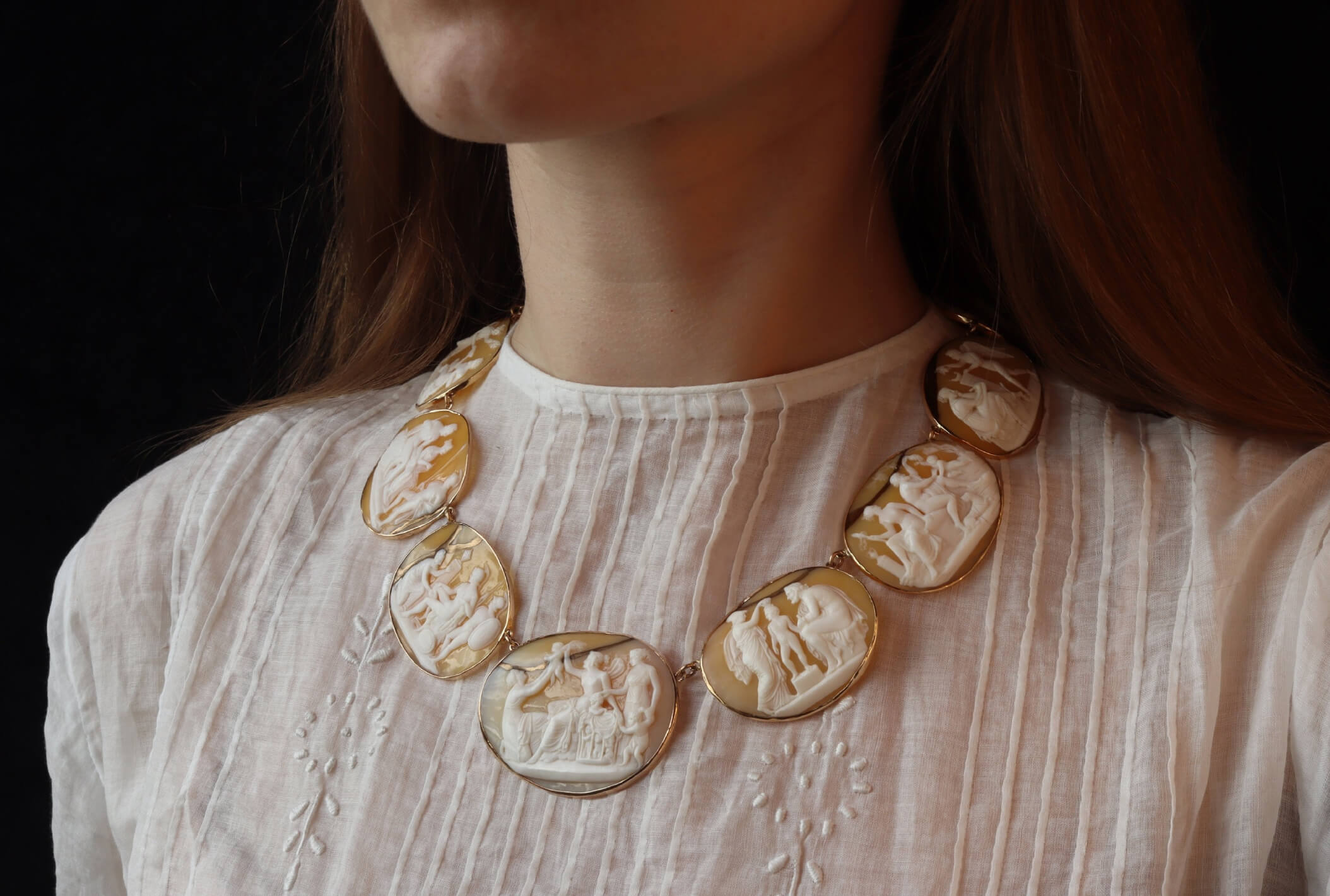
A composite stone made of two layers cemented or fused together and usually intended to appear as a whole natural stone. (The term is also applied to a triplet, made of three layers.)There are several varietiesthe two layers being of the same natural stone and of like quality, being joined together by being cemented at the girdle as to appear as a larger stone (the 'true doublet')the upper layer (the crown) being of quartz, almandine, beryl, or other inexpensive, colourless or pale coloured, natural stone and the lower layer (the base being of coloured glass or paste toprovide the colour by refraction)the upper layer consisting of the stone being imitated and the lower layer an inferior stone of the same species or of a different mineral or of glass, e.g. diamond over white corundumthe upper layer being a synthetic gemstone (e.g. synthetic beryl) over a layer of the same genuine stoneA composite opal is sometimes made as a doublet. Some doublets include a pocket of coloured liquid or a piece of coloured metal foil. Sometimes a cameo is counterfeit, made as a doublet, with theupper part being carved glass and the lower part chalcedony, or with the two parts of contrasting stones. Doublets can be produced as counterfeits, to be deceptive or fraudulent, but some are madelegitimately under recognized trade-names, e.g. the smaryll.Some doublets are superior to coloured glass imitation gemstones; if the upper layer is a gemstone it will resist scratching when tested for hardness. All such composite stones can be readilydistinguished from whole natural stones; one simple test, usually effective, is immersion in water, which causes the join to be revealed by the different light refraction of the parts.
Doublet
Doublet
A composite stone made of two layers cemented or fused together and usually intended to appear as a whole natural stone. (The term is also applied to a triplet, made of three layers.)There are several varietiesthe two layers being of the same natural stone and of like quality, being joined together by being cemented at the girdle as to appear as a larger stone (the 'true doublet')the upper layer (the crown) being of quartz, almandine, beryl, or other inexpensive, colourless or pale coloured, natural stone and the lower layer (the base being of coloured glass or paste toprovide the colour by refraction)the upper layer consisting of the stone being imitated and the lower layer an inferior stone of the same species or of a different mineral or of glass, e.g. diamond over white corundumthe upper layer being a synthetic gemstone (e.g. synthetic beryl) over a layer of the same genuine stoneA composite opal is sometimes made as a doublet. Some doublets include a pocket of coloured liquid or a piece of coloured metal foil. Sometimes a cameo is counterfeit, made as a doublet, with theupper part being carved glass and the lower part chalcedony, or with the two parts of contrasting stones. Doublets can be produced as counterfeits, to be deceptive or fraudulent, but some are madelegitimately under recognized trade-names, e.g. the smaryll.Some doublets are superior to coloured glass imitation gemstones; if the upper layer is a gemstone it will resist scratching when tested for hardness. All such composite stones can be readilydistinguished from whole natural stones; one simple test, usually effective, is immersion in water, which causes the join to be revealed by the different light refraction of the parts.
References
From: An Illustrated Dictionary of Jewelry, autor: Harold Newman, publishers: Thames and Hudson