
Articles of jewelry from Greece produced during the Hellenistic Age, from c. 323 BC (the death of Alexander the Great and the end of the Classical period) until c. 27 BC (the time of the Roman conquestof Greece) and some centuries thereafter when the Greek culture was absorbed in styles of Roman jewelry.Hellenistic culture was influenced by that of the various lands conquered by Alexander the Great, and jewelry styles in particular underwent changes. Owing to the greater availability of gold, jewelrybecame plentiful, and was characterized by three principal new features:The use of new motifs, e.g. the Heracles knot (reef knot), jars, birds, the crescent imported into Greece, and the indigenous figure of Eros.The use of new techniques, e.g. dipped enamelling and the lavish use of coloured gemstones and glass as inlays, all combined in the so-called 'polychrome style'.The introduction of new forms, e.g. earrings with suspended animal and human-head ornaments, diadems and bracelets with the Heracles knot and later with relief and filigree decoration, and fingerrings with an oval bezel set with a gemstone or a cameo.
Hellenistic Jewelry
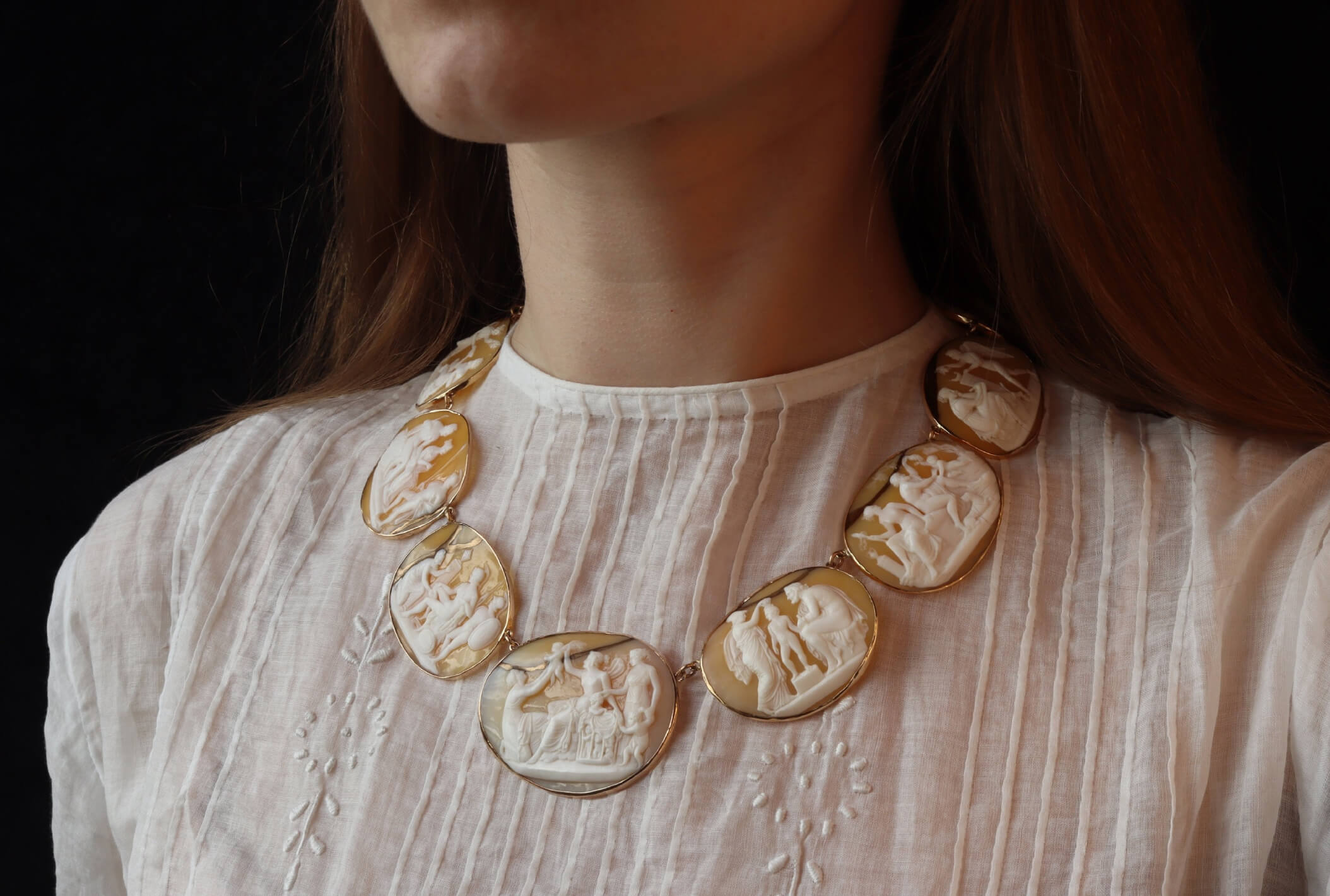
Hellenistic Jewelry
Articles of jewelry from Greece produced during the Hellenistic Age, from c. 323 BC (the death of Alexander the Great and the end of the Classical period) until c. 27 BC (the time of the Roman conquestof Greece) and some centuries thereafter when the Greek culture was absorbed in styles of Roman jewelry.Hellenistic culture was influenced by that of the various lands conquered by Alexander the Great, and jewelry styles in particular underwent changes. Owing to the greater availability of gold, jewelrybecame plentiful, and was characterized by three principal new features:The use of new motifs, e.g. the Heracles knot (reef knot), jars, birds, the crescent imported into Greece, and the indigenous figure of Eros.The use of new techniques, e.g. dipped enamelling and the lavish use of coloured gemstones and glass as inlays, all combined in the so-called 'polychrome style'.The introduction of new forms, e.g. earrings with suspended animal and human-head ornaments, diadems and bracelets with the Heracles knot and later with relief and filigree decoration, and fingerrings with an oval bezel set with a gemstone or a cameo.
References
From: An Illustrated Dictionary of Jewelry, autor: Harold Newman, publishers: Thames and Hudson