
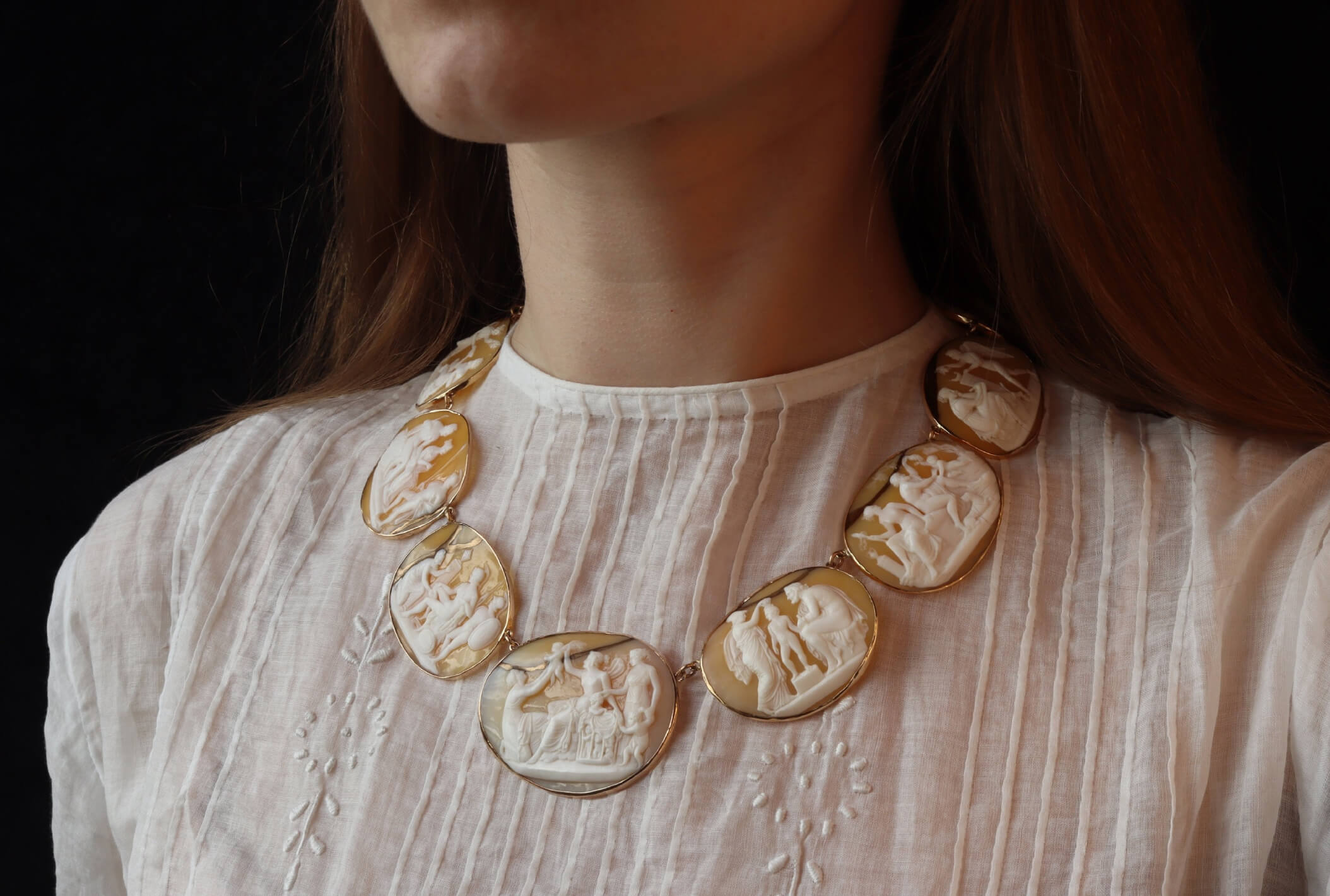
See our: jasper jewelry.A massive variety of quartz consisting of a mass of microscopic grains with many impurities that provide the various colours and render it opaque. The colours include, in addition to monochrome blackand white, shades of brown, green, yellow, blue, and red. The colours may appear (similar to agate) in stripes (called 'ribbon jasper'), bands, or zones (called 'Egyptian jasper' or orbicular jasper).The blue variety is called 'porcelain jasper'.Jasper sometimes is found as patches in other stones, e.g. bloodstone and jasper agate. A hard, fine-grained, unglazed, sometimes slightly translucent, stoneware introduced in 1764 by Josiah Wedgwood.The body or the surface is stained with metallic oxides in several colours, of which cobalt blue is most used; and decoration in relief is generally white, simulating a cameo. It has been used injewelry for buttons, brooches, and medallions.
Jasper
Jasper
See our: jasper jewelry.A massive variety of quartz consisting of a mass of microscopic grains with many impurities that provide the various colours and render it opaque. The colours include, in addition to monochrome blackand white, shades of brown, green, yellow, blue, and red. The colours may appear (similar to agate) in stripes (called 'ribbon jasper'), bands, or zones (called 'Egyptian jasper' or orbicular jasper).The blue variety is called 'porcelain jasper'.Jasper sometimes is found as patches in other stones, e.g. bloodstone and jasper agate. A hard, fine-grained, unglazed, sometimes slightly translucent, stoneware introduced in 1764 by Josiah Wedgwood.The body or the surface is stained with metallic oxides in several colours, of which cobalt blue is most used; and decoration in relief is generally white, simulating a cameo. It has been used injewelry for buttons, brooches, and medallions.
References
From: An Illustrated Dictionary of Jewelry, autor: Harold Newman, publishers: Thames and Hudson