
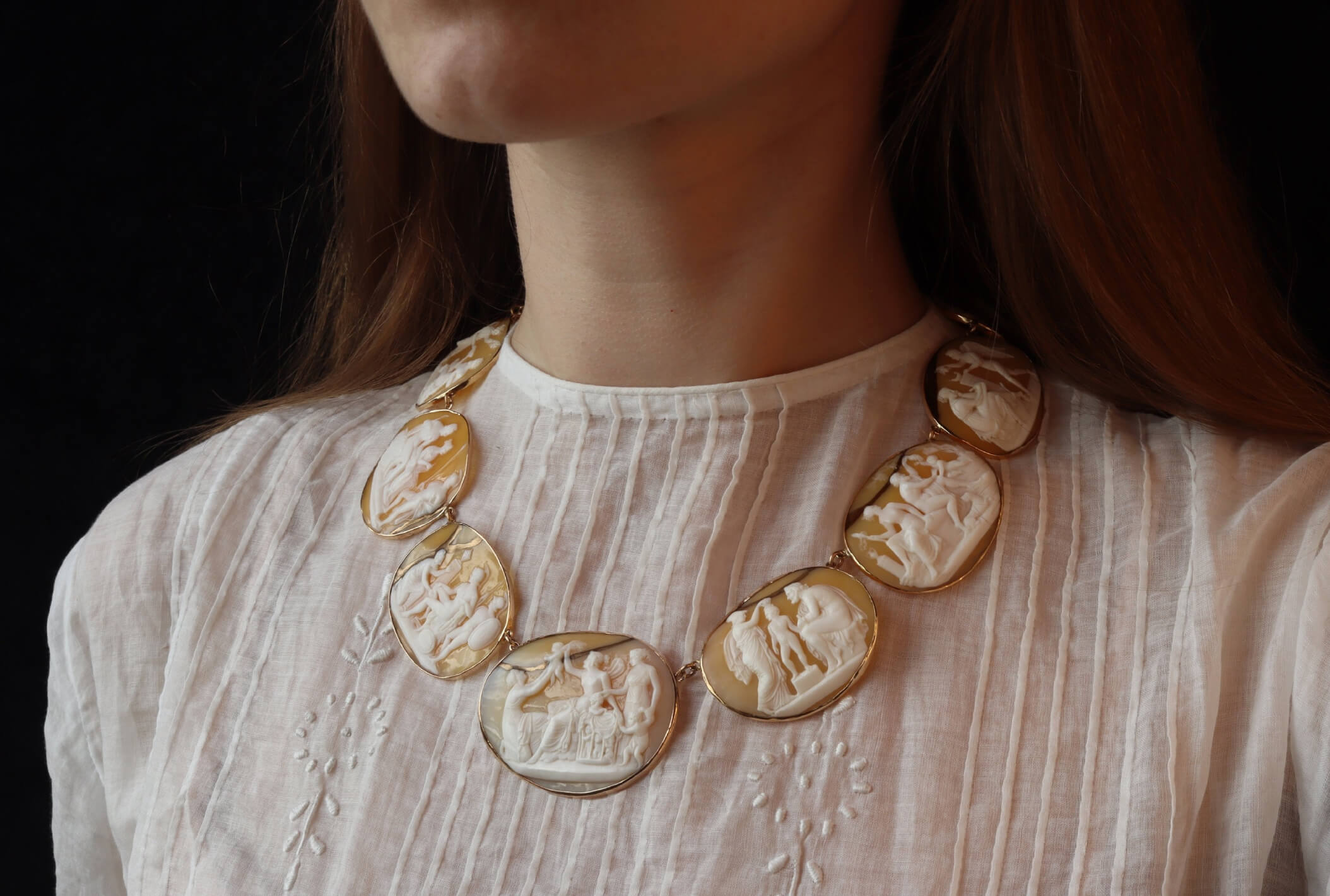
A small object used usually to fasten together two sides of a garment by being attached to one side and passed through a slit, buttonhole or loop on the other side, but sometimes being ornamental andattached to a single piece of material by a prong or sewing, without any corresponding buttonhole.Buttons were used in ancient Greece and Rome, but were first employed generally in southern Europe in the 13th century and had become useful and fashionable by the 14th century. By the 16th/17thcenturies they had come to be used almost exclusively by men and were made in highly decorative styles, including some made of gold set with gemstones or pearls, of enamelware, or ofcameos.Less luxurious varieties have been made of great variety of materials, including base metal, wood, glass, agate,jade, marcasite, cut steel, shell, bone, horn, porcelain, jasper, pinchbeck, lacquer, etc., as well as some of metal or cloth over a wood core and some embroidered with silk threads. Common varietiesare made today of mother-of-pearl, bone, horn, and synthetic materials.They are of many shapes (although usually circular), styles, and sizes. Some are attached by thread through two or more eyelets or by shank attached to the back, or by a fixed or twisting bar (assome studs or collar-button).In England a vast trade was built up at Birmingham, the principal manufactures in the 18th century being John Taylor and Matthew Boulton.
Button
Button
A small object used usually to fasten together two sides of a garment by being attached to one side and passed through a slit, buttonhole or loop on the other side, but sometimes being ornamental andattached to a single piece of material by a prong or sewing, without any corresponding buttonhole.Buttons were used in ancient Greece and Rome, but were first employed generally in southern Europe in the 13th century and had become useful and fashionable by the 14th century. By the 16th/17thcenturies they had come to be used almost exclusively by men and were made in highly decorative styles, including some made of gold set with gemstones or pearls, of enamelware, or ofcameos.Less luxurious varieties have been made of great variety of materials, including base metal, wood, glass, agate,jade, marcasite, cut steel, shell, bone, horn, porcelain, jasper, pinchbeck, lacquer, etc., as well as some of metal or cloth over a wood core and some embroidered with silk threads. Common varietiesare made today of mother-of-pearl, bone, horn, and synthetic materials.They are of many shapes (although usually circular), styles, and sizes. Some are attached by thread through two or more eyelets or by shank attached to the back, or by a fixed or twisting bar (assome studs or collar-button).In England a vast trade was built up at Birmingham, the principal manufactures in the 18th century being John Taylor and Matthew Boulton.
References
From: An Illustrated Dictionary of Jewelry, autor: Harold Newman, publishers: Thames and Hudson