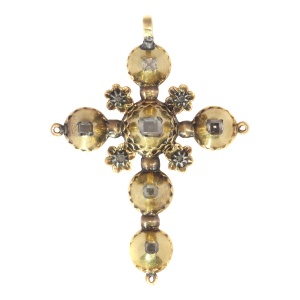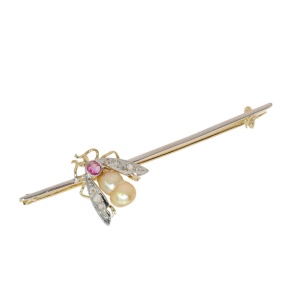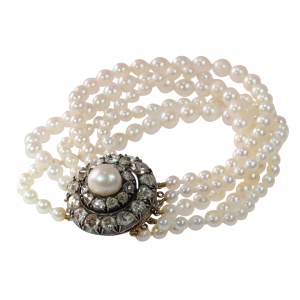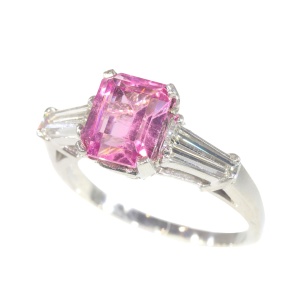

See our: fish jewelry.Shagreen is also known as Shark or Stingray skin/leather. Applications used in furniture production date as far back as the Art Deco period. The word"Shagreen" originates from France and is commonly confused with a shark skin and stingray skin combination.Shagreen is a type of roughened untanned leather, formerly made from a horse's back, or that of an onager (wild ass), and typically dyed green. Shagreen is now commonly made of the skins of sharks andrays. The word derives from the French chagrin (anxiety, annoyance - a reference to the rasping surface of the leather) which in turn is said to have developed from the Turkish sagri, literally, theback of a horse. Shagreen has an unusually rough and granular surface, and is sometimes used as a fancy leather for book bindings, pocket-books and small cases, as well as its more utilitarian uses inthe handles of swords and daggers, where slipperiness is a positive disadvantage.Shagreen was traditionally prepared by embedding plant seeds (often Chenopodium) in the untreated skin while soft, covering the skin with a cloth, and trampling them into the skin. When the skin wasdry the seeds were shaken off, leaving the surface of the leather covered with small indentations.In the 17th and early 18th centuries, however, the term "shagreen" began to be applied to a leather made from sharkskin or the skin of a rayfish (probably the pearl ray, Hypolophus sephen). This formis also termed sharkskin or galuchat. Such skins are naturally covered with round, closely set, calcified papillae called placoid scales, whose size is chiefly dependent on the age and size of theanimal. These scales are ground down to give a roughened surface of rounded pale protrusions, between which the dye (again, typically green vegetable dye) shows when the material is coloured from theother side. This latter form of shagreen was first popularised by Jean-Claude Galluchat (d. 1774), a master leatherworker in the court of Louis XV of France. It quickly became a fashion amongst theFrench aristocracy, and appears to have migrated throughout Europe by the mid-18th century.
Shagreen Or Fish Skin
Shagreen Or Fish Skin
See our: fish jewelry.Shagreen is also known as Shark or Stingray skin/leather. Applications used in furniture production date as far back as the Art Deco period. The word"Shagreen" originates from France and is commonly confused with a shark skin and stingray skin combination.Shagreen is a type of roughened untanned leather, formerly made from a horse's back, or that of an onager (wild ass), and typically dyed green. Shagreen is now commonly made of the skins of sharks andrays. The word derives from the French chagrin (anxiety, annoyance - a reference to the rasping surface of the leather) which in turn is said to have developed from the Turkish sagri, literally, theback of a horse. Shagreen has an unusually rough and granular surface, and is sometimes used as a fancy leather for book bindings, pocket-books and small cases, as well as its more utilitarian uses inthe handles of swords and daggers, where slipperiness is a positive disadvantage.Shagreen was traditionally prepared by embedding plant seeds (often Chenopodium) in the untreated skin while soft, covering the skin with a cloth, and trampling them into the skin. When the skin wasdry the seeds were shaken off, leaving the surface of the leather covered with small indentations.In the 17th and early 18th centuries, however, the term "shagreen" began to be applied to a leather made from sharkskin or the skin of a rayfish (probably the pearl ray, Hypolophus sephen). This formis also termed sharkskin or galuchat. Such skins are naturally covered with round, closely set, calcified papillae called placoid scales, whose size is chiefly dependent on the age and size of theanimal. These scales are ground down to give a roughened surface of rounded pale protrusions, between which the dye (again, typically green vegetable dye) shows when the material is coloured from theother side. This latter form of shagreen was first popularised by Jean-Claude Galluchat (d. 1774), a master leatherworker in the court of Louis XV of France. It quickly became a fashion amongst theFrench aristocracy, and appears to have migrated throughout Europe by the mid-18th century.
References
From: Wikipedia