

A ware made in Egypt, from before 3000 BC, of ground quartz fused by the use of an alkali and covered with a glaze made of a similarly produced material, but coloured (usually green to dark blue,sometimes other colours) and finely pulverized.The term 'faience' is incorrect, since the body is not pottery and the glaze contains no tin oxide as in the case of glazed faience. Examples of such ware are the mummiform ushabti tomb figures, andalso examples of jewelry such as beads, finger-rings, necklaces, and scarabs. The glaze employed was an early forerunner of similar objects made of glass.
Egyptian Faience
This glossary entry has not yet been updated and is under review.
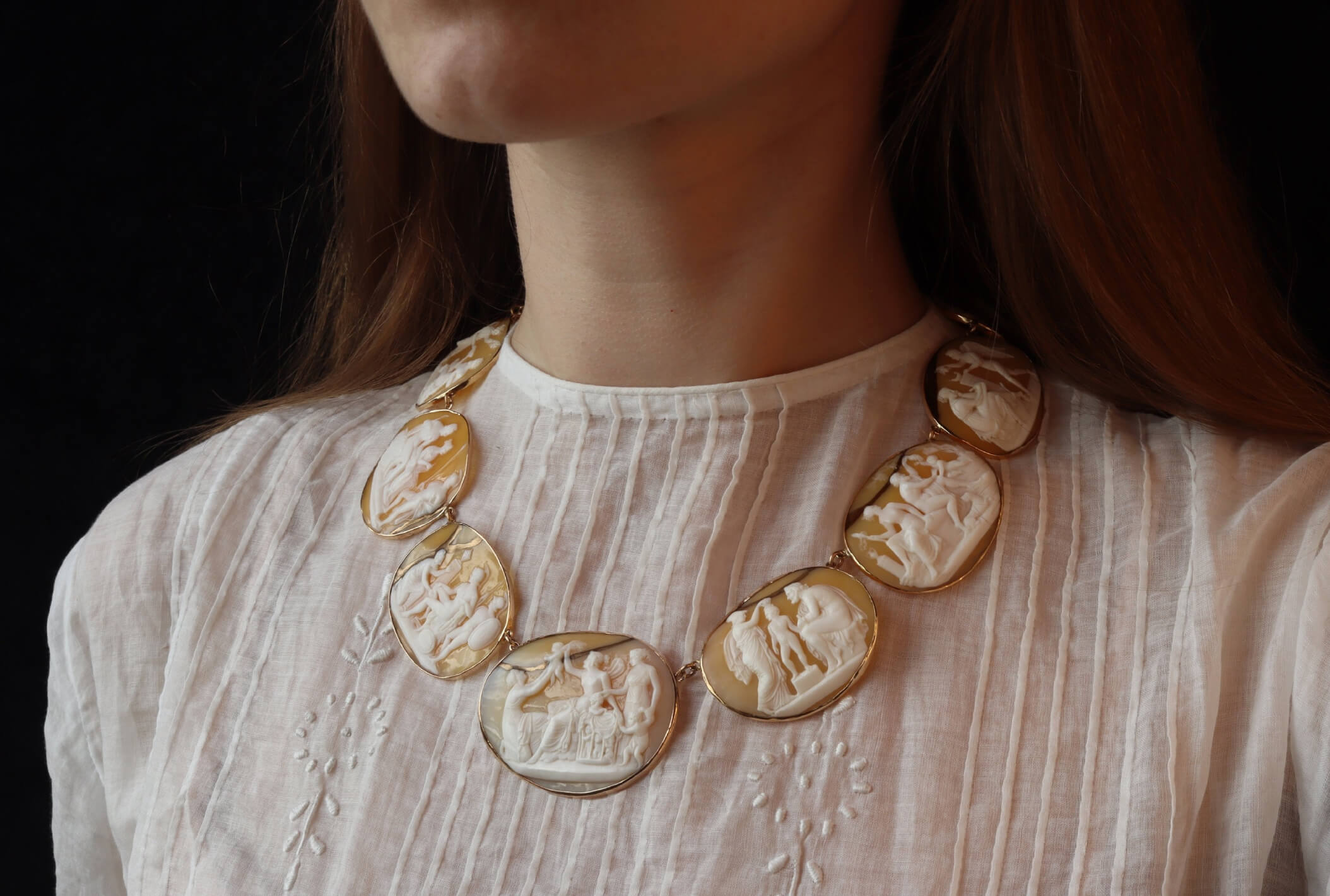
Explanation on Egyptian faience by Adin antique jewelry
Adin Academy
Egyptian Faience
No items found.
A ware made in Egypt, from before 3000 BC, of ground quartz fused by the use of an alkali and covered with a glaze made of a similarly produced material, but coloured (usually green to dark blue,sometimes other colours) and finely pulverized.The term 'faience' is incorrect, since the body is not pottery and the glaze contains no tin oxide as in the case of glazed faience. Examples of such ware are the mummiform ushabti tomb figures, andalso examples of jewelry such as beads, finger-rings, necklaces, and scarabs. The glaze employed was an early forerunner of similar objects made of glass.
Also known as:
References
From: An Illustrated Dictionary of Jewelry, autor: Harold Newman, publishers: Thames and Hudson
Want to share your feedback or input on this Academy article?
Thank you! Your submission has been received!
Oops! Something went wrong while submitting the form.