

Chronicles

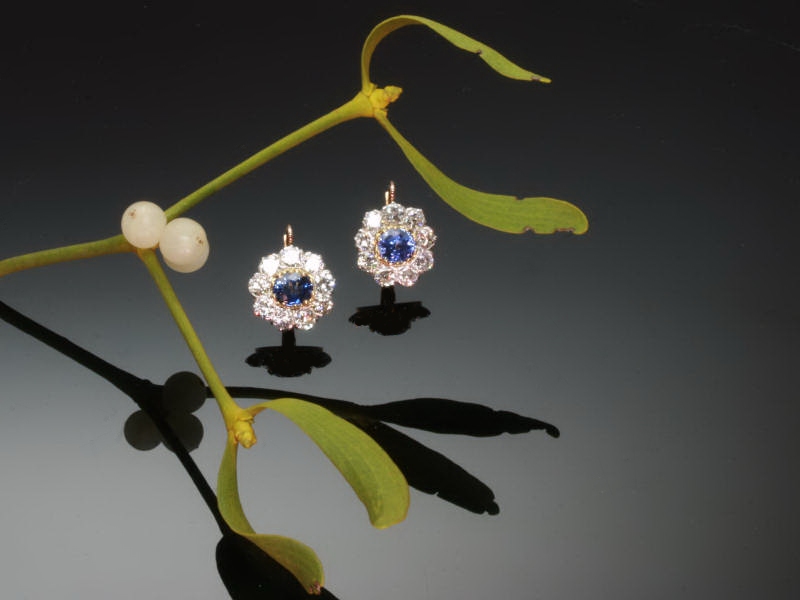
Sorry dear, it's going to be another frugal Christmas this year
"I spent all our Christmas decoration budget on these beautiful earrings for you... I hope you don't mind?"
Click here to read more about these diamond and sapphire cluster earrings.

Just imagine wearing a Medieval 700 year old brooch!
This brooch was offered to us in the shop in this condition. Made somewhere between 1300 and 1400 (always hard to pin-point exactly), we decided to leave it untouched, as we believe that any repair or alteration to this jewel would detract from its genuine character.
What do we see? Born as a cross, with a centre stone that is either ruby or spinel and three remaining settings, most likely for the same type of stone as in the centre. There are three remaining settings, as it is obvious that there was a fourth. The little pins sticking out of the centre were most likely meant to keep pearls in place. We can still see the rubbed ends of the pins, showing a sort of riveting technique. We also think the brooch has been in the ground for a long time, long enough for the pearls to have dissolved.
It still has its original stick pin and closure. Just imagine when people ask you, "What strange thing are you wearing?" and you can say that it's a piece that is some 700 years old! An extraordinary piece with true charisma!
Click here to see this charismatic brooch.

Mistakes that can be made when buying antique jewellery:

Papal cross with hidden space, from the longest reigning pope in history
Two extraordinary characteristics in one piece of antique jewellery: a papal jewel and a hidden space! Finding an original piece of antique jewellery with papal arms is very rare, even for us. And finding one that commemorates a unique situation in papal history is even rarer. The coat of arms on this cross belongs to Pope Pius IX, who was the longest reigning pope in history (31 years).
This unique bishop's cross is made of solid 18K warm yellow gold and bears the papal coat of arms on one side and a Latin text on the other. The Latin text on the back explains that this cross was given to (arch)bishops at the pope's golden episcopal jubilee in 1877 (MDCCCLXXVII).
As the coat of arms is attached to the cross with little golden screws, we decided to carefully open it and discovered a secret compartment! Upon closer examination, we found that it was filled with some darker coloured material (see picture on the description page of this jewel). We did not want to touch it, so we do not know what it is, but we wouldn't be surprised if it were some sort of relic. Normally, we clean all jewellery before offering it for sale, but for obvious reasons, we did not touch this jewel to preserve its original condition.
Click here to see this intriguing cross.


MOOOOHAHAH HAPPY HALLOWEEN !!!!!!! (This is as scary as we can be)
What an intriguing bangle we have here. Its centre stone is a truly vivid green emerald, flanked by three-dimensionally crafted human heads in gold. A typical product of French Haute Joaillerie (highest quality jeweller's craftsmanship) presented in a box by Bapst & Falize. Click the picture to read more about it.
Click here to see this intriguing bangle.

Enjoy jewellery with a history. Genuine Vintage and Antique Rings
Stylish Women Prefer: Adin Antwerp
Next time you attend a smart house party, try this test: Ask every woman there where she bought the antique ring she is wearing. It is almost certain that the majority will tell you “Adin in Antwerp.” But that is only natural. Adin was the first to discover that an antique ring is no longer just a cosmetic; it's a style accessory.
Fashionable women everywhere look to Adin for their antique rings as surely as they look to Paris for styles in clothes. Adin antique rings retain their lustre longer. And as everyone knows, they sparkle and shine.
Try Adin antique rings. Continuously fresh stock coming in! Fashion right!
Click here to see all our real antique rings.

Natural orient pearl necklace. Rare!
In contrast to cultured pearls, the most valuable pearls occur spontaneously in the wild, but they are extremely rare. These wild pearls are referred to as natural pearls. The finest quality natural pearls have been highly valued as gemstones and objects of beauty for many centuries, and because of this, the word "pearl" has become a metaphor for something very rare, fine, admirable, and valuable. We are proud to have some real natural pearl necklaces in our collection and invite you to take a look at them.
Click here to see all our natural pearl necklaces.

BE HAPPY! GO ADIN!
Perfect customer service? You bet. Scientific tests, conducted by three independent consulting laboratories (mothers of the Adin team members), prove that the folks at Adin are nicer than those at any other leading brand.
Rich taste and perfect quality? Absolutely. The full, rich experience of truly fine antique jewellery. Only fine antique jewellery gives you both real happiness and refined taste. And Adin means fine antique jewellery. So, enjoy the delightful combination that brings perfect happiness and rich, genuine taste.
Be Happy – Go Adin!

Garden of Adin's latest gossip: Micromosaic Butterfly and Ladybug seen together!
Micromosaic is made from many small adjacent pieces (tesserae) of inlaid varicoloured glass or stone arranged to form a picture or design. For articles of jewellery, the mosaic was usually made in the form of medallions set in brooches, pendants, necklaces, finger rings, earrings, parures, etc.
Such work has been done principally in Italy, with some pieces executed with skill and artistry in the 19th century. However, many pieces have been made in recent years as tourist souvenirs, with large tesserae of stone or glass that are roughly set, sometimes with painted portions. Pieces of good quality were mounted in gold frames, including some made by the Casa Castellani in Rome. The fashion for mosaic jewellery in England was mainly in the period 1820-60.
Mosaic work in jewellery was of two types:
- Roman or Byzantine mosaic, with the tesserae made of glass, set into molten glass, and fused together.
- Florentine mosaic. (Venetian mosaic) made of slices of coloured glass canes, usually making a millefiori pattern, was seldom used for pieces of jewellery.
In both types, the decorative motifs were often pictorial views of ancient ruins or famous buildings, and in the 1820s, Egyptian motifs. By the mid-19th century, the usual subjects had become more sentimental, e.g. flowers and pet dogs. The Florentine mosaic was imitated in Derbyshire, England, in the late 18th to early 19th century, by using local black marble and feldspar.
Click here to see this beautiful micromosaic pendant.

About griffins and dragons
Dear Friends,
Our apologies for not bringing our weekly email to your inbox for some weeks now. We have been very busy co-organising the first dragon boat festival ever in Belgium. The opening of the festival will be conducted by the Chief Executive of Hong Kong, the Honourable Donald Tsang!
If you have the chance to be in Antwerp on Saturday, 10th September, you are most welcome to visit the First Port of Antwerp Dragon Boat Festival . Even better: let us know you are planning to come, and we'll supply you with a VIP village entrance card!
Click here to see our griffin jewellery.

Do you know this man? Because we don't.
Here we have another antique jewellery riddle. We believe this man could be a French or English general from the Napoleonic era, but we have no clue which general he could be. We have considered Auguste de Marmont and Guy-Victor Duperré, but we couldn't find any resemblance with our stickpin general. The cross our general is wearing here has four arms, whereas the typical French order has five.
The sash and epaulets might also be important indicators. Or does the haircut style suggest a British officer instead of a French one? Visitors of our site have already suggested this could be Lord Horatio Nelson or the Duke of Wellington. However, we don't support these suggestions after comparing the face of this pin with paintings of the two dignitaries.
Any help or information you might have that could assist us in identifying this person would be much appreciated.
Click here to see this antique tiepin.

Dutch 18th Century Amsterdam necklace, a so-called "bootjesketting"
We have no clue why a bootjesketting is called a bootjesketting. Bootjesketting is Dutch and translated to English it would be something like "chain of little boats". One thing is certain: the bootjesketting is part of the typical Dutch jewellery heritage. Some descriptions in museums describe this as typical for the northern Dutch provinces of Groningen and Friesland.
We have strong doubts that this is the case because, besides this example made in Amsterdam in the eighteenth century, there is also a known similar example, also eighteenth century, but made in Rotterdam (to be found in the collection of Museum Rotterdam). Today, most of the bootjeskettings found are made in the nineteenth or even twentieth century. It is extremely rare to find one from the eighteenth century.
Click here to see this antique necklace.

New flower species found in The Garden of Adin
Antwerp, BELGIUM – A newly discovered flower species from the northernmost province of The Garden of Adin will be formally introduced here by local and international environmental groups. Believed to be found only in The Garden of Adin, the flower species, called 'Chrysanthemum Narcissisticum Elkanum', was recently discovered in the province’s mountainous area by noted Adin botanist Elkan Wijnberg of The Adin Conservation International, after whom it is named.
Click here to see these exquisite estate earrings.

Intense bird caring program in The Garden of Adin
Antwerp, 15 May - In a recent study, Adin's Chief Ornithologist (bird expert) Mr Elkan Wijnberg proposed several new approaches to attract more birds to The Garden of Adin. Discussions are still ongoing about the effectiveness of some of his ideas.
Click here to see this exquisite original Art Deco brooch.

Heavenly musician in The Garden of Adin
Antique Victorian jewellery brooch with stone cameo angel, diamonds, and pearls. We present a majestic piece of antique jewellery. This skilfully engraved sardonic hard stone cameo represents a charming little cupid in a shell on a cloud, blowing a trumpet or whistling a flute.
Surrounded by a wreath fully embellished with rose-cut diamonds and natural pearls, this is a typical example of high-class jewellery made during the Victorian Grand Period. Victorian Grand Period jewellery (1860 - 1885) is often dramatic and includes reinterpretations of many ancient patterns and styles. The use of cupids dates back to the Greeks, who called them Erotes, winged gods of love.
Their number varied: Eros (Love) and Himeros (Desire), Pothos (Passion), and the twins Eros and Anteros (Love reciprocated). But regardless of the specific cupid, this is certainly a love-ly brooch.
Click here to see this antique Victorian brooch.

A Royal Wedding with an antique ring...
After seeing Kate and William's wedding celebration, we could not resist presenting you this sapphire and diamond cluster ring, known as a Lady Di ring. William proposed to Kate with his parents' engagement ring (an oval blue sapphire ring with diamonds), which was undoubtedly an immensely emotional gesture.
Although the ring here is "just a tad" smaller than its royal counterpart, it possesses tremendous allure and is just waiting for its princess to wear.
See our: engagement rings and/or anniversary rings and all our sapphire jewellery

A tribute to French symbolic jewellery, phoenix arising from the ashes
One of the reasons French antique jewellery is globally appreciated is the use of symbolism, which gives the jewellery a deeper meaning. Here, we present a fine example.
What we initially believed to be a griffin turns out to be a phoenix, as indicated by the other symbolic attributes in the brooch. We recognise a circle (set with rose-cut diamonds) with flames representing the Sun or Fire, symbols of creation and destruction. The phoenix has long been a symbol of rebirth, immortality, and renewal. The floral pattern breaking through the circle depicts the nest of aromatic branches and incense which the phoenix uses to set itself on fire. From the ashes of that fire arises a new phoenix...
This brooch could symbolise the transition from an old to a new era in one's life.
Click here to see this antique French brooch.

Precious white dew berries, too good to pass over in The Garden of Adin
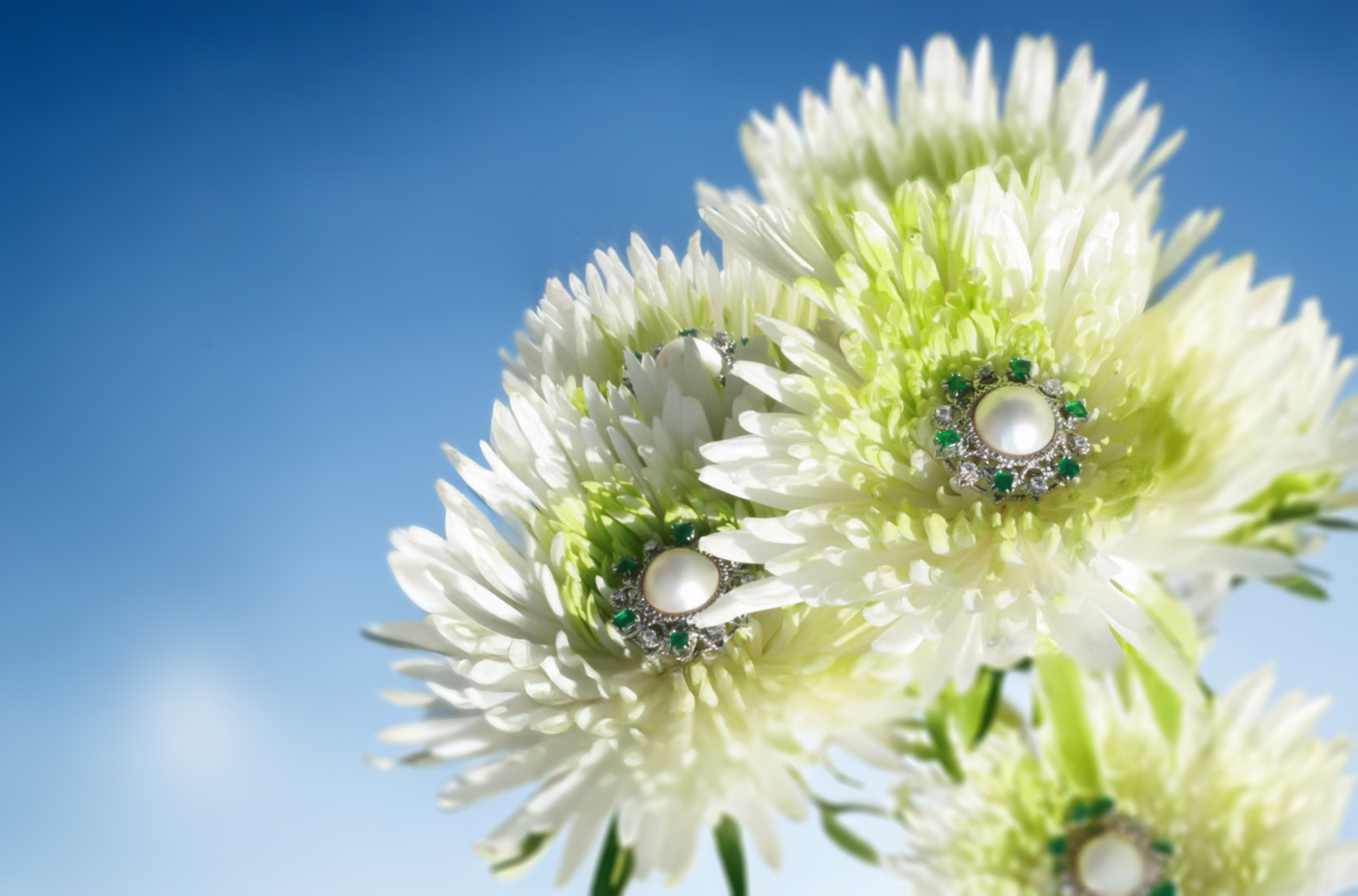
Why are these berries different from all other berries?... And when the Gardener's followers saw them, they said to one another, "What are these?" because they did not know what they were or where they came from. And the Gardener said to them, "These are earrings that are meant to be worn."
Click here to get to these charming fifties earrings.

Get your kicks at Adin 26!
Celebrating 26 years of Adin with our 26th Spring Discount Week
Just this week!!!
5% cash-back on all your purchases! (*)
(*) In sincere appreciation for making Adin your antique jewellery destination, we gladly offer you 5% cash back on your entire Adin purchase made between April 10 and April 17, 2011.
Click here to get to our complete collection of antique historic jewellery.

Religious discoveries in The Garden of Adin
We would like to explain a little bit about the variations in our collection of antique French provincial jewellery. Most of these pieces are inspired by religion, which is not surprising given the influence of the church over the past centuries. Every province of France had a distinct dress code, each with its own specific jewellery.
The quality of our collection is truly museum-worthy, yet eminently wearable. Just imagine wearing a piece of jewellery that has witnessed two, or even three, centuries of history.
Croix Boulonnaise
Circa 1770
This type of cross is part of the adornment worn by wealthy married women along the coast between Boulogne and Dunkirk in France. These crosses are recognised by the shell motifs, which evoke the pilgrimage to Saint Jacques de Compostelle. The filigree work harks back to its distant Spanish origin.
Croix Normande
Circa 1819-1830

This cross pendant is both a religious symbol and a marker of regional identity. When worn with a specific costume, it also signifies social status. The size and abundance of materials used in its composition reflect the wealth of its wearer.
Croix Viroles
Circa 1750-1790

This cross belongs to the rare group of French Provincial gold cross pendants made at the end of the 18th century (circa 1790). It was purchased and worn by wealthy provincial French women. These jewels rarely contained diamonds, which were predominantly reserved by jewellers for the nobility.
This very cross from our collection is featured in the famous book Georgian Jewellery 1714-1830, page 152.
Croix Badinne
Circa 1838-1850

This cross was the most typical and traditional cross made in Roussillon, France, usually tied around the neck with a silk or velvet ribbon. The shape of this jewel was developed by Catalan goldsmiths in the late 17th century. It was worn during the Empire and Restoration periods and is depicted in the portrait of Elizabeth Campagnac.
Today, French regional crosses are very rare, unlike the variety that existed in the past. Most of these crosses are now kept in museums or private collections.

Spring sprung in The Garden of Adin
Any idea how often spring has sprung over this flower?.... at least 150 times!
Click here to get to this Victorian flower brooch and pendant.

Recipes d'Amour: Gratiné Oysters with antique pearl jewelry
"La nouvelle cuisine d'Adin" proudly presents:Crusted Oysters
Preparation time: 90 minutes
Ingredients:
- 24 fresh oysters
- 1 leek
- 1 tablespoon oil
- 1 dl Champagne
- 1 dl whipped cream
- 300 grams grated cheese
- One piece of antique pearl jewellery (can even be the Art Deco ring as pictured too)
Method:
- Open the shells and take the oysters out.
- Collect and sift the moisture and separate the deeper half of the shells.
- Cut the leek into small rectangles, wash them and let them drain.
- Rinse the deeper halves of the shells and pat them dry.
- Sauté the leek in the oil and add the whipped cream, the collected oyster moisture, the Champagne, and some grated cheese.
- Boil this down to a third and season to taste.
- Fill the deeper half of the shells with a bed of the leek mixture and place an oyster on top.
- Sprinkle some grated cheese on top.
- Place under a grill till the cheese is melted and slightly crusted. Serve with Champagne.
Present the antique jewel after degustation of oysters and Champagne.Success guaranteed.
Click here to see this magnificent Art Deco ring with a big South Sea pearl.

A tribute to French naturalistic jewelry: a Swan on Garden of Adin's Diamond Lake
At the end of the 19th century, jewellers used nature as inspiration for their designs. Their interpretations of animals in jewels are based on a realistic view of the colours and lines in naturalistic detail. The French were undoubtedly unrivalled in the design of jewellery during this period, with a deep understanding of the gems and materials used. It is in French jewellery that the most stunning naturalistic motifs can be found.
This 19th-century naturalistic jewellery in diamonds, of course, can be very expensive. With careful and imaginative taste, the flowers (reedmace or cattail) and swan act as a romantic and fascinating theme of this decorative jewel. We think that this beauty was made at the end of the Victorian and beginning of the Art Nouveau era.
The Victorian era (the period of Queen Victoria's reign from June 1837 until her death on 22 January 1901) is known for its eclectic revival and interpretation of historic styles and the introduction of cross-cultural influences from the Middle East and Asia in furniture, fittings, and interior decoration. Victorian design is widely viewed as having indulged in an excess of ornament. The Victorian period can roughly be divided into three distinct periods: the Romantic (1837 - 1860), Grand (1861 - 1885), and Late or Aesthetic Period (1880 - 1901). The jewellery of the late Victorian period once again returned to romanticism with more delicate and whimsical motifs such as stars, crescent moons, reptiles, animals, birds, and insects. The discovery of the diamond mines in South Africa led to the use of mine, rose, and cushion cut diamond stones.
The Art Nouveau style began in the late Victorian era. Art Nouveau (French for "New Style") is an international movement and style of art, architecture, and applied art - especially the decorative arts - that peaked in popularity at the turn of the 20th century (1890–1905). The name "Art Nouveau" is French for "new art". It is also known as "Jugendstil," German for "youth style," named after the magazine Jugend, which promoted it, and in Italy, Stile Liberty, from the department store in London, Liberty & Co., which popularised the style. A reaction to academic art of the 19th century, it is characterised by organic, especially floral and other plant-inspired motifs, as well as highly stylised, flowing curvilinear forms. Art Nouveau is an approach to design according to which artists should work on everything from architecture to furniture, making art part of everyday life.
But all this info aside: What a beautiful brooch! Upon seeing this brooch, we all turned instantly happy. What a pretty piece of Applied Art. Charming, touching, cute, top-notch work and design... One of the very nicest pieces we have had in many, many years. And it stays nice... every time we look at it, we are in awe of the quality and its positive impact on our mood :-)
Click here to see this antique French brooch or the the following link to see all our Animalistic jewelry.
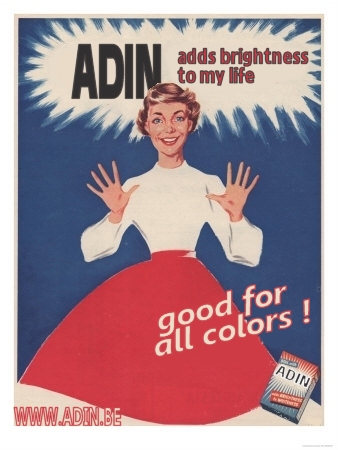
ADIN - Now, with a new improved formula!
The new improved Adin formula allows effective wearing of antique jewellery at all temperatures. Furthermore, it allows women to improve their impact on the environment by wearing antique jewellery in a specific colour of their choice, such as antique jewellery with the colour white, blue, red, yellow, purple, and/or even black.
Inspired by colour and mineral-based ideas, this latest antique jewellery formula is virtually biodegradable and has a good environmental profile that exceeds European Union and American legislation.
Click here to see all our antique jewellery.

Adin, King of the Blues, Latest release: The thrill is back!
The Adin Blues genre is rather based on colour than on a musical form or genre. Adin Blues can be subdivided into several subgenres, ranging from Nineteenth Century Light Blues to Vintage Urban Blues that were more or less popular during different periods of the 20th century. Best known are the Sapphire, Lapis Lazuli, Turquoise, and Starlite Blues styles.
Click here to see all our blue antique jewellery.

Some background info on Victorian jewelry
Victorian Decorative Arts refers to the style of decorative arts during the Victorian era (the period of Queen Victoria's reign from June 1837 until her death on 22 January 1901). The Victorian era is known for its eclectic revival and interpretation of historic styles and the introduction of cross-cultural influences from the Middle East and Asia in furniture, fittings, and interior decoration. Victorian design is widely viewed as having indulged in an excess of ornament. The Victorian period can roughly be divided into three distinct periods: the Romantic (1837 - 1860), Grand (1861 - 1885), and Late or Aesthetic Period (1880 - 1901).
We consider this beautiful bracelet to be of the Grand Period. Jewellery from this period was often a re-interpretation of ancient, Renaissance, and Gothic patterns and styles. The most important (ancient) ornament in this bracelet is the wreath, an ornament with much history and symbolism associated with it - most of it goes back to Greek mythology.
The Romans' use of laurel wreaths echoed the Greek traditions. The wreath was a symbol in the arts, literature, government, and education in Roman society. In the arts, it expressed that one was valued and respected with a laurel wreath resting atop one’s head. Kings in both Greece and Rome donned the laurel wreath to illustrate sovereignty. Julius Caesar, for example, proclaimed the laurel wreath "to be a symbol of the supreme ruler." The wreaths worn by kings were reminiscent of the traditional laurel wreath by the shape and its connotation, yet were embellished with gold and gems. (This eventually led to the modern-day crown.)
But all this info aside: it's a sheer joy, looking at how the wreath elegantly drapes itself around the wrist in a fluent line of diamonds. And yet, it does not scream out loud, a refined piece of French craftsmanship so typical of what the French call "Haute Joaillerie" (high class/high standards jewellers).
"Haute Joaillerie" (high class/high standards jewelers).
Click the following link to see all our Victorian jewellery.

Newsflash
ANTWERP, February 13 - In an attempt to stimulate the sales of their antique rings, The Adin Research Center for Antique Jewellery Commercialisation has set up a Human Genetic Engineering Team. The aim of this team will be to see if women can have more than five fingers on each hand.
The first results are promising. We'll keep you updated!
Click here to see all our antique rings jewellery.

Driven by its environmental conciousness, Adin is setting the trend again and goes green!
As the eloquent experts would say: "With the presence of green being ubiquitous in The Garden of Adin and dedicated to finding solutions for the Garden's sustainability, the Gardener won a key endorsement for his proposal to focus on green sales." But it boils down to the fact that we just would like you to take a look and be greenish and environmentally bedazzled. Go green and let your friends turn green with jealousy at the beautiful green antique jewellery you can find with us!
Antiqualy yours,
The Adin team

Instant Antique Earrings in handy blister pack. No doctor prescription needed.
ANTWERP, January 23 - Along with instant chicken soup, instant coffee, instant oven cleaners, and instant pain relief, it was only a matter of time before instant antique earrings made their international debut. Researchers at "The Adin™ Research Center for Relationship Welfare" have come out with this brand new invention in a handy blister pack.
According to Adin's Chief Researcher Elkan Wijnberg, non-clinical testing shows promising results, and although still in the testing phase, "Adin™ Instant Antique Earrings" will be launched in the near future. Till then, antique earrings have to be bought per pair at www.aantique-jewel.com.
Click here to see all our antique earrings.

The Adin Research Center for Relationship Welfare: Discovery of love vitamin
ANTWERP, January 16 (Reuters - Recent studies at "The Adin Research Center for Relationship Welfare" have shown that the non-nutrient Retro Style Jewellery (RSJ) — long viewed as a nonessential — has now been established as the first new vitamin discovered in a long time. The new vitamin can positively affect relationship dips and is named vitadin. According to Adin's Chief Researcher Elkan Wijnberg, a regular dose will benefit relationships.
Retro Style Jewellery
The Retro style was strongly influenced by its predecessor, the Art Deco style. Using the same type and language of geometrical shapes but with bolder, heavier lines, shapes, and stones. Typical for the Retro style is its imitation of three-dimensional folds of fabric with the ribbon bow as its most popular motif, often highlighted in the centre with a calibré cut ruby or sapphire knot (mostly lab-produced stones were used) and diamonds in various cuts as white accents.
Gold regained its popularity during the Retro period because platinum was not available to goldsmiths and jewellers since it was being used for the war effort. This was the main reason that during the Retro period, different colours of gold became popular — yellow gold was combined with rose gold and green gold in striking combinations. In France, goldsmiths worked with no fewer than 27 shades of gold!
The most popular gemstones seen in the Retro style are aquamarine, citrine, topaz, large cabochon-cut rubies and sapphires (including star stones), golden beryl, peridots, and tourmaline. Not uncommonly, gems used were exceptionally large in order to reflect the scale of the jewellery.
Click here to see all our Retro jewellery.

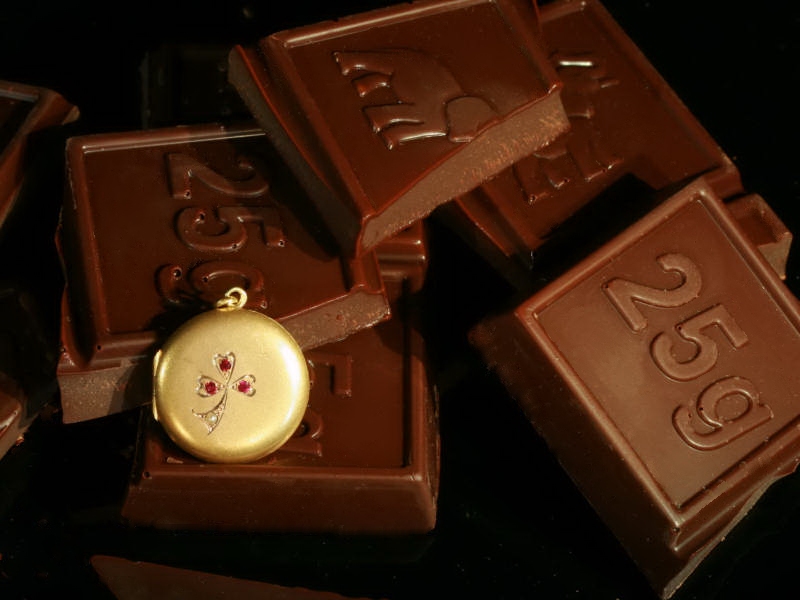
Recipes d'Amour: Adin's Epiphany Present Pie
How to make her Queen of the Day
One of the customs for the 6th of January (also called “Epiphany” or “Twelfth Night”) is to bake a cake and hide something in it. The one who gets the piece of the pie with the hidden object can call himself King or Queen for that Day.
This folkloric practice was already used by the old Romans as a ritual at the Festival of Saturn. It was a time of celebration, visits to friends, and gift-giving, particularly of wax candles, and earthenware figurines.
Depending on the place one is in, the hidden object can be a bean (England), almond (Belgium), a little porcelain doll (France), and obviously a piece of antique jewelry when having been in The Garden of Adin.
Ingredients for a 6 - 8 portions pie:
-
- 200 grams butter at room temperature -
-
- (plus a little bit of butter for buttering the baking tin) -
-
- 200 grams ground almonds -
-
- 200 grams sugar -
-
- 4 eggs -
-
- 7 tablespoons self raising flower -
-
- 100 grams dark chocolate -
-
- 1 piece of antique jewelry -
-
Method:
-
Stir up the butter, almond powder and sugar
till smooth and creamy.
-
Add the eggs one by one.
-
Add 6 spoons of flower with a wooden spoon.
-
Divide the dough in two.
-
Melt the chocolate (2 minutes in microwave).
-
Stir the melted chocolate in one half of the dough.
-
Butter the cake tin (diameter ± 26 cm or 10 inch)
and disperse with the remaining flower.
-
Randomly scoop the dough without the chocolate
into the cake tin.
-
Add the chocolate dough.
-
Shovel the two from bottom to top
without really mixing the two colors.
-
Add the antique piece of jewelry (if heath-resistant)
and smoothen the top.
-
If the piece of antique jewelry is not heath-resistant
than hide it in pie when pie is cooled off after baking.
-
Bake the pie within 35 to 45 min.
in a prewarmed oven at 170°C (or 340° F).
-
The pie is ready when a knife (or knitting needle)
that you insert is dry when taken out.
-
Serve:
Best secretly mark the part of the pie with the jewel.
So you are sure to give your loved one the right piece.
Preparation time: ca. 15 minutes
Baking time: 35 - 45 minutes
Grade of difficulty: medium to easy

The entire Adin team wishes you: Happy New Year!
Click here to see the antique jewelry our team has gathered the past years.