

Chronicles
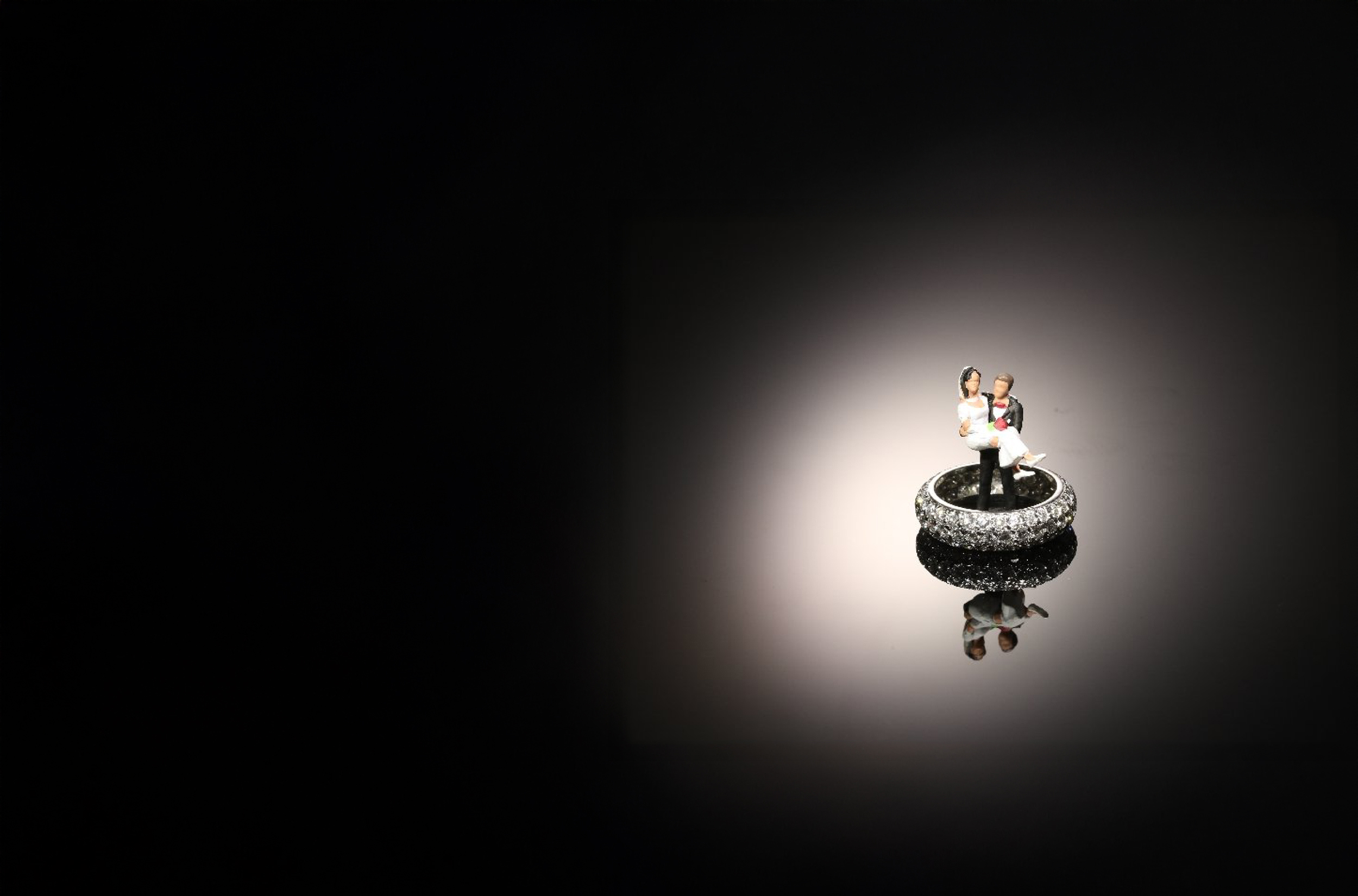


Happy 2018
We wish you all that is good for you and yours!

Subliminal Message by Adin Antique Jewellery? Naaaah! We just want to wish you Happy Holidays!


Jewellery Safari in The Garden of Adin. Enter at own risk!

♫ Working in a Winter Wonderland ♫


Surprise, surprise!
The mirroring interplay of 40 old European cut diamonds encrusted in the geometric shapes of this platinum pendant from 1920 embodies the modern character of the Art Deco period. This stylised design resembles a sturdy bird's tail totem, guiding you from its central diamond in any direction you wish to go.
Click here for more info on this platinum and diamonds Art Deco pendant.

Working hard to polish up our antique jewellery.
Victorian Ring and Necklace with Interchangeable Part Set with Opal and Diamonds
In 1837, Queen Victoria began the longest reign in the history of Great Britain. For 64 years, from 1837 to 1901, she symbolized the growth and triumph of the British Empire as Queen of Great Britain and Ireland and Empress of India. Proud, passionate about beautiful things, and highly educated about all styles of her time, she influenced lifestyles through her taste and immense love of jewellery.
Set with diamonds and a beautiful opal, this jewel is considered Victorian in its design, craftsmanship, and materials used. With an extremely easy system to use, the diamond cluster with an opal center can be attached to either the ring or the pendant of the necklace.
Opals are found in many colours, ranging from clear to white, gray, red, orange, yellow, green, blue, magenta, rose, pink, slate, olive, brown, and black. The mysterious opal can evoke as many convictions and superstitions as it can twinkle colours. In the Arabic world, it was said that opals fall from the heavens during lightning storms. The Romans believed that this one gemstone held the power of all gemstones, as it displays all of their different colours at once.

17th Century Peruzzi Cut Diamond, one of the first models of brilliant cut diamond.
There are no words to describe the miracle that has risen over centuries from this extraordinary Peruzzi cut diamond. Even back in its period of polishing, somewhere between 1650 and 1680, this diamond was already one of the rarest gems in the world. This rarity is due to its brilliant cut shape, while the majority of diamonds at that time were cut as rose cuts.
The top of a Peruzzi cut diamond consists of 33 facets and truly comes alive with fire and luster. This cut is considered the ancestor of the modern brilliant cut diamond. Even more remarkable, considering its substantial weight of 1.83 ct, its valuable G colour, and its SI1 clarity, is that this Peruzzi diamond has remained unaltered for almost four centuries.
Antique diamonds of this calibre normally don't survive in their original cut into the 21st century. This is because, through the ages, modern jewellers, whenever they acquired large stones like this, often repolished them into contemporary brilliant cut diamonds.
Interestingly, all these so-called contemporary brilliant cuts of past centuries are now considered old cuts themselves. With our lifelong experience in unique jewellery and gemstones, we must almost believe that this exclusive Peruzzi diamond is of divine descent, as it is obviously protected by a guardian angel.
Click here for more info on this 17th Century Brilliant Cut Diamond.

The Adin Antique Jewellery Museum Of Fairy Tale Artifacts reveals historic secret!
Once upon a time, Napoleon's court painter captured an instant snapshot of the emperor on his way to visit the woman he loved. In the painting, Napoleon, holding a jewel in his right hand, reflexively hid the jewel under his waistcoat. The existence of this jewel has long been a source of dispute among jewellery historians around the world.
Recently, Mr. Elkan Wijnberg, chief conservator of the Adin Antique Jewellery Museum of Fairy Tale Artifacts, revealed the truth. Mr. Wijnberg stated, "Napoleon, being way ahead of his time, loved antique jewellery. It is with great pride and ultimate joy that the Adin Antique Jewellery Museum of Fairy Tale Artifacts exhibits all the actual pieces of jewellery that Napoleon held in his right hand in this picture."

Romance in The Garden of Adin. Ok, half way there....

Don't sit under the apple tree,with anyone else but me!

Romance in The Garden of Adin. Timeless, ageless, endless love....
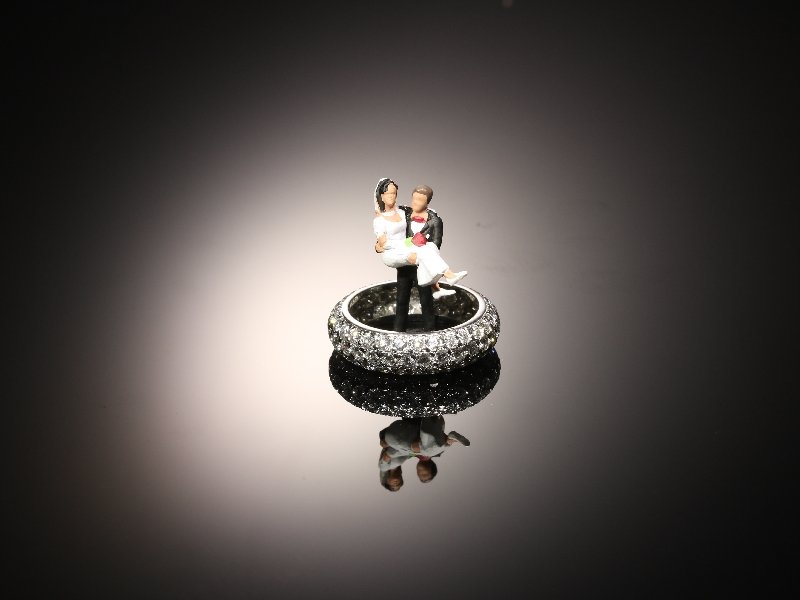
Romance in The Garden of Adin. From here to eternity and beyond....

Antique Jewellery Works at Adin. We apologize for any inconvenience this may cause.

Digging for Antique Jewellery at Halloween!

How sweet it is to be loved by you!
Mauboussin is a renowned French jewellery firm founded in 1827 by the artisan jeweller M. Rocher, which flourished through the collaboration with Jean-Baptiste Noury. Mauboussin opened their first US store in New York in 2009 and now has numerous shops all over the globe.
Click here for more info on this Vintage Fifties ring by Mauboussin Paris.

Uh? Jewellery and aluminium oxide????
Aluminium, or aluminum, is a silvery-white, soft, nonmagnetic, ductile metal. By mass, aluminium makes up about 8% of the Earth's crust; it is the third most abundant element after oxygen and silicon, and the most abundant metal in the crust. Now, what does aluminium have to do with jewellery, you may wonder. Well, another word for aluminium oxide is "corundum," which is commonly known as "sapphire."
Sapphire is typically blue in colour, but natural "fancy" sapphires also occur in yellow, purple, orange, and green hues. The only colour that sapphire cannot be is red—because red-coloured corundum is called ruby.
Click here for more info on this top notch Ceylon sapphire and diamond ring.

Art Deco ring with diamonds and emeralds
This platinum engagement ring from 1920 oozes Art Deco sophistication with its stunning old European cut diamond, centred in an openwork geometric design. Two lines of four single brilliant cut diamonds each form a bridge from the right and left of the central brilliance of pure white to a verdant green square outline of 16 carré cut emeralds. This engagement ring offers a framework in which your future memories will mount, and bridges will forever stand strong.
Click here to learn more about this top notch Art Deco platinum ring.

Estate Vintage ruby and diamond earrings with over 14 crt of untreated natural rubies

Art Deco platinum ring with 1.55 ct white diamond and Brazilian emeralds
This splendid platinum Art Deco ring radiates straight to your heart. At its centre is a 1.55 ct old European cut diamond, surrounded by an octagonal frame set with emeralds and diamonds. Twenty Brazilian emeralds emphasize the impeccable white colour of the dazzling diamond, symbolizing the uncharted possibilities and the unwritten blank pages of a new unspoiled path in love. The outer set of 28 single cut diamonds surrounding the stunning centre extends to the ring's shank, allowing it to sweep softly around your finger.
Click here to learn more about these top notch Art Deco platinum ring.

Why do we look for oak leaves on old jewellery?
We invite you to take a glance over our shoulder as we evaluate an antique piece of jewellery. At first sight, we estimated that these earrings were designed and crafted in the tradition of the Dutch "Zeeland" region around 1825.
Upon further investigation, we found a mark "I & ES," which we considered to be the master mark. We then turned to our extensive library but couldn't find specific information on this hallmark. Next, we consulted the Dutch assay office, known for its extensive database on Dutch gold- and silversmiths through the ages. They kindly informed us that this specific mark indeed belonged to a Dutch master based in Rotterdam, active around 1822, but they had no further details—not even his name.
Thus, our quest to uncover more about these earrings ended there. However, we were pleased that the Dutch assay office confirmed our gut assumption about the Dutch origin and era. Had these earrings been made at least 25 years later, we might have found a hallmark representing an oak leaf. Dutch jewellery, especially 14K pieces, has been hallmarked with an "oak leaf" since 1853. Over time, the shape of this hallmark has changed from a Dutch native oak leaf with rounded lobed ends (used from 1853 until 1906) to an American oak leaf with pointed lobed ends (used from 1906 until 1953). By identifying an oak leaf mark, we can determine the alloy (14K) and origin of a piece and, by closely examining the ends of the leaf, even the era it was made in.
As an interesting footnote, there are a few reasons why it is challenging for jewellery historians to determine the country of origin and the maker of Continental European jewellery made in the last 500 to 600 years. One major reason is that around 1790, during the French Revolution, the guilds were abolished, and all their archives containing centuries of valuable information on gold- and silversmiths were destroyed. Additionally, for Dutch silver and jewellery before 1940, including the earrings in this picture, the Second World War's bombing of Rotterdam resulted in the destruction of practically the entire archive of the assay office.
This highlights how valuable every piece of information is in unlocking the hidden history or mystery of antique jewellery.
Click here to learn more about these rare antique Dutch filigree earrings.

The decorative value of glass through the ages
Not only has the beauty of glass been adding an intriguing appeal to our otherwise dull objects of daily use, but this alluring material—when crushed into the finest powder called enamel—can also enhance an already precious piece of jewellery into an exquisite masterpiece. The firing and fusing of ground glass onto another material (e.g., gold, silver, copper, porcelain) offers more than a guarantee of true craftsmanship; the technique of enamelling holds a rich history dating back to the ancient Egyptians, Greeks, Celts, Russians, and Chinese.
Here, we offer a mesmerizing French Victorian ring, with its top embellished by an eye-catching royal blue transparent enamel fused over a radiating guilloche engraving.
(The topic of guilloche engraving will be addressed in one of our future heralds, so stay tuned!)
Click here to learn more about this French antique Victorian enameled ring.

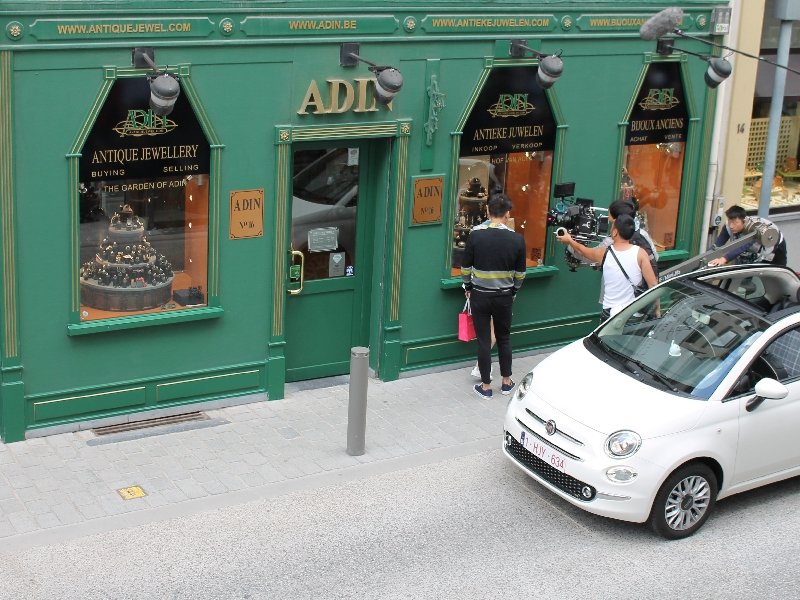
Film Location: Adin Antique Jewellery
An exclusive preview!
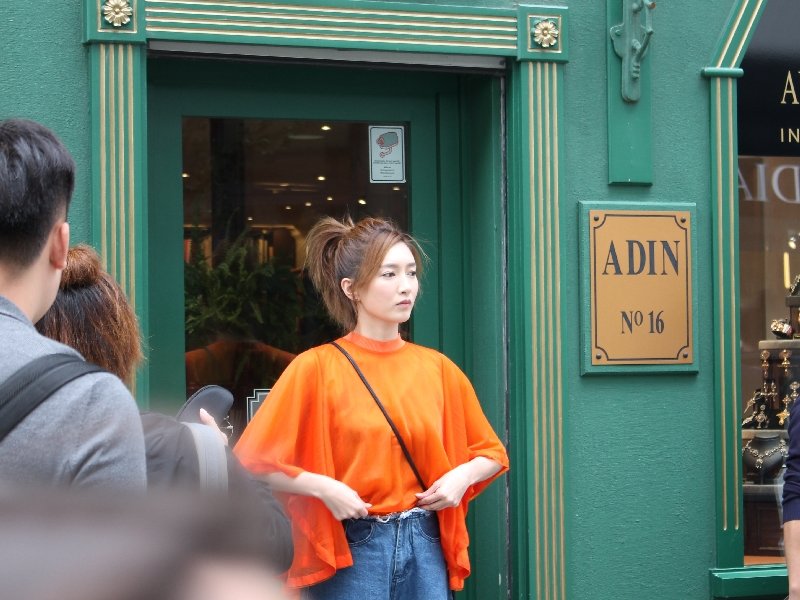
Antwerp, August 6th 2017 - This week a 60-headed Chinese production team launched the recordings of the Chinese TV series 'Mr Right' in Antwerp.'Mr Right' is the 2nd season of 'How to Be a Better Man' - a television series broadcast on Chinese public television and followed by more than 380 million viewers!And for what we understood, the leading characters, Ji Chang Wook and Wang Xiao Chen, are the Chinese counterparts of Brad Pitt and Angelina Jolie.And just guess where the shooting took place?
Right! (click here)


-->


-->


Ladies necessities through the ages: Perfumes and Diamonds.

Fishing in the Garden of Adin. It's all about the bait!

Antique jewelry of the future!
What makes a good piece of antique jewellery, a good piece of antique jewellery? The answer to this question is as simple as can be.
A good piece of antique jewellery should be a true representative of the style of the period in which it was made, and it must have actually been made during that era. A piece of jewellery that is well-crafted but pretending to be older than its actual creation date is merely a reproduction.
What we present here is what we believe to be a future piece of antique jewellery. Recognisably made around 1980, it was created following the finest traditions of the jeweller’s craft.
Not only that, but the centre stone—a Colombian emerald of approximately 1.80 carats—is of a quality we have never before had in our collection. This radiant gem beams its intense green light in a way that captures the heart of anyone who gazes upon it.
We consider ourselves fortunate to have acquired this beauty for our collection.
Intrigued?

Catch a falling star...
Catch a falling star and put it in your pocket,
Never let it fade away.
Catch a falling star and put it in your pocket,
Save it for a rainy day.
(Lyrics by Lee Julien Pockriss and Paul J. Vance)
It is quite possible that this brooch was inspired by the passage of Halley’s comet in 1835. The passage of Halley’s comet inspired jewellers to create pieces in the shape of celestial bodies. This comet appears every 76 years. In 1705, Edmond Halley predicted, using Newton’s newly formulated laws of motion, that the comet seen in 1531, 1607, and 1682 would return in 1758 (which, alas, was after his death). The comet did indeed return as predicted and was later named in his honour.
Intrigued?
Click here to learn more about this Victorian diamond loaded brooch.

Artist Jewelry by Chris Steenbergen (1920-2007)
This 14K yellow gold and silver brooch from 1972, crafted by the renowned Dutch contemporary jewellery artist Chris Steenbergen, serves as a collectible piece of future antique jewellery. The design illustrates an interplay of contours, featuring a square outer line, a circular negative inner space, and an oval profile. Exemplifying minimalistic abundance, this jewel is a wearable statement.
This particular brooch is pictured on page 36 of the catalogue from the Museum Boijmans Van Beuningen in Rotterdam, Netherlands, titled Chris Steenbergen, Goldsmith, published in 1985.
Intrigued?
Click here to learn more about this brooch by Chris Steenbergen.

A touch of history: Antique Victorian diamond necklace
At first glance, it is obvious that this frivolous red gold-backed necklace fits elegantly around the neck like a garland of six larger flowers alternating with six smaller ones. As three more flower pairs with dangling triplets drape from this blooming aura, an abundance of foil-set rose-cut diamonds encrusted in silver shimmer illustriously. However, there's more to this intriguing piece than meets the eye...
Every antique jewel exudes history, but this enchanting necklace from around 1850 also has a modern story to tell about what jewellery can symbolize for a family. We were honoured to purchase this jewel from the heirs of a jeweller who crafted this unique necklace from his personal collection of four pairs of antique Flemish earrings. Finding one complete pair of this type of earrings is incredibly rare, let alone having four pairs.
Moreover, all of his daughters truly shone on their wedding days while wearing their father's creation. Although it is not our custom to offer redesigned or remodelled pieces, the way this jewel came to be is utterly charming: initiated by a passion for antique jewellery, fuelled by the vision and craftsmanship of a jeweller, and truly ignited by the love of a father.
Intrigued?
Click here to learn more about this antique Victorian diamond necklace.

The Doves of Pliny
The depiction of four plumose pigeons, known as the "Doves of Pliny" or "Capitoline Doves," refers to Pliny the Elder's description of the original image in a classical mosaic by Sosus of Pergamon dating back to the 2nd century BC. A revival of these archaeological wonders occurred in the first half of the 19th century, when it was popular to reuse this motif in various artefacts. However, we have never seen a piece of such superb quality as the one we have here.
To emphasise its excellence, we invite you to closely examine the water in the vase and notice the subtle reflection of the drinking dove. This meticulous detail is precisely the aspect that mesmerised Pliny, as it continues to captivate us today. It is rare for an artist to successfully capture this specific fragment of the iconic image.
Furthermore, this cameo has been engraved in the hardest part of the shell, resulting in a more realistic appearance with its three distinct colour layers. The level of craftsmanship required to sculpt such detail in a material as hard as stone suggests an Italian origin.
This piece of artistry is brought to its full spectacle in a harmonious mounting, likely crafted by an English goldsmith.
Click here to learn more about this magnificent cameo bracelet.

Holy smoke! Lucky in the sky with diamonds!

Holy smoke! The Garden of Adin goes green!

Holy smoke! Romanticism and a pink cloud what more does one need?

Holy Smoke! So totally out of the blue in The Garden of Adin!

The best way to start Mother's Day: With bubbles.

Seek, and thou shalt find! In The Garden of Adin of course.

Jean Després, Master of French Art Deco and Modernistic Jewelry
Jean Després (1889-1980) was an Art Deco jewellery designer whose name epitomises the most dynamic styles of the 20th century. This definitive celebration of his work will delight both new admirers and seasoned connoisseurs alike. Capturing the streamlined, modern aesthetic of the machine age and transforming it into objects of great beauty, Després has always been the jeweller of choice for informed collectors and insiders. Josephine Baker was an early admirer, and Andy Warhol’s collection was sold at Sotheby’s, New York, in 1988.
As a young man, Després came to know avant-garde artists in Paris, including Léger, De Chirico, and Braque. After the outbreak of war in 1914, he worked on the industrial design of aeroplanes, transferring this experience and inspiration into the jewellery business. Després used geometric motifs in his designs and, in the 1930s, embarked on a notable collaboration with the glass painter Étienne Cournault. He went on to create a range of tableware and decorative objects in gold, silver, and pewter, whose bold, industrial looks were uncompromisingly modern, yet always graceful and refined.
From: Jean Després Jeweler, Maker and Designer of the Machine Age by Melissa Gabardi, ISBN 9780500514788
Click here to learn more about this Art Deco silver cross signed Després

Online course on how to be romantic: Here! Flowers!

Big Natural 13½ Carat Untreated Ruby

Adin's Scientific Newsbreak! Einstein's relatively antique jewellery theory proven!
The Adin Institute for Advanced Study on Einstein's Relatively Antique Jewellery Theory proudly presents:
"Gravitational Waves: Ripples in the Fabric of Space-Time Bringing Us Jewellery from the Past."
In 1916, around the time this brooch was made, Albert Einstein predicted the existence of gravitational waves as part of his relative antique jewellery theory. In Einstein's theory, space and time are aspects of a single measurable reality called space-time. Matter and energy are two expressions of a single material. We can think of space-time as a fabric.
The presence of large amounts of mass or energy distorts space-time, essentially causing the fabric to "warp," and we observe this warping as gravity. Freely falling objects—whether they are antique brooches, rings, or earrings—simply follow the most direct path in this curved space-time; in other words, from Adin's premises to your doorstep.
Furthermore, this is perfect proof that the Earth is not flat but corrugated.
From: Wijnberg, Elkan (April 9, 2017). "Einstein and the Relative Antique Jewellery Theory." Antwerp: Adin's Scientific Press
Click here to learn more about this Antique platinum Edwardian diamond brooch.


Variations on Cubism, something "belle" from the Interbellum
The Interbellum, or the interwar period (1918–1939), is understood within recent Western culture to be the time between the end of the First World War and the beginning of the Second World War. In the pictured ring, one can recognize a transition from the refined Art Deco style to the somewhat more robust Retro style.
Click here to learn more about this platinum Art Deco/Interbellum ring.
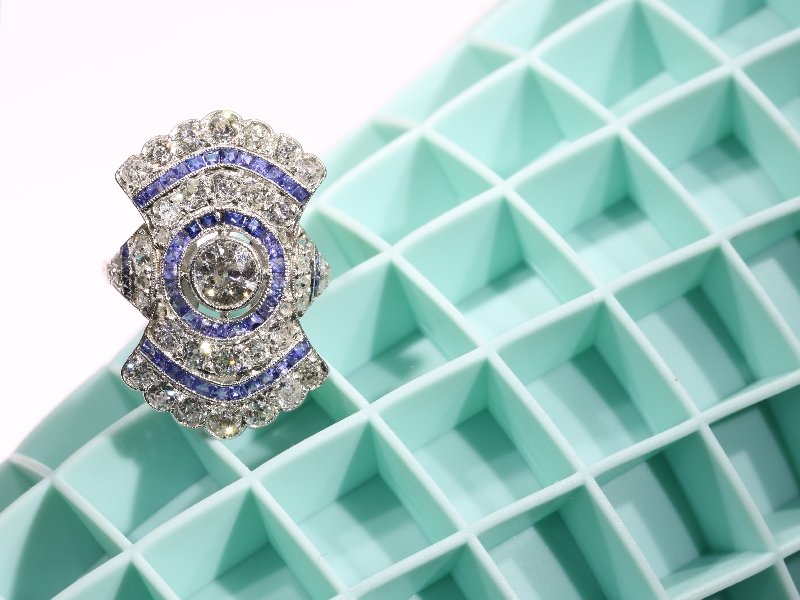
Variations on Cubism, Art Deco In The Garden of Adin
Abstract motifs and geometric forms are quite typical of the Art Deco period. Art Deco moved away from the soft pastels and organic forms of its predecessor, Art Nouveau, and embraced influences from many different styles and movements of the early 20th century, including Neoclassical, Constructivism, Cubism, Modernism, and Futurism. Its popularity peaked in Europe during the Roaring Twenties and continued strongly in the United States through the 1930s.
Unlike many design movements that have political or philosophical roots or intentions, Art Deco was purely decorative.
Click here to learn more about this platinum Art Deco ring with sapphires.

Spring has Sprung - 02

Spring has Sprung - 01

A ring with a hidden message!
Let us unravel the mystery of this antique ring from 1890, encrypted in the colours of its four prominent gemstones. Together, the colours convey a historical message: Green, White, Violet—"Give Women the Vote". The yellow colour underlines the internationally shared foundation of this idea, which was championed by women fighting for their right to vote in the early 1900s. These women, particularly the militants in the United Kingdom, called themselves the "Suffragettes".
Moreover, these specific colours were chosen for their intrinsic symbolism. Hope springs from the Green of the square-cut tourmaline, while purity emanates from a White old European cut diamond in vertical alignment with the verdant green. Royalty, dignity, and freedom are reflected in the Violet of a pinkish tourmaline, sitting side by side with a gold beryl. The yellow colour also has significance with the American Suffragettes, who adopted "The Yellow Ribbon" as their anthem.
Clearly, a jewel meant for a strong woman, this ring will always guide you to your desires and ambitions.
Click here to learn more about the Suffragettes and this Suffragette ring.

In The Desert Of Life, The Wise Person Travels By Caravan...

Oops! Seems like Cupid made a mistake!
As these days are very busy for Cupid, we've heard from a reliable source that he has run out of arrows. Naturally, he cannot disappoint anyone waiting for their one true love, so he is now using his diamond sword!
This sword brooch is crafted from no less than two solid pieces of diamond for the blade and another solid piece for the hilt. The shimmer of the lozenge-shaped facets on the diamond surface is almost too bright for the human eye to perceive. When Cupid makes his strike through your lover's heart, it will be swift and almost imperceptible. But soon enough, the passion between you and your sweetheart will spark as radiantly as the nine old European cut diamonds and the nine rose cut diamonds set in the silver pommel, cross-guard, scabbard-belt, and carrying-band.
Tipped with a silver chape on a red gold back, Cupid's love sword will strike harder than any arrow. Are you ready to face the consequence of Cupid's new toy?
Beyond the romantic allure we've attributed to this jewel in these times of love, it is a unique brooch almost entirely made of diamond. Furthermore, these diamond parts are cut in a manner we've never seen before. An additional special diamond, encrusted in the centre of the sword's cross-guard, displays an extraordinary and uncommon yellow-greenish colour. Be aware of this dangerous brooch, as it might touch your heart as well.
Click here to see more from this antique brooch crafted from solid diamonds.

Heartwarming Jewellery in Cold and Dark Days

Art Deco Treasure From The Hanging Gardens of Adin Antique Jewellery

Recipes d'Amour: Ye Olde Green Em'rald Pea Pottage Parure
Original Adin Recipe from the Middle Ages!
For those familiar with the Adin Weekly Herald, it is no surprise that we are also deeply interested in cooking. It is not even a bold statement to say that there is such a thing as "La Cuisine d'Adin". During our perusal of some antique cooking books from the Middle Ages, we discovered some original Adin old-school recipes. We thought it only fair to share one with you. Enjoy!
Ye Olde Green Em'rald Pea Pottage Parure
Ye preparation time: The time of milking three fully loaded goats
Ye portions: Two pints clean water of meremen teardroplets
12 oz green peas of nightly pick
6 oz onions cut finely by maidenchild
One handbreadth oil of whale's lard
One half handbreadth saffron powder, covered in 8 handbreadths water
Two handbreadths light brown sugar from over the dunes
One half handbreadth salt from the deepest seas
One emerald parure of Adin antique jewellery (for example, the parure as pictured)
Ye processeth:
- Prepare the peas. Take peas and boil them fast, covering them until they burst. Then, take them up and strain them through a cloth.
- Take onions and mince them, and boil them in the same broth with oil. Add sugar, salt, and saffron. Boil them well thereafter, and serve them forth with an emerald parure.
Remember, in our snug Middle Ages, the thicker a purée was, the better its quality was thought to be. So, do not be too sparing on the amount of gems and jewels you add.
Nothing better to warm you on winter days: enjoy! For more information, please click the picture and find the full explanation on the descriptive page of these fine jewels.
Click here to see more from this antique gold parure (brooch, bracelet and earrings).

Precious Cross from the 17th Century
As if a guardian angel bestowed upon this yellow gold cross, this invaluable 18K Iberian pendant and brooch from Spain or Portugal, adorned with 23 old table rose cut diamonds, has endured since the 17th century. Apart from the grand pear-shaped suspension, the primary shape of a diamond ascending from an eight-lobed dome embellished with mille grains repeats around the fully diamond-encrusted centre. The airy presence of this jewel is attributed to the curling wirework from which leaflets sprout between the intersections. For more information, please click the picture to find the full explanation on the descriptive page of this exquisite jewel.
Click here to see more from this 17th Century diamond cross.
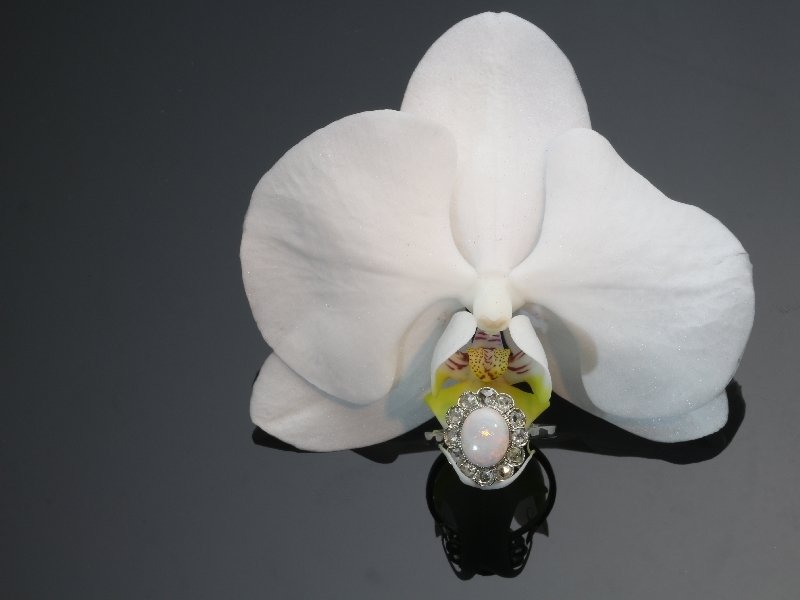
Multifunctional Opal
The mysterious opal can evoke as many convictions and superstitions as it can twinkle colours. In the Arabic world, it was said that opals fall from the heavens during lightning storms. The Romans thought that this one gemstone beheld the power of all gemstones because it displays all of their different colours at once. Still, it took only one novel from the 1800s by Sir Walter Scott to make people think of this stone as bad luck.
Although we wouldn’t dare to tell you what to believe, we do recommend this jewel to all fair ladies. It is, namely, accepted since medieval times that an opal has the power to preserve the colour of blonde hair. And let me punctuate that we are too respectful and respectable to make jokes about blondes.
For more information, please click the picture and find the full explanation on the descriptive page of this fine jewel.
Click here to see more from this Art Deco opal and diamond ring.