

Chronicles


The entire Adin team is toasting to your good health!
To our customers!
Who have the great taste to call upon our antique jewellery expertise.
Happy New Year!
Click here to see the antique jewelry our team has gathered.

Adin Fine Antique Jewellery Information: The Whiplash
Although Art Nouveau (1880-1914) took on distinctly localised tendencies as its geographic spread increased, some general characteristics are indicative of the form. A description published in Pan magazine of Hermann Obrist's wall-hanging Cyclamen (1894) described it as "sudden violent curves generated by the crack of a whip," which became well known during the early spread of Art Nouveau. Subsequently, not only did the work itself become better known as The Whiplash, but the term "whiplash" is frequently applied to the characteristic curves employed by Art Nouveau artists.
Such decorative "whiplash" motifs, formed by dynamic, undulating, and flowing lines in a syncopated rhythm, are found throughout the architecture, painting, sculpture, and other forms of Art Nouveau design. (Source: Wikipedia)
For more information, please click the picture and find the full explanation on the descriptive page of this fine jewel.
Click here to see more from this Art Nouveau brooch/pendant.

Adin Fine Antique Jewellery Information: Dummy Jewellery
At first, we thought we were seeing double, but we immediately realised how exceptional this pair of rings really is. Not only do we have a most valuable platinum Estate ring with high-class Colombian emeralds and diamonds, but also its dummy.
Up to the Fifties of the last century, it was not uncommon for the fortunate few to have their most precious jewellery pieces reproduced in less expensive materials. These reproductions were called "dummies" and were specifically made to wear during flamboyant cruises and extensive journeys. Nowadays, such pairs are hardly ever found as a couple anymore, which makes this valuable ring together with its pseudo-twin truly a unique collection.
Although the terms "dummy" and "copy" are no flattering words for any meticulously crafted jewel, make no mistake: it's only the original ring's counterpart that embodies the most precious adventures of its owner.
For more information, please click the picture and find the full explanation on the descriptive page of these fine jewels.

Adin Fine Antique Jewellery Information: Belle Époque
As was aspired in the true essence of the Belle Époque period, this enchanting brooch from 1900 embodies the glorification of romanticism perfectly. The gleam of the parallel engravings—called guilloche—in the 18K warm yellow and possibly red gold background lures you straight from the platinum frame of 104 rose-cut diamonds into its nostalgic enameled landscape.
Over the sun-kissed meandering stream, you can drift off to a long-forgotten ruin while passing spring-blooming trees in green meadows. With its ribbon and double twig wrapping, this marvelous jewel presents more than just the framework in which your past memories reflect next to your future dreams. The depth that is created and how the scenery comes to life by the sun's reflection on the water showcase the craftsmanship of a master goldsmith and painter.
In our trade, we treasure such extraordinary craft, where the gold shines through the transparent and translucent enamel. For more information, and to see the actual shining of the scenery that we are so amazed by, please click the picture and find the full explanation and movie on the descriptive page of this fine jewel.

Adin Fine Antique Jewellery Information: Style Guirlande
The Belle Époque Style, also known as 'Style Guirlande' (French) or in plain English: 'Garland Style', epitomises delicacy and elegance. This era favoured white metals and white stones shaped into garland designs. Motifs of ribbons and bows, leaves and flowers predominated in symmetrical curvy openwork shapes, inspired by Renaissance garland paintings and the frothiness of 18th-century Rococo patterns.
As a truly extraordinary example from its era, this antique platinum pendant glistens with 76 diamonds encrusted in the joyfully arranged leaves. From the upper triple diamond top, two leaflets sprout downwards through both nooses of the central bow, from which two ribbons drape over the two twigs. The bow’s heart suspends a dangling old European cut diamond, which guides your gaze to two arching garland branches. At the point where they meet, another old European cut diamond sways from a pair of leaflets. This charming scene sweeps anyone to moments of merriment and bliss.
For more information, please click the picture and find the full explanation on the descriptive page of this fine jewel.
Click here to see more from this Belle Époque guirlande diamond pendant.

True love lasts forever! 400 years old and still very wearable.
Dating back to around 1630, this 18K yellow gold ring, called a Claddagh ring or Fede ring, is truly a present from history and tales. Two hands offer friendship by reaching out to a heart which is bulging—or better, bursting—with love through the gleam of a foil-set rose cut diamond. To seal this bond with loyalty, a crown with three rose cut diamonds in a foil setting guides the heart vertically around your finger.
Looking at the untouched black enamel on the sleeves behind the gold hands, this precious jewel proves to stand the test of time. As should the union between the two loved ones who share this treasure. To find a more genuine relic is nearly impossible, as it seems that the GIA museum in Carlsbad, USA, has one other example of a Claddagh ring in this specific design from the 17th century. Having this jewellery piece in your possession is definitely more of an honour than a hazard to preserve and even wear this rare fragment of history.
An almost identical item from a private collection can be found in the book titled “Rings: Jewellery of Power, Love and Loyalty” by Diana Scarisbrick, Thames & Hudson Ltd, London 2007, and in the book titled “Rings: Symbols of Wealth, Power and Affection” also by Diana Scarisbrick, Thames and Hudson Ltd, London 1993. The astonishing resemblance between the catalogued rings and this exceptional ring confirms once more the remarkable age of this ring and the miracle of its well-guarded travel through time.
For more information, please click the picture and find the full explanation on the descriptive page of this fine jewel.
Click here to see more from this antique Claddagh or Fede ring.

Adin Fine Antique Jewellery Presents: Vintage earrings with the refreshing scent of eucalyptus!

Antique Jewellery Magician Strikes Again!

Adin Circus Is Still In Town !


Mutant Pumpkin Spotted Guarding the Gates of Adin Antique Jewellery!

Halloween at The Garden of Adin. Who needs orange?

The Garden of Adin Wishes You a Colourless Halloween!

Adin Fine Antique Jewellery Presents: Exuberant parure with over 34 carats of diamonds!
Here we have what we call in our trade a "parure." A parure is a matching set of jewellery, meant to be worn together. This particular set of earrings and necklace, with a pendant changeable into an independent piece, truly seems to be bejewelled by a force of nature, making you as enticing as a divine nymph.
With a swirl of 18K yellow gold branches, this exuberant Dutch Estate necklace highlights its azure-set 275 brilliant cut diamonds, totalling over 34 carats, sprouting from an 18K white gold bloom, flower bud, and leaf veins effortlessly around your neck. Not to mention the two petal-shaped ear clips, each with 61 brilliants in an overall recurring pattern of horizontal and vertical pierced white gold millegrain rims, meant to be whisked to your ears by a spring breeze.
To fit your every need, the tremendous floret of this striking set from 1990 can be picked from its sprig to be worn as a brooch or separately as a pendant on a twisted silk cord in the colour of your choice. The possibility to not only flaunt your exquisite style but also to have fun with dressing up and anticipating your moment of shine is offered by the assortment of eight silk strings, each in a different colour: black, silver, metallic, navy blue, apple green, cinnamon, and chocolate brown.
For more information, please click the picture and read the full explanation on the descriptive page of this fine jewel.
Click here to read about this estate diamond loaded parure.

Adin Fine Antique Jewellery Information: Symbolism in Antique Jewellery.
A touch of history - This Early-Victorian bi-colour gold-backed pendant from 1830 embodies a treasure of symbols through a deep pink garnet heart, a silver-topped bow, snake, cross, and anchor encrusted with three European cut diamonds and a total of 86 rose-cut diamonds set in foil. While the ruby-eyed snake wraps around the cross, its head emerges to the centre of the garnet, emphasising the opulent heart shape.
This meaningful composition reveals the snake's role of protection, wisdom, hope, and fertility when it comes to matters of the heart from deep within the garnet's core. This gemstone of love is topped by a cross which extends from behind the garnet into an anchor, resulting in an Anchored cross, also known as a Mariner's cross. Generally signifying hope, this bejewelled imagery contributes even more to the message of promise and faith in this jewel.
To complete the message of hope and tenderness, the above-mentioned piece with a 14K yellow gold back dangles from an adorable bow-knot with an 18K red gold back, which literally depicts the strong bond of love. This bow particularly grants you the possibility to wear this extraordinary jewellery piece as a brooch.
It couldn't be clearer from the craftsmanship and the total design that this jewel doesn't just speak of promises and fairytales, but it truly conveys the message of love. For more information, please click the picture and read the full explanation on the descriptive page of this fine jewel.
Click here to read about this early Victorian love brooch/pendant.

New Species of Dragonfly Discovered! in the Garden of Adin.
Adin, Antwerp, Belgium - The newfound species is about 1.3 inches (3.4 cm) long. It lives close to mountain streams in a remote region in The Garden of Adin. So far, only gold specimens are known, with an opal body, pearl spots, and ruby eyes. The species is named Stultitia Elkanti, in honour of Prof. Elkan Wijnberg, Chief Biologist at the Garden of Adin.
“Having a newly discovered animal or plant species named after oneself is one of the most beautiful awards for a biologist,” Prof. Wijnberg commented. “I’m extraordinarily honoured, for sure, but there are a lot of other dragonfly researchers who would have deserved this award before me.”
Research describing the new species is published online in the Adin Weekly Herald.
Click here to read about these late Victorian dragonfly brooch.

Adin Antique Jewellery Games 2016. Closing Ceremony by Cirque d'Oreille!
ANTWERP, Belgium (AAJ) - Antwerp’s globally celebrated cultural icon, Adin's Cirque d'Oreille, is bringing its special blend of stagecraft, thrilling acrobatic athleticism, and colourful cultural pageantry to an original production created especially for the Closing Ceremony of the Adin Antique Jewellery Games 2016.
Click here to read about these 18th century Baroque earrings.

Adin Antique Jewellery Games 2016. Athletes very satisfied with bedroom facilities!
ANTWERP, Belgium (AAJ) - They call Elkan Wijnberg 'the dream expert'. A veteran of over thirty Antique Jewellery Games, the experienced official is working on the biggest challenge of his career: managing the decoration of the athletes' sleeping facilities. “With the addition of our new antique jewellery frame, we’re making it even easier for the athletes to relax,” says Wijnberg, who formerly served as a gardener in The Garden of Adin. “Although a recent study showed that most people sleep with their eyes closed, we still want to bring that extra touch to the quality of their night rest."
Click here to read about this early 19th French Baroque cameo.

Adin Antique Jewellery Games 2016. New Sport Approved. Cow Jumping!
The International Antique Jewellery Games Committee (IAJGC) today agreed to add Cow Jumping to the sports programme for the Adin Antique Jewellery Games Antwerp 2020. The decision represents the most comprehensive evolution of the Antique Jewellery Games programme in modern history. Plans call for staging Cow Jumping in temporary venues installed in urban settings, marking a historic step in bringing the Games to young people and reflecting the trend of urbanisation in sport. The Organising Committee for the Antwerp 2020 Games proposed this new sport in response to the new flexibility provided by the Antique Jewellery Games Agenda 2020.
Click here to read about this early 19th Century citrine necklace.

Adin Antique Jewellery Games 2016. Synchronized Antique Jewelry Swimming
5th Consecutive Gold Medal for Adin!
The free routine final for synchronized antique jewellery swimming at the Antique Jewellery Games 2016 was highlighted by a near-perfect routine by the Adin antique jewellery swimming team. Speaking to the media afterwards, Adin synchronized antique jewellery swimming team trainer Mr. Elkan Wijnberg commented that “sometimes everyone calls the girls mermaids and asks if they have gills, they are that comfortable in this performance.” The Adin Team’s gold medal performance further solidified Adin's dominance in the sport of synchronized antique jewellery swimming, bringing home Adin’s fifth straight gold medal.
Click here to read about this signed Cartier brooch/pendant.

Adin Antique Jewellery Games 2016. New world record Jabot Pin Throwing!
ANTWERP, Belgium (AAJ) - Adin's top athlete, Elkan Wijnberg, smashed his own world record on his way to victory in the jabot pin throw today! Widely regarded as the greatest men's jabot pin thrower of all time, Wijnberg heaved a monumental distance on his third attempt to crush the competition at Adin's Antique Jewellery Stadium. Wijnberg's winning effort was more than one metre further than his own previous world record set in 2015.

Adin Antique Jewellery Games 2016. Official opening with Art Deco Jewellery Diving.
Art Deco Jewellery Diving, as an independent part of Antique Jewellery Diving, was first introduced in the official programme of the Adin Antique Jewellery Games at the 1904 Games of Antwerp and has been an antique jewellery sport since. It was known as "fancy diving" for the acrobatic stunts performed by divers wearing impressive antique jewellery during the dive (such as tiaras and full parures). This discipline of Aquatics, along with bejewelled swimming and water pearl polo, is regulated and supervised by the international federation for aquatic antique jewellery sports.

Summertime In The Garden of Adin and the livin' is easy...
Art Deco - Abstract motifs and geometrical forms are quite typical of the Art Deco period. Art Deco moved away from the soft pastels and organic forms of its predecessor, Art Nouveau, and embraced influences from many different styles and movements of the early 20th century, including Neoclassical, Constructivism, Cubism, Modernism, and Futurism. Its popularity peaked in Europe during the Roaring Twenties and continued strongly in the United States through the 1930s. Although many design movements have political or philosophical roots or intentions, Art Deco was purely decorative.

Summertime In The Garden of Adin and the livin' is easy...
Cameo is a method of carving, or an item of jewellery or vessel made in this manner. It features a raised (positive) relief image. There are three main materials for Cameo carving: shells, agate (called a Hardstone cameo), and glass. Cameos can be produced by setting a carved relief, such as a portrait, onto a background of a contrasting colour. This is called an assembled cameo. Alternatively, a cameo can be carved directly out of a material with integral layers or banding, such as (banded) agate or layered glass, where different layers have different colours. Sometimes dyes are used to enhance these colours.
Cameos are often worn as jewellery. Stone cameos of great artistry were made in Greece, dating back as far as the 6th century BC. They were very popular in Ancient Rome, and one of the most famous stone cameos from this period is the Gemma Claudia, made for Emperor Claudius. The technique has since enjoyed periodic revivals, notably in the early Renaissance, and again in the 17th, 18th, and 19th centuries.
Click here to read about this antique diamonds and hardstone cameo ring.

French antique gold necklace with enamel a so-called collier d'esclave - ca. 1810
Esclavage is French and literally means slavery. We'll leave it to your imagination to interpret this naming. It is a type of necklace composed of three or more chains or strings of beads or jewels, with the chains or strings hanging approximately equidistant from each other. They were worn in Normandy as peasant jewellery in the mid-18th century. Such jewels were, in many regions of France, the most beautiful jewel offered by the bridegroom to his bride on their wedding day. The definition of 'collier esclavage' appears for the first time in the 'Dictionnaire de Trévoux' in 1752. This necklace has a very wide geographical diffusion. In Normandy, the gold pieces were often engraved. A collier d'esclave is an extremely rare article to find, and we are proud to be able to offer one here.

Summertime In The Garden of Adin and the livin' is easy...
Truly Magnificent Art Deco Platinum Diamond Ring Brooch
This platinum Art Deco brooch from 1930 resembles one of Cupid's arrows bending backwards into an enclosed circle to find its goal. Imagine how the 182 ajour-set diamonds in various cuts will sparkle from the feather fletching over the bottom emerald-cut diamond and back again, striking your heart. The lustre of the marquise-cut diamonds with the pear-shaped one on top is only the beginning before they reach their goddess of love.

Summertime In The Garden of Adin and the livin' is easy...

Adin Antique Jewellery presents: A Clear Case of Oops! Errors and blunders from the world of jewelry.
This week, contrary to what you are used to from us, we have something rather long for you to read. However, we think you might enjoy it as much as we did.
We have an old friend (90+!) who comes from a respectable family of international precious stone and pearl dealers, counting even the Shah of Brunei as a customer. This friend kept a diary of his vicissitudes and adventures and recently gave us a copy. It turned out to be a very interesting read.
The following is one of those adventures.... A clear case of oops!
The year is 1943... (Around the time the pictured brooch was made)
When a foreign visitor goes ashore in Colombo, the island of Ceylon, where by rights the very roads should be strewn with more gems than decorate the pages of the 'Thousand and One Nights' Entertainment, he is at once surrounded by a mob of evil-smelling and noxiously persistent gem touts. Rudeness does not help at all in ridding oneself of this nuisance, and I have known travellers who preferred staying on board during coaling time rather than face a small army of pestering gem vendors on shore.
On one of my periodical visits to the island, I went ashore in the company of several shipmates, and as usual, the gem gang was there in full force to meet the passengers as they emerged from the ferry stage. In the twinkling of an eye, my friends and I were surrounded by a host of gesticulating, shouting natives, each more eager than the rest to introduce us to the amenities of the locality. As a side line, these tourist guides all carried a supply of semi-precious stones, neatly done up in small paper packages, and – as of old – these were thrust impetuously into our faces with invitations to inspect and buy.
This was all in good accord with certain deep-laid plans I had made while still aboard ship. After a moment, I exclaimed, raising my voice to be heard by first half a dozen and then by them all:
“Look here, you fellows, if my friends and I really wanted to buy from you, you wouldn't let us! You won't let us budge. We can scarcely breathe. And as for looking at anything when a hundred of you show your goods at once, what a hope you've got! That's not the way to do business.”
This was not the talk they were accustomed to. After gaping at us for a moment, they began to hustle us again, but a bit doubtfully this time. Then I said: “If you want us to inspect your goods, sit round in a circle, and we will take each of you in turn.”
And they did it. After some scuffling and heated words, they actually formed themselves into a rough circle around us, and I proceeded to inspect what each man held out in turn. Greatly wondering, they heard me recount in detail the manifold shortcomings of their stones. They could not make out at all the crazy white man who chose to sit in the broiling sun and who went to such pains to pronounce like an expert on their rubbishy goods.
When I thought that my chivvying had reached the limit of their patience, I drew from my pocket a magnificent sapphire, a rare specimen piece, from which I had long refused to be separated, despite most attractive offers.
“Now, friends,” said I, “as you have shown me the best you have to offer, I will show you what kind of gem interests me, so that when I come again you will know what to bring me.”
They all drew closer, but respectfully, for a good view of the stone in my hands, and those who managed to get a really good look broke into exclamations of astonishment. “How much?” cried several with one voice. “Tell us what you want for it, mister. We know merchants in the town who will buy it from you.” For in the twinkling of an eye they were all brokers.
“If I sell at all,” I replied firmly, “I will sell on the spot. Now, you boys know a good stone when you see one, as I can see, what about a deal with one of you?”
At that, there was a roar of laughter. A nimble-witted fellow called out: “Yes, we will give you all we have got if you take sarongs in payment!”
“Very well,” I said, “if you dealers won't buy, perhaps a European in the crowd would like the stone.” For by now we had attracted quite a lot of attention, and our transaction was very much Coram publico. Addressing a portly gentleman, I said: “Perhaps you, sir? You have seen this magnificent stone and you have heard what these experts have had to say about it. Will you buy the gem? I need spending money while I am in port, and if you buy it, your wife will thank you for it.”
“Let me have a good look,” said the European. I placed the stone in his palm. He turned it this way and that and asked: “How much?”
“Two hundred pounds,” I said casually, as if naming the price of soap.
“That is a lot of money,” said the customer. “However, I have taken a liking to the stone and I will take it.” Thereupon, he brought out his wallet, counted out the money and walked away with the gem. It looked like a very nice little transaction, but you see, I had “planted” my customer, and he had paid for my sapphire with my money.
I soon found, however, that good jokes must be paid for. Having seen me become rich at a stroke before their very eyes, the boys set up a great clamour. They had “assisted” at the sale and they wanted their squeeze. If it had not been for them, they said, I would not have sold the stone. Furthermore, as a stranger, I had poached upon their selling territory and owed them compensation.
Bare they might be from the waist up, but they knew all the answers, and I now found myself confronted by a host of partners who must be paid out. This was not quite too funny. But I managed in the end to retire with professional honour unstained, but minus all my loose silver. When I rejoined my confederate at the G.O.H., he insisted, being an opportunist, that the drinks were on me.
Click here to read about this Retro brooch.

Spring season in The Garden of Adin. A ring of beauty is a joy forever!
A clear case of oops! Last week, an enthusiastic reader of our weekly newsletter handed us an idea. She had noticed a mistake in our previous email and wrote to us about it. We responded that it was "a clear case of oops". She wrote back again and suggested using "Clear cases of oops" as a theme for future emails. As an example, she mentioned the misunderstanding surrounding the "ruby" in the English crown. For centuries, it was assumed to be a real ruby but turned out to be a spinel. Talk about "a clear case of oops"!
So, we will try to gather more 'OOPS' stories. If you have one and would like to share, let us know! And thanks to Jenna for her contribution!
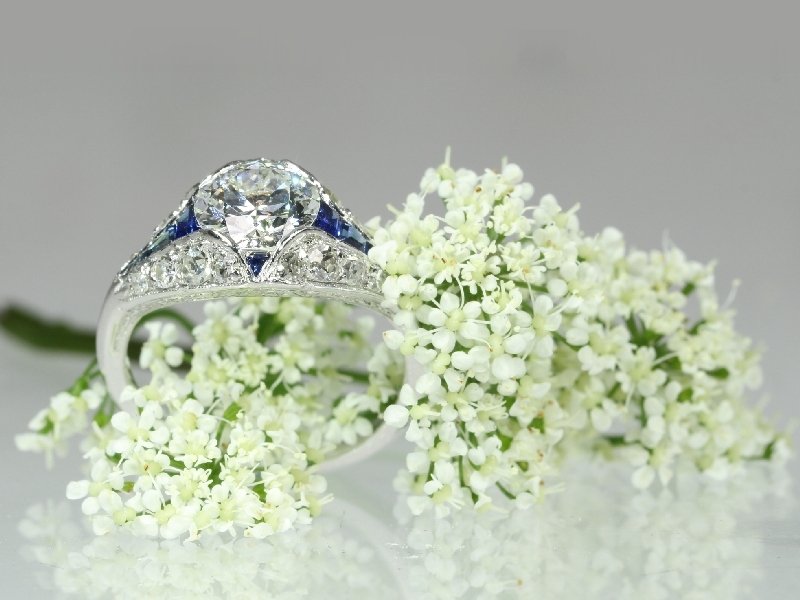
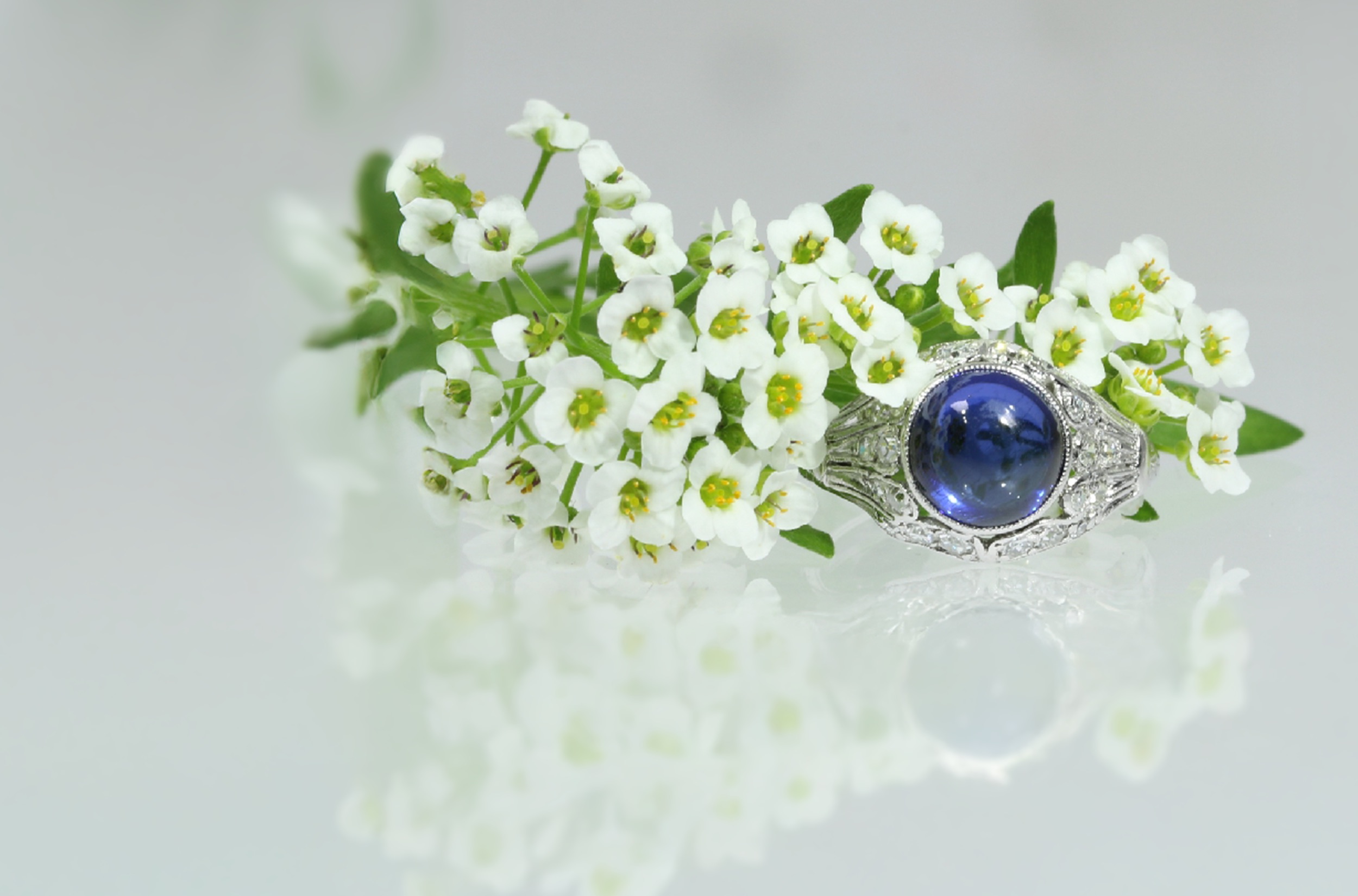
Spring season in The Garden of Adin. A ring of beauty is a joy forever!
Did you know? At the Adin website, we have a comprehensive style overview of all Western countries for every era from 1620 to the present. By clicking on each of these various styles, you will receive an explanation of that style. Click here to get there! We sincerely hope you enjoy the reading!

Spring season in The Garden of Adin. A ring of beauty is a joy forever!
To understand antique and estate jewellery, one must delve into many (sometimes complex) factors. Some of these are covered in both the Antique Jewellery Lecture and Adin's Jewellery Glossary on the Adin website. Although we do not intend to explore these matters too deeply, the information provided will give a good idea of what antique and estate jewellery is all about. We sincerely hope you enjoy the reading!

Rocks & Roll !
Tutti frutti, oh rutti
Tutti frutti, oh rutti
Tutti frutti, oh rutti
Tutti frutti, oh rutti
Tutti frutti, oh rutti
A wop Art Deco mop a lomp bom bom!
Jewellery like this, set with brightly coloured gemstones polished as leaves, is called "Tutti Frutti jewellery". The first Tutti Frutti piece was a necklace commissioned by Queen Alexandra and designed by Pierre Cartier in 1901.
Tutti Frutti jewellery designs are considered to be a perfect mix of East and West because they are made up of brightly coloured gemstones (like sapphires, rubies, and emeralds) carved using Indian techniques and set in French platinum and diamond mountings. The style became extremely popular during the 1920s.
Click here for more info on this Art Deco tutti frutti brooch.

New In Our Assortment! Flower and relationship binders! All in one!

Suprise Mom! Add something red to her breakfast!

Just imagine wearing earrings that are almost 300 years old!
In these 19.2K yellow gold Portuguese Rococo earrings from 1740, an adorable double bow dangles between two marquise-shaped flakes of symmetrically pierced flourishing frills.
With five rose-cut diamonds dispersed in alignment over the entire jewel and two extra diamonds topping the bows on the left and right, you could relive a fragment of history and the era's romances in this warm openwork gold tucked in this original jewellery box.
Click here to see and read more about these 18th Century gold and diamond earrings

Poetical spring in The Garden of Adin.
A flower cannot blossom without sunshine,
and man cannot live without love.
Max Müller (1823-1900)
German-born philologist
Click here to see and read more about this antique opal and diamond ring.

Poetical spring in The Garden of Adin.
It is spring again.
The earth is like a child
that knows poems by heart.
Rainer Maria Rilke (1875-1926)
One of the German language's greatest 20th-century poets

Poetical spring in The Garden of Adin.
These gems have life in them.
Their colours speak,
saying what words fail of.
George Eliot (1819–1880)
One of the leading writers of the Victorian era

Dew drops in The Garden of Adin. Earth's liquid jewellery, wrought of air.
Dew... Earth's liquid jewellery, wrought of air.
PHILIP JAMES BAILEY
English poet
(1816 - 1902)
Click here to see and read more about this Lady Di Art Deco engagement ring.
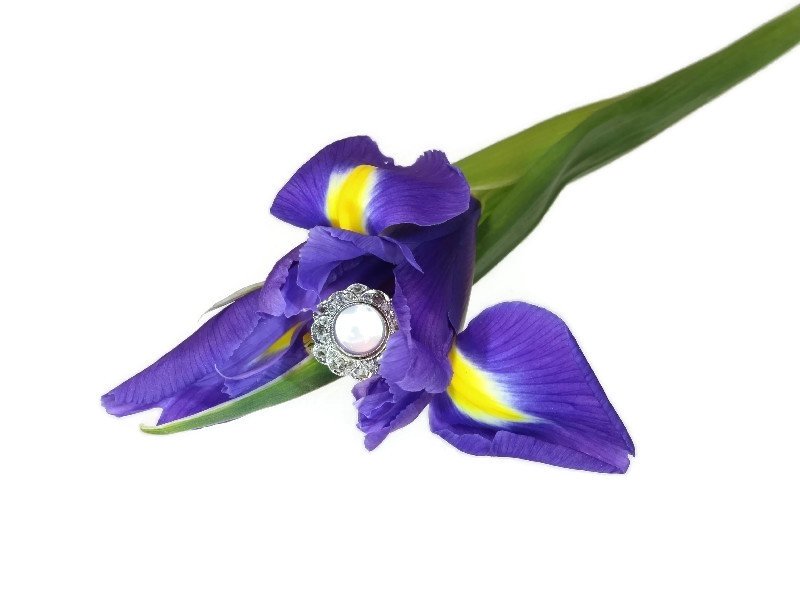
Blue moon in The Garden of Adin. With a dream in my heart...
Blue Moon
Blue moon, you saw me standing alone
Without a dream in my heart
Without a love of my own
Blue moon, you knew just what I was there for
You heard me saying a prayer for
Someone I really could care for
And then there suddenly appeared before me
The only one my arms will ever hold
I heard somebody whisper "Please adore me"
And when I looked, the moon had turned to gold!
Blue moon!
Now I'm no longer alone
Without a dream in my heart
Without a love of my own
"Blue Moon" is a classic popular song written by Richard Rodgers and Lorenz Hart in 1934
Click here to see and read more about this blue moonstone Art Deco ring.

Black, yellow and red in The Garden of Adin.

Antique Jewellery For A Balanced Life. Blowing Bubbles In The Garden of Adin.
At the centre of this gold Victorian cluster ring from 1870 is a dazzling rose-cut diamond set in silver on foil, with a red gold domed engraved back. It is as gorgeous in quality as it is grand in its diameter of 9.3mm (0.37 inch).
Encircled by 15 rose-cut diamonds encrusted in silver set on foil with a red gold back, no rose-cut diamond has ever diffused more brilliance.
This one jewel establishes a timeless grandeur as well as a cute sophistication.
Discover more jewellery suitable for wearing while blowing bubbles!

Antique Jewellery For A Balanced Life. Attractive blossoms in The Garden of Adin.
The darling style of these 18K yellow gold Victorian earrings from 1870 lies in their lush knot design tied up with a natural baroque pearl. Alongside the five blood coral beads between each loop and the black enamel on the upper surface of these endearing jewels, the embellishments extend even further with engravings on the outside and inside of the gold ribbon, just to remind you of the beauty of tying the knot.
Discover more blossoms in our entire collection of unique Victorian jewellery!

Antique Jewellery For A Balanced Life. Poetry in The Garden of Adin.
The Ancient Greeks already knew!
If thou wilt make a man happy? Add not unto his riches but take away from his desires.
If thou wilt make a woman happy? Reach to your riches in The Garden of Adin to take away from her desires.
- Epicurus - Ancient Greek Philosopher 341–270 BC (freely interpreted)
Click here to see and read more from this Art Deco bracelet.

Antique Jewellery For A Balanced Life. Get Zen in The Garden of Adin.

Gold growing on trees, scientists find small deposits in leaves.
Contrary to popular belief, gold does grow on trees. Scientists from the Adin Scientific and Industrial Research Organisation (ASIRO) have proved that the leaves of certain trees in The Garden of Adin contain interesting amounts of antique gold jewellery. The scientists published their findings in the scientific journal "Nature & Antique Jewellery Communications" this week.
One of the authors of the paper, Adin's geochemist Dr Elkan Wijnberg, said some root systems dive down deeper than Art Nouveau. The tree acts “as a hydraulic pump... drawing up the antique gold jewellery,” he said.
He also mentioned that the discovery could offer a significant opportunity for antique jewellery exploration. We'll keep you informed!
Click here to see and read more from this Art Nouveau brooch.
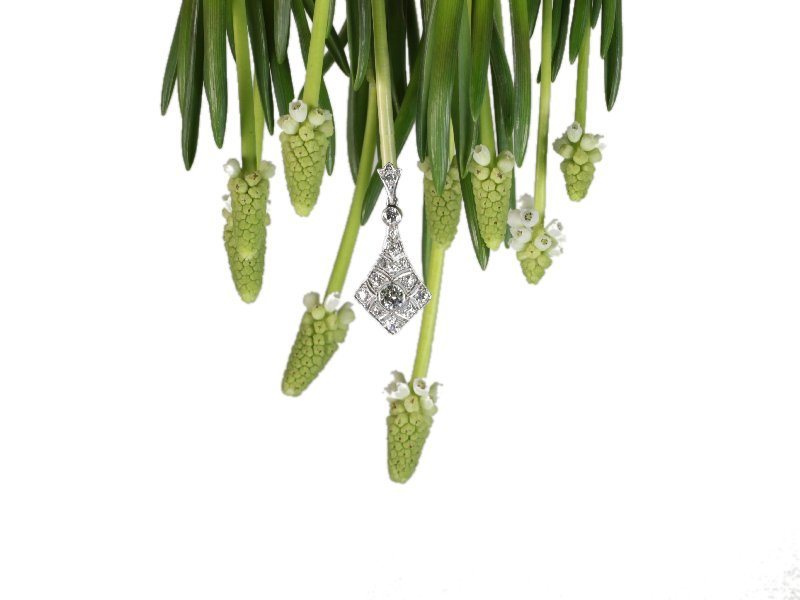
New attraction in The Garden of Adin: twinkling dangling jewellery
The recent attraction in The Garden of Adin is a cave known for its population of twinkling hanging jewellery, called: Twinkling Delight or Adinius Orbis Luminosa. This species is found exclusively in The Garden of Adin. Each piece is around the size of an average pendant and very suitable for everyday wear. Ages of over 100 years are not uncommon with this species. There are organised tours that include a boat ride under the glimmers but due to the overwhelming success, it is best to buy tickets early.
Click here to see and read more from this glimmer.

Hide And Seek In The Garden of Adin.
A stunning piece of jewellery made and signed by Cartier, Paris. A true representative of jewellery from the fifties of the twentieth century, when all sorts of flowers were used as sources of inspiration. These pieces were often abundantly decorated with precious stones.
Cartier - A leading French jewellery firm, founded in 1847, with its headquarters in Paris and branches in several major centres. Originally, the firm made jewellery that attracted a prestigious clientele, including French royalty and the future Edward VII.
Click here to see and read more from this signed Cartier jewel.

Hide And Seek In The Garden of Adin.

Adin's Recipes d'Amour, so many ways to spice up your life...

Magic Beans! Where else than in The Garden of Adin?

A bejeweled Bird Of Paradise, where else than in The Garden of Adin?
Just as spring's warmth lingers in this mild winter, so too does this bird of paradise remain perched on its branch here in the Garden of Adin. The ancient Greeks called it a Phoenix, the Egyptians a Bennu, and the Persians a Huma. Regardless of its cultural name, this bird of paradise symbolises resurrection within its own fire. And how this Fifties brooch ignites in an incandescent inferno of vibrant gemstones and plique-à-jour enamel.
Although this challenging technique, using vitreous enamel between the design's cells, was mostly employed during the Art Nouveau period, it now adds extra visible depth to the mythological meaning of this jewel's depiction. Its coloured translucence flares next to the diamonds, turquoises, and ruby. So, hurry to purchase it before it flies off to its winter retreat, now that Frost's cold is promised to come.

A 1500 Years Old Earring! A true antiquity and still wearable!
Crafted between fourteen and seventeen centuries ago, this ancient ear pendant in at least 18K yellow gold is more of a precious artefact worthy of a showroom in a museum—just as a similar one is displayed in Germany—than a customary antique jewellery piece. Within this unique treasure, a triangular shape is repeated in its overall outline of two cones assembled at their bases, as well as in the patterns of its typical Caucasian style field and cluster granulation. Possessing this rare fragment of history is definitely more of an honour than a hazard to preserve and even wear.